
Quick answers
- Why is my outdoor refrigerator not cooling in summer?
- Outdoor units already fight high ambient heat, so a dirty condenser or a stalled condenser fan tips them over the edge fast — the system can't reject heat into hot patio air. Clean the coil thoroughly, shade the unit from direct sun, and check the fan before assuming a sealed-system fault.
- Can a regular indoor fridge be used in an outdoor kitchen?
- It shouldn't be. Outdoor-rated units are built with sealed electronics, weather-resistant components, and higher heat tolerance. An indoor fridge outdoors will run warm, corrode, and fail early. We confirm a unit is outdoor-rated before diagnosing a cooling complaint.
- Why does my patio fridge run constantly but stay warm?
- It's losing the battle against ambient heat and a heat-loaded condenser. With the coil caked in dust and ash and the cabinet sitting in sun, the compressor runs nonstop and never catches up. Cleaning the condenser and improving shade and ventilation often turns it around.
- Does wildfire-season ash affect outdoor refrigerators?
- Yes — fine ash settles on and into the condenser, insulating the coil so it can't shed heat. Outdoor units catch far more of it than indoor ones. After smoky stretches, a thorough condenser cleaning is the single most useful thing you can do.
Siting
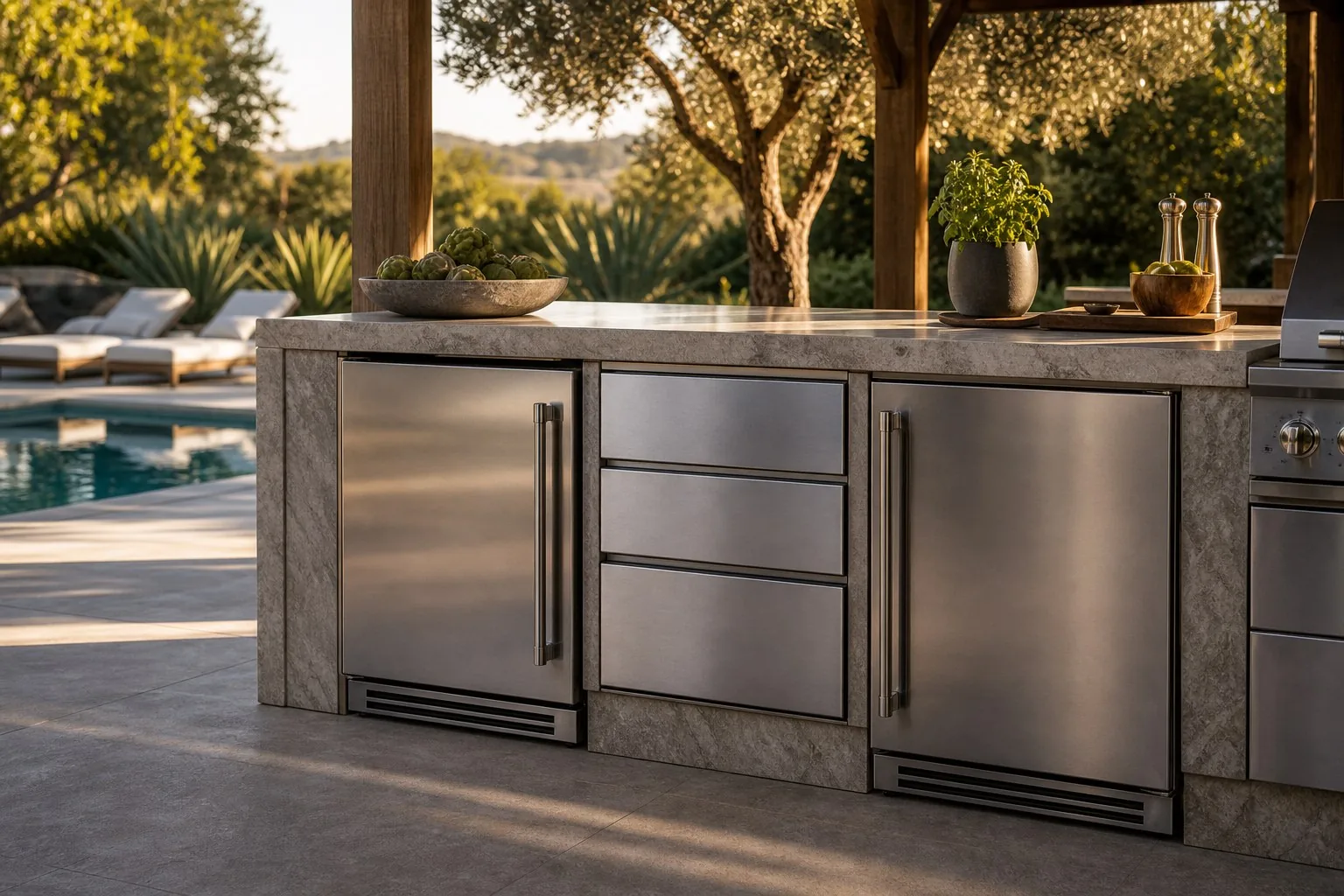
Shade and airflow are part of the repair
A unit baking in direct afternoon sun against a solid wall has nowhere to dump heat. Before we condemn a fan or compressor, we look at where it lives: clearance behind and above the cabinet, sun exposure, and whether the grille can actually draw cool air. Re-siting often does what a part swap can't.
Maintenance
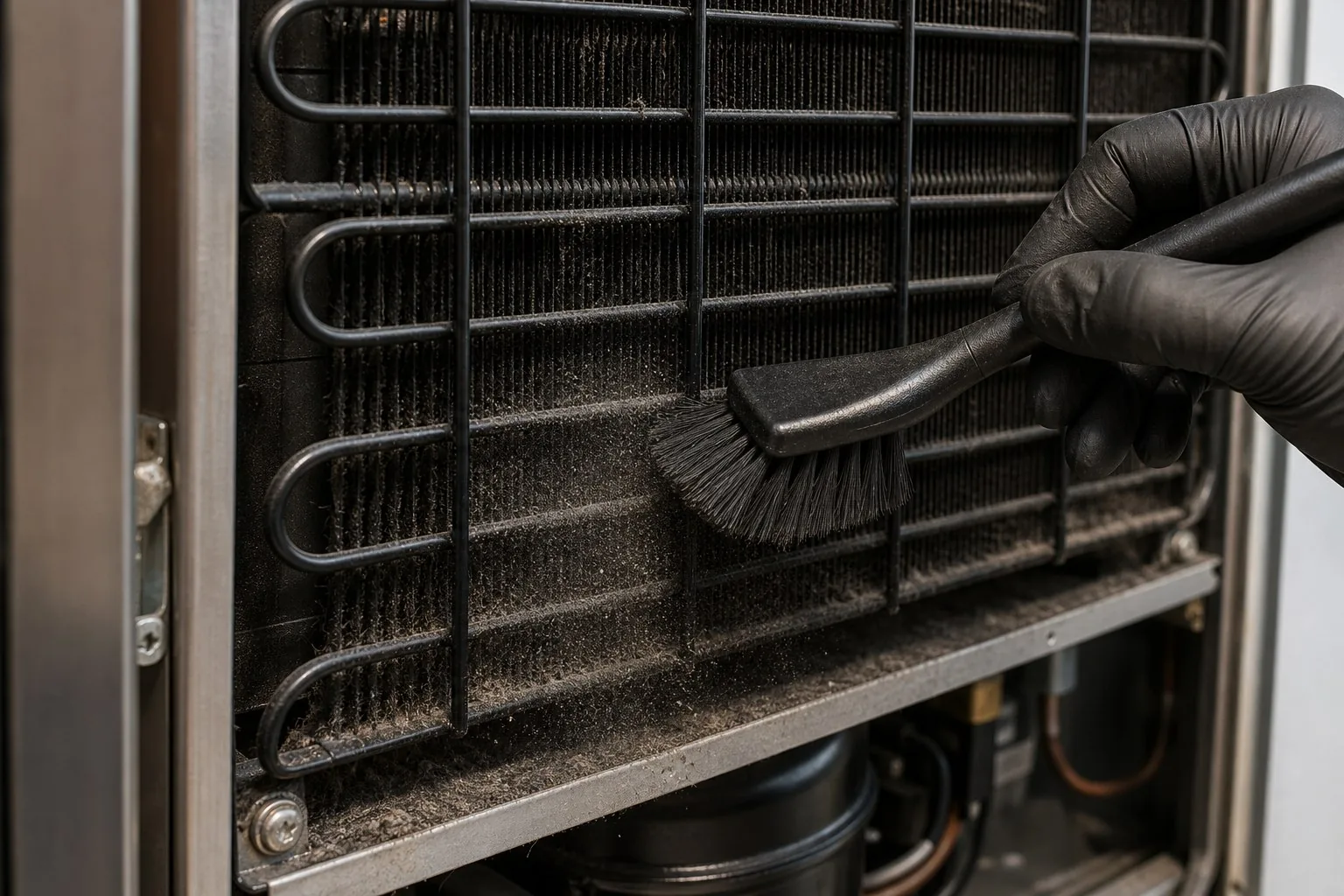
Ash and grease are the silent killers
Outdoor coils collect what indoor units never see — grill grease drifting from a nearby burner, garden pollen, and wildfire-season ash that packs the fins like felt. That insulating layer is invisible from the front. A deep coil cleaning is the first and cheapest move, and on patio units it often is the whole fix.
Built for weather, but the weather still wins
An outdoor refrigerator is engineered to survive what an indoor unit can’t — heat, humidity, temperature swings, dust, and salt air. That hardening matters, but it doesn’t make the laws of refrigeration go away. A fridge cools by moving heat out of the cabinet and rejecting it to the surrounding air. When the surrounding air is a 95°F Tri-Valley afternoon and the condenser is caked in patio dust, the unit has almost no margin left. Heat and dust, in that order, drive nearly every outdoor service call.
Why do outdoor units load up faster than indoor ones?
Because they collect everything the patio throws at them: garden dust, pollen, grease from the grill nearby, and wildfire-season ash. That layer insulates the coil so it can’t shed heat, while ambient temperatures are already working against it. The compressor runs long, the cabinet drifts warm, and a unit that was fine in spring struggles by July. The pattern mirrors what we see on a warm indoor Sub-Zero not cooling call — only outdoors the coil loads several times faster.
What actually fails on an outdoor refrigerator?
The dominant fault is heat plus a dirty coil; the rest follow from the harsh siting. In rough order:
- Heat-loaded, dust- or ash-clogged condenser — the dominant outdoor failure; clean it first.
- Condenser fan motor — outdoor fans take weather and debris and stall sooner.
- Weathered door seal — sun and temperature cycling stiffen gaskets that then leak warm air.
- Corrosion and moisture intrusion — on units that aren’t truly outdoor-rated or are poorly sited.
- Control or thermistor drift — exaggerated by the extreme ambient swings outdoors.
We always confirm a unit is outdoor-rated; an indoor fridge pressed into patio duty will fail no matter how well it’s serviced.
Outdoor-fridge symptoms at a glance
| Symptom or sign | Likely cause | What we do |
|---|---|---|
| Runs nonstop but stays warm in summer | Heat-loaded, dust- or ash-clogged condenser | Deep-clean the coil, check shade and clearance before any part |
| Cooling fades after smoky weeks | Wildfire ash insulating the fins | Thorough condenser cleaning, then re-verify temperature |
| Cabinet sweats or door feels loose | Sun- and salt-weathered gasket | Replace with a genuine OEM seal and confirm a clean closure |
| Fan silent, coil hot to the touch | Stalled or seized condenser fan motor | Fit the matching OEM fan motor and confirm airflow |
| Rust streaks or moisture inside | Indoor unit used outdoors, or poor siting | Confirm rating, advise re-siting or replacement honestly |
Many of these are the same parts and logic behind an undercounter refrigerator repair — the patio environment simply pushes them harder.
Bay Area context
Outdoor kitchens are everywhere from Blackhawk to the Peninsula, and inland patios in the Tri-Valley see real summer heat plus periodic wildfire ash on the coils. Coastal sites add salt air and corrosion. We start with a deep condenser cleaning and shade-and-ventilation check, then diagnose from there — restoring an outdoor unit to spec in one visit. Most outdoor jobs fall in the non-sealed band you can preview on our repair cost page, and the work carries the same genuine OEM parts and standards as our indoor Sub-Zero repair. A flat $89 service call applies and is waived with any repair.
Is an outdoor fridge worth repairing or replacing?
Almost always repairing, as long as the cabinet is genuinely outdoor-rated and structurally sound. A clogged coil, stalled fan or tired gasket is inexpensive next to a new outdoor unit, and a deep cleaning alone often fixes the complaint at no parts cost. The exception is an indoor fridge that has been corroding on a patio — once moisture has reached the electronics, replacement with a true outdoor model is the honest call.
Before you book an outdoor-fridge diagnostic
- Confirm the unit is genuinely outdoor-rated, not an indoor fridge pressed into patio duty
- Brush and vacuum the condenser grille thoroughly, front and back
- Add shade or a vented enclosure if it sits in direct sun
- Check that nothing blocks the air intake or exhaust clearance
- After smoky weeks, clean the coil again before assuming a sealed-system fault
Frequently asked questions
Why is my outdoor refrigerator not cooling in summer?
Outdoor units already fight high ambient heat, so a dirty condenser or a stalled condenser fan tips them over the edge fast — the system can't reject heat into hot patio air. Clean the coil thoroughly, shade the unit from direct sun, and check the fan before assuming a sealed-system fault.
Can a regular indoor fridge be used in an outdoor kitchen?
It shouldn't be. Outdoor-rated units are built with sealed electronics, weather-resistant components, and higher heat tolerance. An indoor fridge outdoors will run warm, corrode, and fail early. We confirm a unit is outdoor-rated before diagnosing a cooling complaint.
Why does my patio fridge run constantly but stay warm?
It's losing the battle against ambient heat and a heat-loaded condenser. With the coil caked in dust and ash and the cabinet sitting in sun, the compressor runs nonstop and never catches up. Cleaning the condenser and improving shade and ventilation often turns it around.
Does wildfire-season ash affect outdoor refrigerators?
Yes — fine ash settles on and into the condenser, insulating the coil so it can't shed heat. Outdoor units catch far more of it than indoor ones. After smoky stretches, a thorough condenser cleaning is the single most useful thing you can do.
What clients say
4.9 · 327 reviews
Our patio fridge ran nonstop but stayed warm all July. The technician showed me the outdoor condenser caked with grill grease and pollen, did a deep coil cleaning, and confirmed the fan and seal were fine. It held temperature again the next day without any parts at all.
After the smoky weeks I noticed our outdoor refrigerator drifting warm. They found fine wildfire ash packed into the fins like felt, cleaned it thoroughly, then replaced a stalled condenser fan motor weathered from the weather. Honest work and they verified it was truly outdoor-rated first.
Coastal salt air had stiffened the door gasket on our outdoor unit so it leaked warm air and sweated. The tech replaced the weathered seal with an OEM gasket and pointed out the cabinet needed more shade and ventilation clearance. Cooling is steady now and they explained the siting clearly.