
Start here, then go deep
This page answers the questions people actually ask before booking a high-end appliance repair in the Bay Area. Each answer is self-contained, but every one of them has a deeper guide behind it — follow the links when you want the full picture.
These appliances live in a demanding environment. Inland Tri-Valley and South Bay estate kitchens push 90–100°F in summer, which forces a refrigerator’s sealed system to work harder and makes a dust-choked condenser fail faster. Wildfire-season ash and ordinary remodeling dust load those coils quickly. Closer to the coast and the fog line — Pacific Heights, Sea Cliff, Marin, the Peninsula’s west side — salt air corrodes condenser tubing and fasteners over time. Hard water across much of the Bay Area scales ice makers, water valves and steam-oven lines. Knowing which of these conditions your kitchen faces often points straight at the real fault.
What should I have ready before I book?
Two photos and one honest symptom description. Snap the rating plate and snap the display, then note when the problem appears — constantly, only after a defrost cycle, or only in hot weather. With those in hand the right questions below answer themselves faster, and the technician can pre-stage likely parts. Use the quick map to jump to your situation.
| Your question | The short answer | Go deeper |
|---|---|---|
| What will the visit cost? | Flat $89 diagnostic, waived with any repair | repair cost guide |
| Repair or replace? | Repair while it costs under about half a new unit | repair vs replace |
| Where’s my model number? | On the rating plate — location varies by unit | model number guide |
| What does this code mean? | A model-specific clue, not a verdict | Sub-Zero error codes |
| Is a warm fridge urgent? | Yes — move perishables, then book the soonest slot | emergency repair |
The questions, in order
- Who fixes these? We are an independent, diagnostic-first service for Sub-Zero, Wolf, Viking, Thermador and GE Monogram across the Bay Area — not a generalist and not affiliated with any manufacturer.
- What will it cost? See the repair cost guide for real ranges and the diagnostic fee explained, including when it’s waived with any repair.
- What’s my model number? The model number guide shows exactly where the rating plate hides on each unit — the single most useful thing you can have ready.
- What does this code mean? The Sub-Zero error codes reference translates alarms into causes and safe next steps.
- Repair or replace? The honest math is in repair vs replace.
- Is this urgent? A warm fridge or a leak is covered in emergency repair.
How to use your model number and error code
Two things make every answer below faster and more accurate: your model number and any error code on the display.
Where is the model number, and why does it matter?
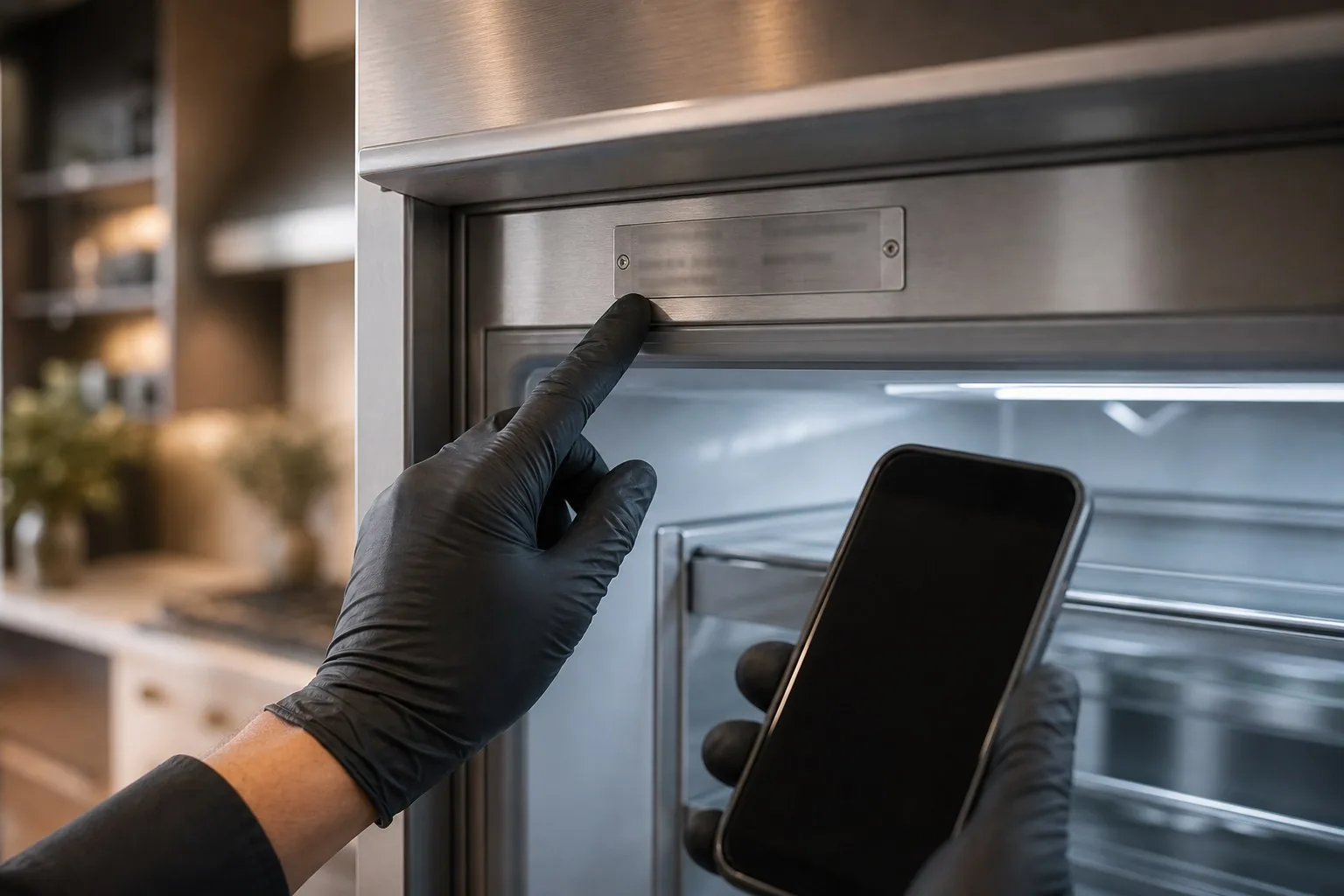
The model number on the rating plate decides which parts fit and which fault patterns apply — a Sub-Zero column behaves differently from a classic side-by-side or an undercounter unit. On Sub-Zero built-ins the plate sits inside the door near the top hinge; on drawer, integrated and 700-series units it’s inside the cabinet to the left of the upper drawer. Wolf, Viking, Thermador and GE Monogram carry the plate behind a kick panel, on the oven frame, or along the door jamb. Photograph it before you book.
Note the exact error code, then verify
An error code is a clue, not a verdict. Write down exactly what shows — a Sub-Zero “Vacuum Condenser” alarm usually points to a dirty condenser, while oven F-codes generally point to a sensor or control fault. Before you call, compare the display reading to an independent thermometer. A panel that says it’s cold while a glass of water inside reads 50°F tells us far more than the code alone.
How does the diagnosis actually work?
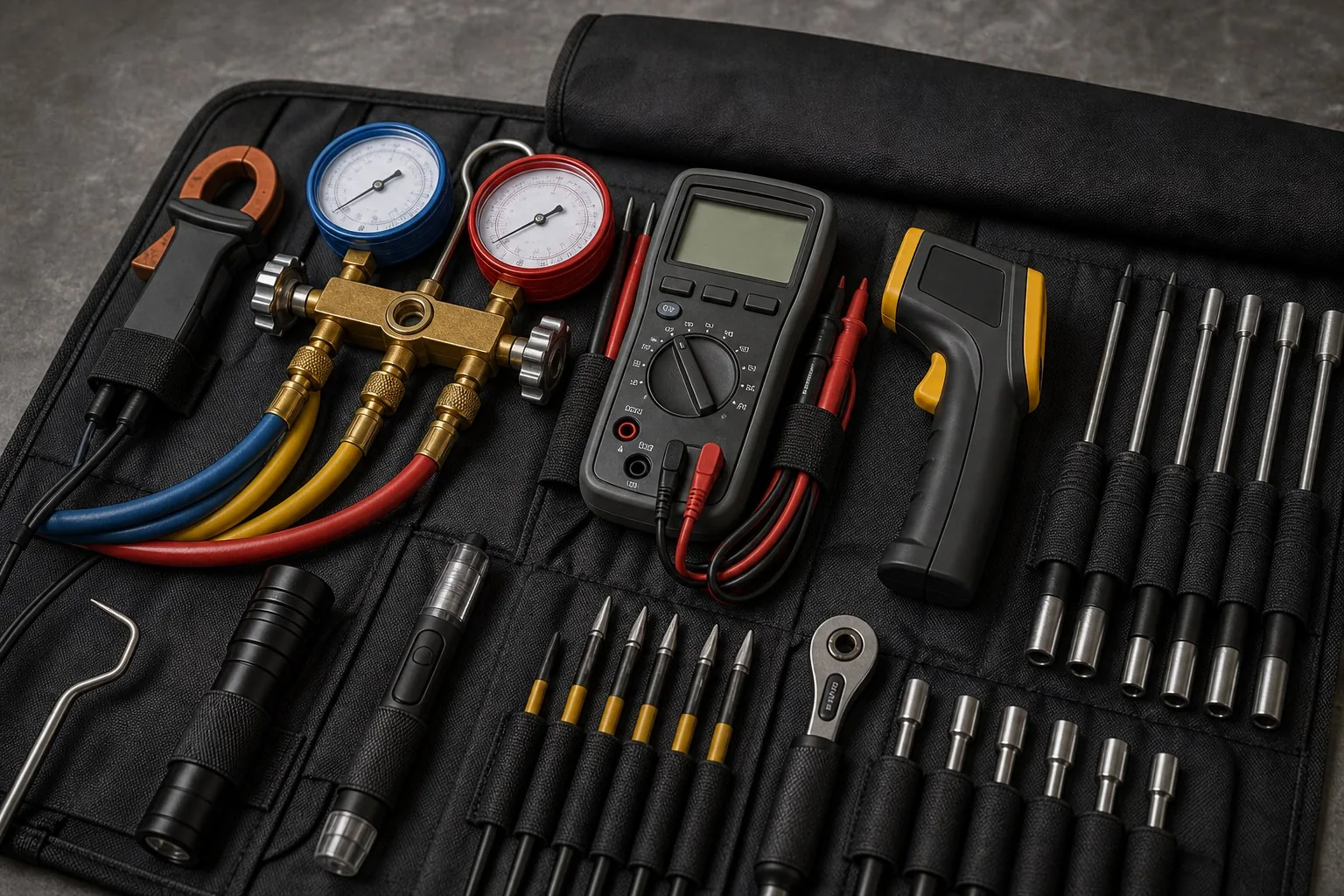
We read the symptom against the model, confirm the fault on site with gauges and meters, and quote the exact repair in writing before any work begins, using genuine OEM parts matched to the rating plate. That diagnostic-first approach is what keeps a single careful visit from turning into guesswork and repeat trips.
Quick answers
- Who repairs high-end appliances like Sub-Zero and Wolf in the Bay Area?
- An independent, diagnostic-first service that specializes in built-in and professional brands — Sub-Zero, Wolf, Viking, Thermador and GE Monogram. We diagnose the real fault, quote it in writing, and repair with OEM parts matched to the exact model on the rating plate.
- How much does high-end appliance repair cost?
- Most non-sealed repairs run $200–$700, and sealed-system or compressor work runs $900–$2,000. The diagnostic is a flat $89 and is waived with any repair. Every quote is confirmed in writing before any work begins.
- Where is the model number on my appliance?
- On Sub-Zero built-ins it's inside the door near the top hinge; on drawer and undercounter units it's inside the cabinet to the left of the upper drawer. Other brands carry the plate behind a kick panel or on the door frame. The model decides the parts and the fix.
- What do appliance error codes mean?
- Codes are model-specific clues, not verdicts. A Sub-Zero 'Vacuum Condenser' alarm usually means a dirty condenser; oven F-codes point to a sensor or control fault. Note the exact code and your model number, then compare the display to an independent thermometer before you call.
Before you book
Two photos shrink the unknowns
Snap the rating plate and the display before you call. The model decides which parts fit and which fault patterns apply, and a photographed error code lets us pre-stage the likely components on the truck. Owners who arrive with both routinely turn a two-trip job into one clean visit.
Frequently asked questions
Who repairs high-end appliances like Sub-Zero and Wolf in the Bay Area?
An independent, diagnostic-first service that specializes in built-in and professional brands — Sub-Zero, Wolf, Viking, Thermador and GE Monogram. We diagnose the real fault, quote it in writing, and repair with OEM parts matched to the exact model on the rating plate.
How much does high-end appliance repair cost?
Most non-sealed repairs run $200–$700, and sealed-system or compressor work runs $900–$2,000. The diagnostic is a flat $89 and is waived with any repair. Every quote is confirmed in writing before any work begins.
Where is the model number on my appliance?
On Sub-Zero built-ins it's inside the door near the top hinge; on drawer and undercounter units it's inside the cabinet to the left of the upper drawer. Other brands carry the plate behind a kick panel or on the door frame. The model decides the parts and the fix.
What do appliance error codes mean?
Codes are model-specific clues, not verdicts. A Sub-Zero 'Vacuum Condenser' alarm usually means a dirty condenser; oven F-codes point to a sensor or control fault. Note the exact code and your model number, then compare the display to an independent thermometer before you call.
Is it worth repairing or should I replace?
Repair is usually the better call. A maintained luxury built-in lasts 25–30 years, and keeping custom cabinetry has real value. Replace only when multiple major components fail or a repair would exceed about half the installed price of a new comparable unit.
Can I get same-day or emergency appliance repair?
A no-cooling refrigerator or a flooding dishwasher is treated as urgent, and same-day visits are common across much of the Bay Area depending on routing and parts. Move perishables to safety, then book the soonest slot online or by phone.
What clients say
4.9 · 327 reviews
I had a list of questions before booking and they actually answered them straight — what the diagnostic costs, where my model number hides, what my Wolf F-code likely meant. The tech matched the code to the rating plate, found a drifted oven sensor, and quoted it in writing first. No phone guesswork.
Texting the rating-plate photo before the visit turned a two-trip job into one. They pre-staged the likely part, confirmed a stalled evaporator fan on my Sub-Zero built-in on site, and replaced it with OEM the same afternoon. Diagnostic-first and honest about what I didn't need.
Useful answers up front saved me money. My panel claimed it was cold but a glass of water inside read 50 degrees, exactly like they describe — turned out a thermistor was misreading, not a dead compressor. Genuine part, written quote, fixed in one visit. Scheduling took a couple days.