
Quick answers
- Why is my wine fridge not holding temperature?
- The usual culprits are a dust-clogged condenser, a failing condenser fan, a worn door seal letting warm room air in, or a control mode that quietly switched cooling off. Set it near 55°F, clean the condenser, and log temperatures for a full day before deciding it's a real fault.
- My Sub-Zero wine column stopped cooling after a power outage — why?
- Many wine units re-enter a showroom or demo mode after a power interruption, which disables active cooling. Check the control panel first; if it isn't in that mode and the unit is still warm, it needs a diagnostic to find the actual fault.
- What's the difference between a single-zone and a dual-zone wine cooler?
- A single-zone unit holds one storage temperature; a dual-zone unit runs two independent compartments — typically reds warmer and whites cooler — using separate dampers, sensors, and sometimes a second evaporator. Dual-zone faults are usually isolated to the warm zone only.
- Why is there condensation or low humidity in my wine cooler?
- Wine storage needs stable humidity as well as temperature. A warm-running unit, a leaking gasket, or blocked airflow upsets the balance — too dry dries out corks, too wet invites label mold. Both point to a sealing or cooling fault worth diagnosing.
Wine storage is about stability, not just cold
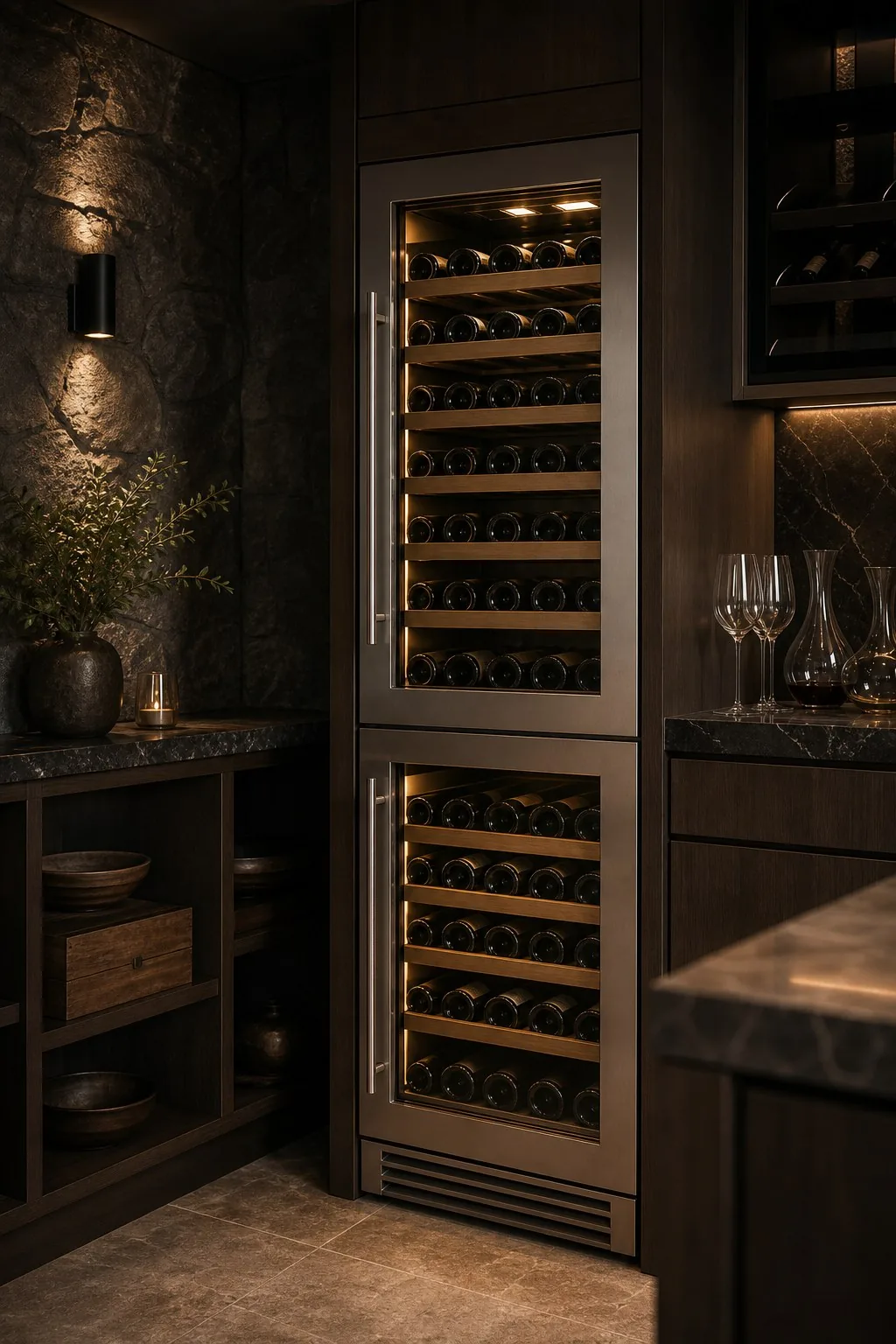
A wine refrigerator has a harder job than a beverage fridge: it must hold a steady temperature and a steady humidity so corks stay sealed and labels stay clean. Most service calls trace back to a coil that can no longer shed heat, a fan that’s stalling, a gasket that’s letting warm room air in, or a control mode that quietly switched cooling off. We diagnose which one before we touch the unit — and we treat dual-zone wine columns and integrated undercounter installs as the built-ins they are.
Why does single-zone vs. dual-zone narrow the diagnosis?
A single-zone unit maintains one storage temperature throughout. A dual-zone unit runs two independent compartments — typically reds nearer 60°F, whites nearer 50°F — using separate dampers, thermistors, and sometimes a second evaporator. When only one zone drifts warm, that’s diagnostic gold: it points to that zone’s damper, sensor, or fan rather than a system-wide compressor or sealed-system fault. A whole-unit warm-up is a different conversation entirely — the same single-zone logic we apply to a refrigerator column, where each tower is its own sealed system.
| Symptom or sign | Likely cause | What we do |
|---|---|---|
| Whole unit drifting warm | Dust-loaded condenser or stalling condenser fan | Clear the front grille, confirm fan rotation, check run time |
| One zone warm, the other fine | That zone’s damper, sensor, or fan | Diagnose the warm zone only, leave the healthy zone alone |
| Stopped cooling after a power outage | Showroom / demo mode re-engaged | Check the panel and exit demo mode before any repair is quoted |
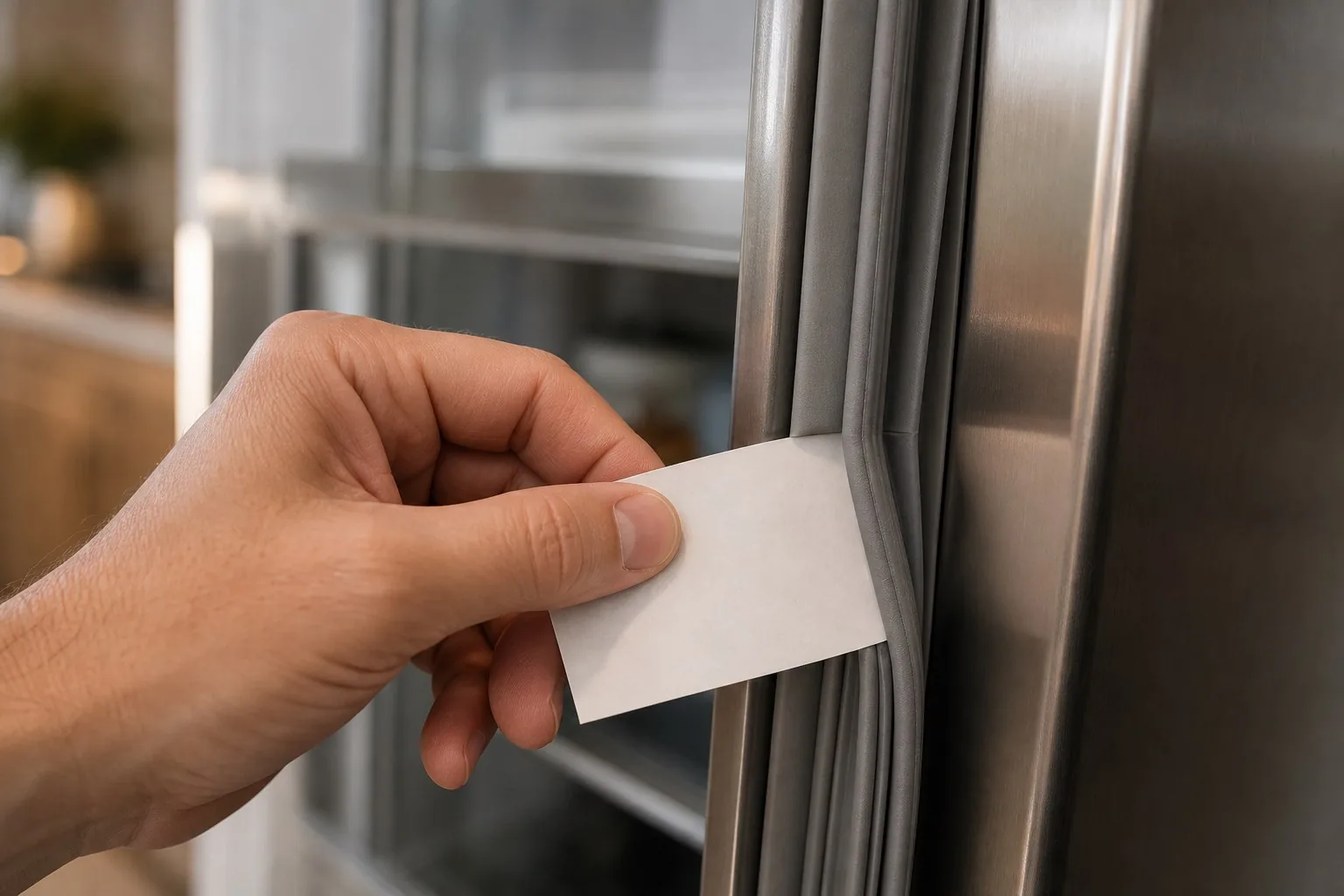
| Holds 55°F but corks drying out | Tired door gasket or blocked airflow | Read humidity alongside temperature, replace the OEM seal if leaking |
| Condensation or label mold inside | Humidity imbalance from a seal or airflow fault | Trace the sealing/airflow path, not the cooling system |
Common Bay Area causes
- Heat-stacked installs — a wine unit tucked beside a Wolf range or a dishwasher, or built into a sun-exposed island, fights its own ambient load. Inland Tri-Valley and Silicon Valley kitchens routinely hit 90–100°F in summer, and a coil already loaded with dust simply can’t keep up.
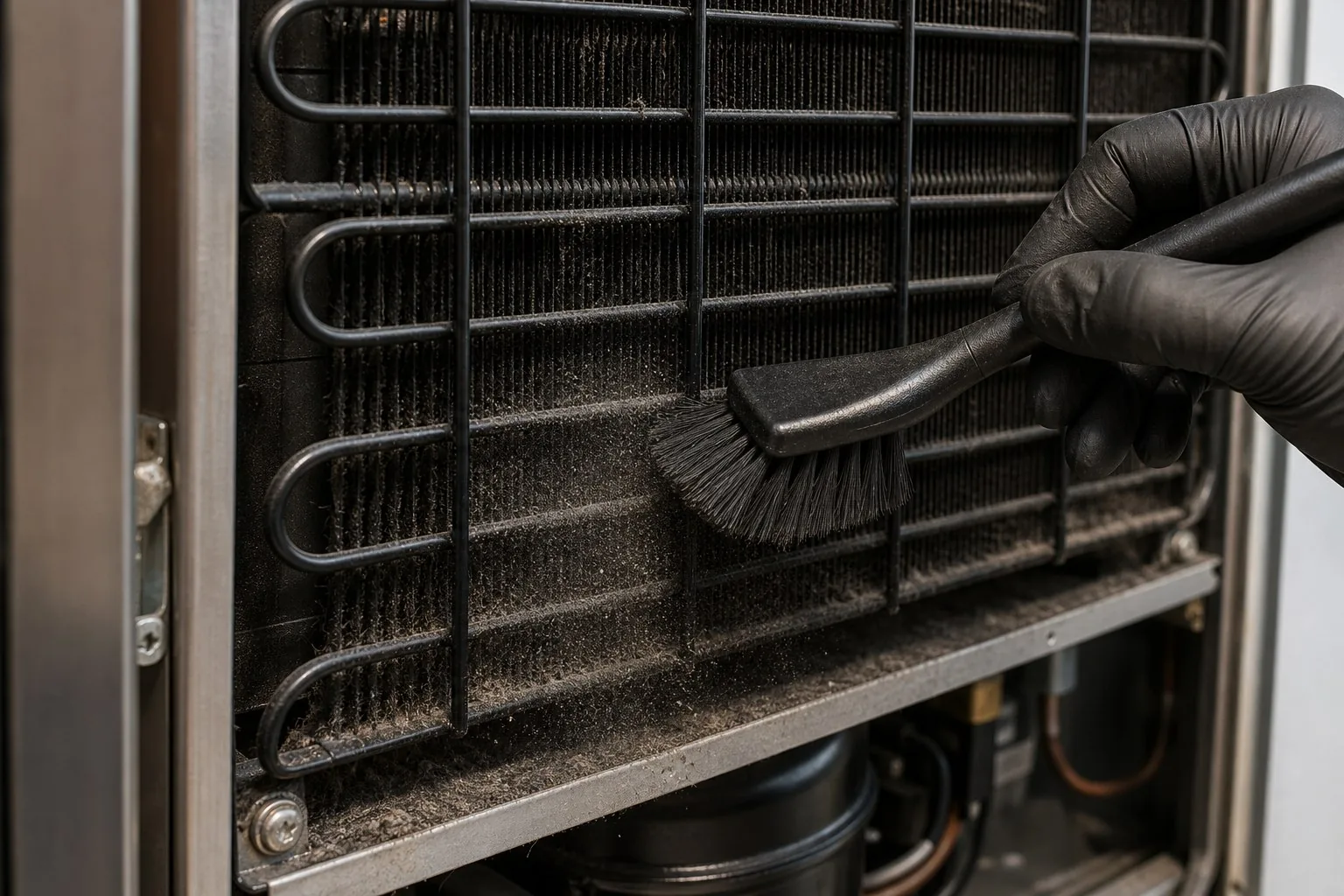
- Condenser fouling — wildfire-season ash and fine grit pack the front grille within weeks, and pet hair compounds it, forcing long, inefficient run times.
- Coastal corrosion — salt and fog along the Peninsula and in Marin wear condenser fan bearings, so a stalled fan shows up more often near the water.
- Hard water — common across the region, it scales the components tied to humidity control and accelerates seal and drainage issues.
Humidity vs. temperature — they’re not the same fault
A unit can hold temperature yet still mishandle humidity — too dry dries out corks, too wet invites label mold. That usually means a tired gasket or blocked airflow rather than a cooling failure, and it’s why we read both numbers, not just the thermometer. When a wine unit genuinely loses cooling, the diagnosis follows the same path as any Sub-Zero that’s not cooling: rule out the condenser and fan first, then read the sealed system. We carry genuine OEM parts matched to the model on the rating plate, and we work around gated, hillside, and white-glove-access estate homes by appointment so the unit is back to a stable 55°F in one clean visit.
Is a wine cooler worth repairing?
Almost always, yes. The common faults — a fouled condenser, a stalled fan, a worn gasket, or a unit stuck in demo mode — are inexpensive next to replacing a built-in wine column set into custom millwork, and many “dead” wine fridges simply need demo mode cleared at no part cost at all. Our repair cost page lists the bands by fault. Wine units sit in the same built-in family as undercounter refrigeration, and the full Bay Area service starts at the Sub-Zero repair hub.
Before booking a wine-cooler diagnostic
- Confirm the panel isn't in showroom or demo mode after any power blip
- Set storage near 55°F and leave it to stabilize
- Clear the front grille of dust, ash, and pet hair
- Move the unit clear of direct sun and adjacent heat sources
- Log temperature and, if shown, humidity for a full day
Two readings, not one
Temperature and humidity fail separately
A wine unit can sit right at 55°F and still mishandle moisture — corks drying out or labels growing mold. That points at a tired gasket or blocked airflow rather than a cooling loss, which is why we read humidity alongside temperature. Treating a humidity complaint as a refrigeration fault sends the diagnosis down the wrong path entirely.
Heat-stacked installs
Where the unit lives decides how hard it works
Wine fridges get tucked beside a Wolf range, against a dishwasher, or into a sun-struck island, so they fight ambient heat a kitchen fridge never sees. Add an inland summer at 90-100°F and a grille packed with wildfire-season ash, and a coil that coped all winter suddenly can't shed heat fast enough to hold setpoint.
Frequently asked questions
Why is my wine fridge not holding temperature?
The usual culprits are a dust-clogged condenser, a failing condenser fan, a worn door seal letting warm room air in, or a control mode that quietly switched cooling off. Set it near 55°F, clean the condenser, and log temperatures for a full day before deciding it's a real fault.
My Sub-Zero wine column stopped cooling after a power outage — why?
Many wine units re-enter a showroom or demo mode after a power interruption, which disables active cooling. Check the control panel first; if it isn't in that mode and the unit is still warm, it needs a diagnostic to find the actual fault.
What's the difference between a single-zone and a dual-zone wine cooler?
A single-zone unit holds one storage temperature; a dual-zone unit runs two independent compartments — typically reds warmer and whites cooler — using separate dampers, sensors, and sometimes a second evaporator. Dual-zone faults are usually isolated to the warm zone only.
Why is there condensation or low humidity in my wine cooler?
Wine storage needs stable humidity as well as temperature. A warm-running unit, a leaking gasket, or blocked airflow upsets the balance — too dry dries out corks, too wet invites label mold. Both point to a sealing or cooling fault worth diagnosing.
What temperature should wine storage be?
Long-term storage sits around 55°F, with serving zones set warmer for reds and cooler for whites in dual-zone units. Stability matters far more than an exact number — it's the temperature swings, not the setpoint, that damage wine over time.
What clients say
4.9 · 327 reviews
Only the upper zone of our dual-zone wine column drifted warm. The tech said one warm zone is diagnostic gold and traced it to that zone's damper, not a system-wide fault. Genuine OEM damper fitted, both zones now hold steady. Reds near 60, whites near 50, exactly as they should.
Our wine fridge stopped cooling right after a power outage. Before charging me, he checked the panel and found it had slipped into demo mode, which disables cooling. Reset it and confirmed temperature and humidity were both stable. Honest enough to fix it without inventing a repair. Highly recommend.
Our wine cooler held 55 but corks were drying out. The tech read humidity alongside temperature and found a tired door gasket letting room air in, not a cooling loss. Swapped the OEM seal, humidity stabilized. I'd never have guessed a sealing fault could mimic a refrigeration problem.