
A column is one tall zone, one job
Refrigeration columns are tall, narrow built-ins configured as a single climate — an all-refrigerator tower or an all-freezer tower, frequently paired side by side behind matching panels. Each column carries its own sealed system, its own controls, and its own top-mounted condenser. The towers share nothing but the surrounding millwork, so a fault in one rarely touches the other, and isolating the problem is far cleaner than on a combined built-in refrigerator where one system serves both compartments. Columns sit in the same built-in family as refrigerator drawers and undercounter units — flush, panel-faced, and pulled the same careful way.
Why does a column fail where it does?
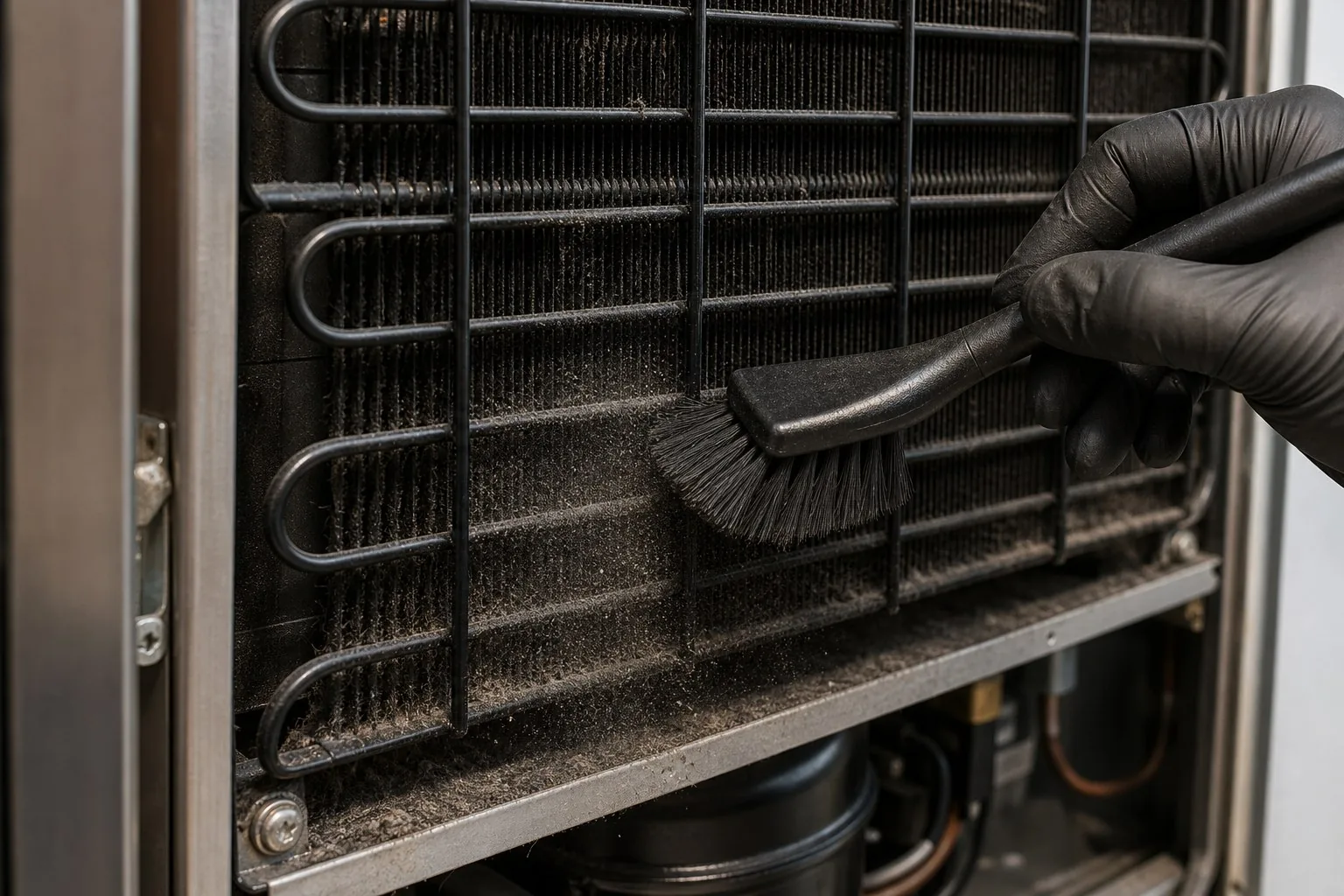
The two traits that define a column also define its failure points. First, the condenser usually sits up top behind the upper grille rather than at the floor — convenient for the design, but it quietly collects dust and pet hair until the compressor runs long and the cabinet drifts warm. Second, a full-height door means a long gasket under real leverage: any twist, hardening, or hinge sag along that tall run lets warm air slip in at the edge. Tall flush bodies sit inside custom cabinetry, so service starts the way every built-in does — protect the floor, release the panels and trim correctly, and ease the unit out on a planned path before the direct diagnosis begins.
| Symptom or sign | Likely cause | What we do |
|---|---|---|
| Tower drifts warm, compressor runs nonstop | Top-grille condenser choked with dust or pet hair | Clear the upper grille, confirm the single zone recovers, check run time |
| Frost building inside a freezer column | Defrost heater, thermostat, or board fault | Test the defrost circuit before condemning any cooling part |
| Cold sits at the back, cabinet stays warm | Stalled evaporator fan motor | Verify fan rotation and draw, fit an OEM motor |
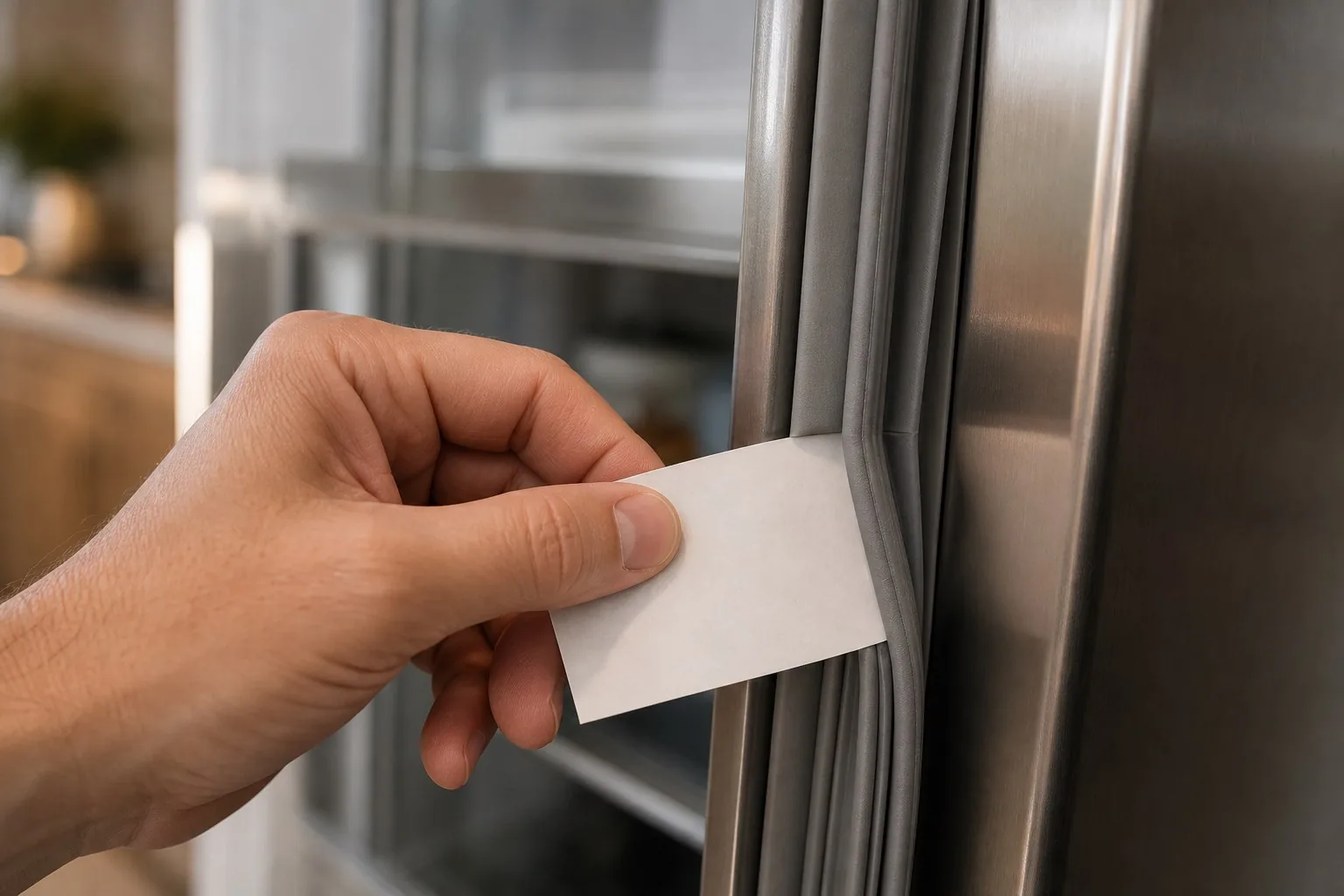
| Warm air ribbon felt along the door edge | Long full-height gasket distorted or hardened | Run a bill along the whole seal, realign the door or replace the gasket |
| One tower warm, the paired tower fine | Fault isolated to that single sealed zone | Diagnose the warm unit only, leave the healthy column untouched |
Real failure modes
- Top-mounted condenser clogging — behind the upper grille, it loads with dust unseen and forces long compressor runs.
- Defrost failure — a failed heater, thermostat, or board lets frost choke the evaporator and block airflow.
- Evaporator fan motor — without it, cold sits at the coil instead of filling a tall cabinet.
- Tall-door gasket leak — the long seal works under leverage, so a small distortion draws warm air in.
- Thermistor or control drift — the board misreads the single zone’s temperature and under-cools.
On Sub-Zero column lines — the integrated and designer towers, including the BI-36 and larger built-in formats — the diagnostic logic is the same: confirm the upper grille and condenser are clear, then read the one zone’s behavior to pinpoint the fault. We install genuine OEM parts matched to the model on the rating plate. The single-zone approach mirrors how we read a Sub-Zero that’s not cooling in any built-in: rule out the cheap, common condenser fault first, then chase the real one.
Repair or replace a column?
A column repair is almost always the cheaper path. Most non-sealed faults — fans, gaskets, defrost parts, thermistors — fall well below the cost of removing and reinstalling a tall flush unit, let alone refacing the surrounding millwork. Sealed-system or compressor work runs higher, but Sub-Zero’s 12-year sealed-system warranty often covers it on a qualifying column, so we verify the model and build date before quoting. See our repair cost page for the bands by fault, and note that a column with a genuinely failed sealed system in an old cabinet is one of the few cases where replacement deserves a look.
Bay Area context
Paired columns are a fixture of remodeled estate kitchens across the Peninsula and Tri-Valley, where owners choose a dedicated fridge tower and a dedicated freezer tower over one combined box. Inland heat from 90–100°F Danville and Walnut Creek summers, plus wildfire-season ash, loads those top-mounted condensers hard, while coastal salt and fog can corrode hardware on units near the bay. Hard water shows up wherever a column feeds an ice maker. We treat clearing the upper grille and condenser as the first move, then diagnose the single zone from there — one careful visit, one corrected column, through hillside and gated access included.
Quick answers
- Why is my Sub-Zero refrigerator column not cooling?
- A column is a single-zone tower, so a warm one points cleanly at its own top-mounted condenser, defrost circuit, evaporator fan, or door gasket — never a shared system. Clear the upper grille, confirm the seal, and give it a full day before booking a diagnostic.
- My freezer column is fine but my refrigerator column is warm — is one broken?
- Usually one tower has failed, not both. Paired columns are independent units that share only the cabinetry and a power feed, so a warm refrigerator column beside a healthy freezer column means the fault sits in that one tower's condenser, fan, or defrost circuit.
- Where is the condenser on a refrigeration column?
- On most built-in columns the condenser is mounted up top behind the front grille, not at the floor. That placement lets dust and pet hair settle into it unnoticed, which forces long compressor runs — clearing the upper grille is the first thing we check.
- Why is my freezer column building up frost inside?
- Interior frost on a freezer column usually means a defrost fault — a failed heater, defrost thermostat, or control board — or warm air leaking past the long door gasket. We confirm whether it's the defrost circuit or the seal before replacing any part.

How they're built
Two towers that only share the millwork
A paired fridge-and-freezer column setup looks like one appliance behind matching panels, but each tower runs its own compressor, controls, and condenser. That independence is why a warm refrigerator column standing beside a frosty freezer column points squarely at one unit — and lets us isolate and correct it without disturbing the other.
The long-seal problem
A tall door magnifies a small gasket flaw
The full-height door on a column carries a gasket several feet long, working under more hinge leverage than a standard fridge. A minor twist, a hardened corner, or slight sag draws a steady ribbon of warm air in at the edge. We slip a bill along the whole run to find where the seal lets go before condemning the cooling system.

Frequently asked questions
Why is my Sub-Zero refrigerator column not cooling?
A column is a single-zone tower, so a warm one points cleanly at its own top-mounted condenser, defrost circuit, evaporator fan, or door gasket — never a shared system. Clear the upper grille, confirm the seal, and give it a full day before booking a diagnostic.
My freezer column is fine but my refrigerator column is warm — is one broken?
Usually one tower has failed, not both. Paired columns are independent units that share only the cabinetry and a power feed, so a warm refrigerator column beside a healthy freezer column means the fault sits in that one tower's condenser, fan, or defrost circuit.
Where is the condenser on a refrigeration column?
On most built-in columns the condenser is mounted up top behind the front grille, not at the floor. That placement lets dust and pet hair settle into it unnoticed, which forces long compressor runs — clearing the upper grille is the first thing we check.
Why is my freezer column building up frost inside?
Interior frost on a freezer column usually means a defrost fault — a failed heater, defrost thermostat, or control board — or warm air leaking past the long door gasket. We confirm whether it's the defrost circuit or the seal before replacing any part.
What clients say
4.9 · 327 reviews
Our refrigerator column was warm while the matching freezer column right beside it stayed perfect. The technician explained each tower is its own sealed system, cleared the top-grille condenser, then replaced a stalled evaporator fan. One unit fixed, the other untouched, and our cabinetry panels never got scratched.
Frost was building inside our freezer column and the cabinet drifted warm. He ran the dollar-bill test along the tall door first, found the long gasket had hardened at one corner, then confirmed the defrost circuit was fine. New OEM seal, door realigned, and it has held ever since.
Inland summer dust had choked the top-mounted condenser on our refrigerator column, so the compressor ran nonstop. He cleared the upper grille, confirmed the single zone recovered, and showed me the three-month cleaning interval out here. Honest diagnosis, careful panel-safe pull-out, fair written price.