
Quick answers
- Why is my Sub-Zero refrigerator drawer warm?
- On a drawer unit the gasket rides on the moving drawer face and must reseat perfectly each time you push it closed. A worn, hardened, or misaligned face gasket — or a drawer that no longer seats flush on its glides — is the most common reason a drawer runs warm.
- My refrigerator drawer won't slide or close fully — what's wrong?
- Drawer glides, rollers, and the self-close mechanism take constant load from a drawer packed with food. A drawer that drags, racks side to side, or pops back open needs the slide hardware re-tensioned or replaced and the drawer re-squared so it seats flush and seals again.
- Why is one drawer cold and the other warm?
- Most integrated drawer units run independent zones with separate setpoints and sensors, so one warm drawer points to that drawer's own face gasket, glide alignment, or thermistor — not the whole unit. We isolate the failing zone before opening anything up.
- Can panel-ready refrigerator drawers be repaired without ruining the custom front?
- Yes. The custom cabinet panel detaches from the drawer with the correct hardware, is set aside on a protected surface during service, and is remounted and re-shimmed to sit flush with the surrounding millwork. Protecting the integrated front is part of the job.
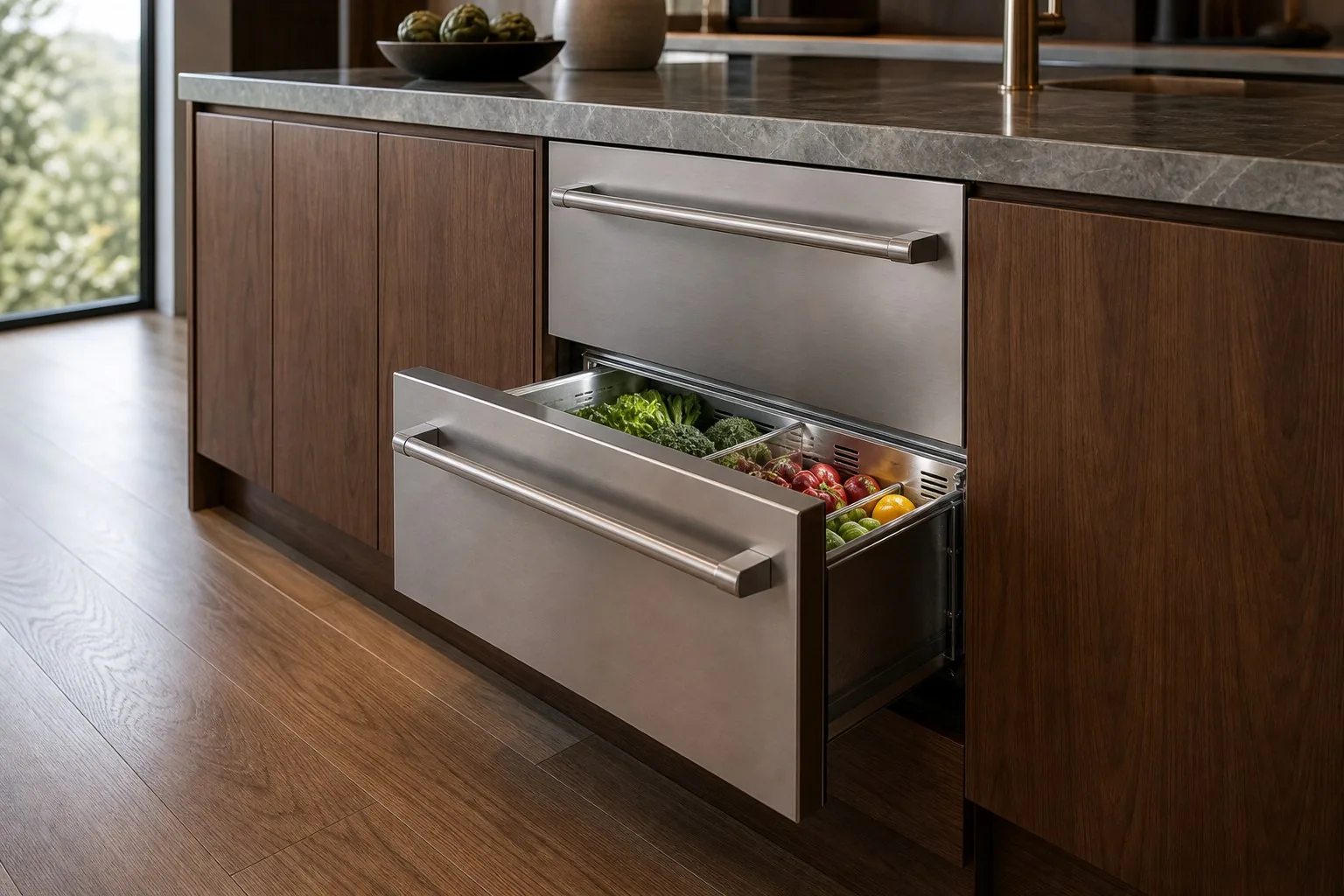
The traveling seal
A drawer gasket has to reseal on every push
Unlike a hinged door that closes against a fixed frame, a drawer gasket rides on the moving face and must land flat each time. After thousands of cycles the corners harden and stop compressing evenly — so the warm-drawer call is far more often a tired traveling seal than a refrigeration fault.
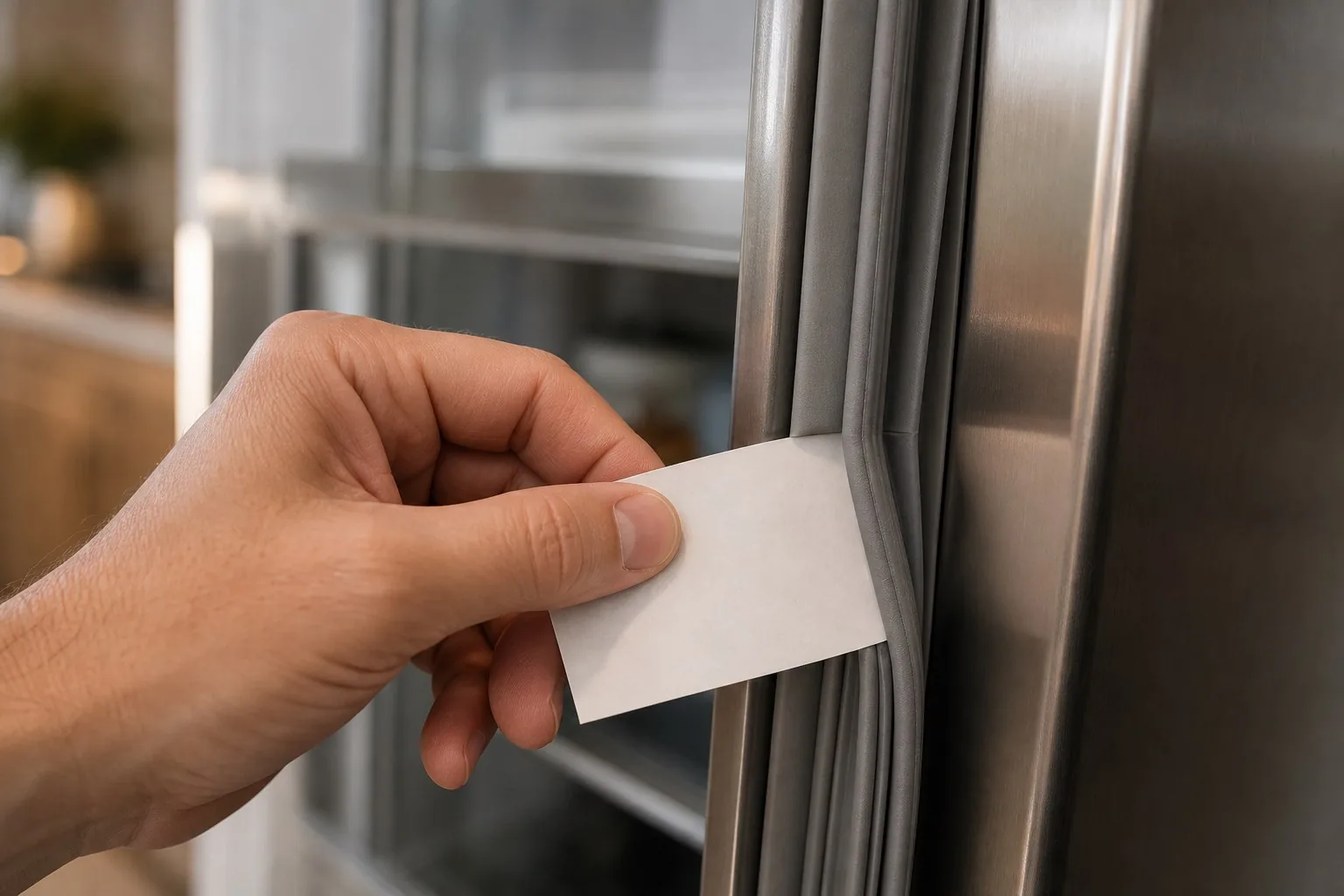
Test it yourself
The dollar-bill test, drawer edition
Close the drawer on a bill at each corner and the mid-front, then tug. If it slides out freely anywhere, the seal isn't biting there. Uneven grip across the face usually means the drawer needs re-squaring on its glides before the gasket can do its job.

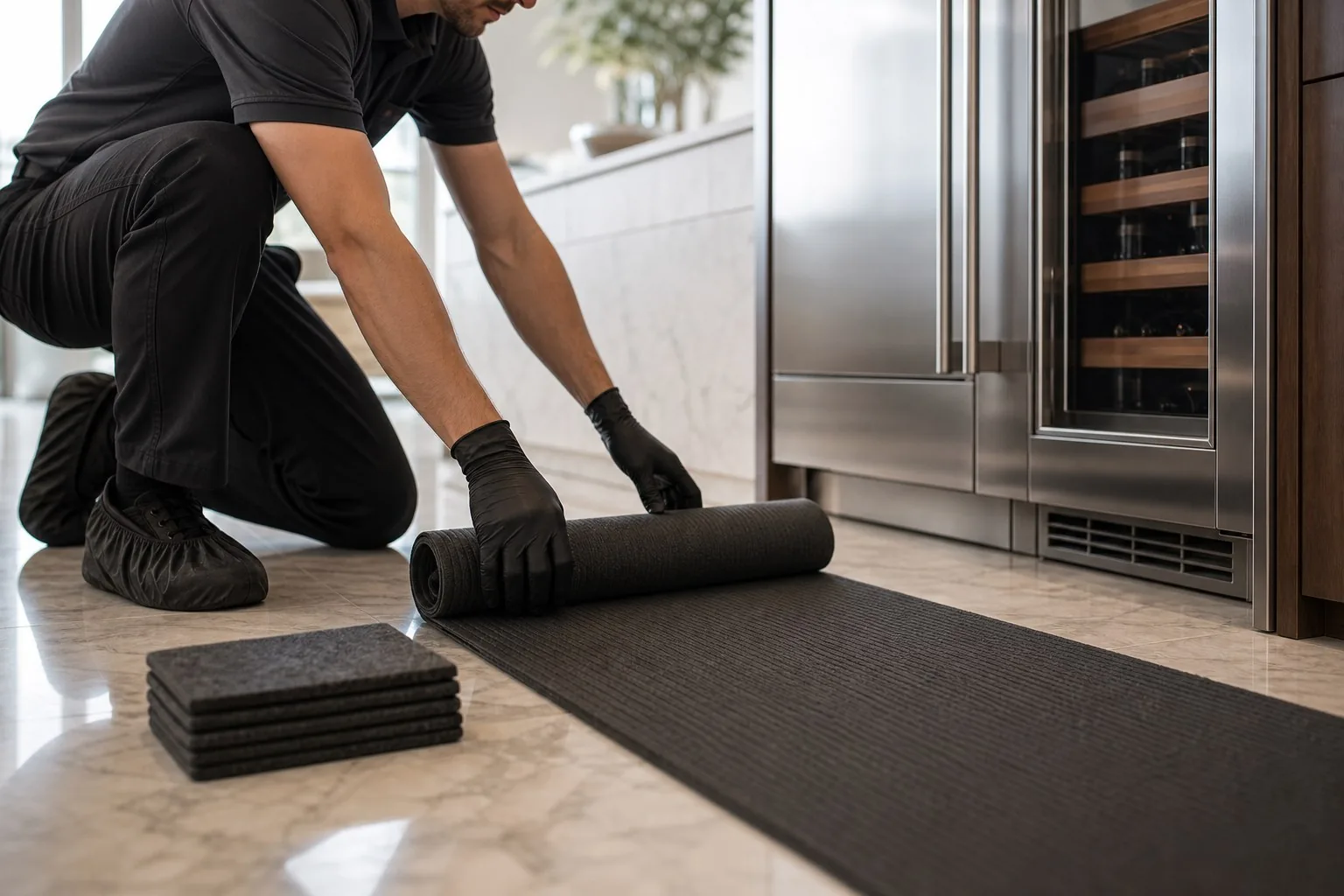
Before you book a warm-drawer visit
- Confirm the drawer seats fully flush and doesn't drift back open a finger's width
- Check the face gasket for hardened or flattened corners that no longer spring back
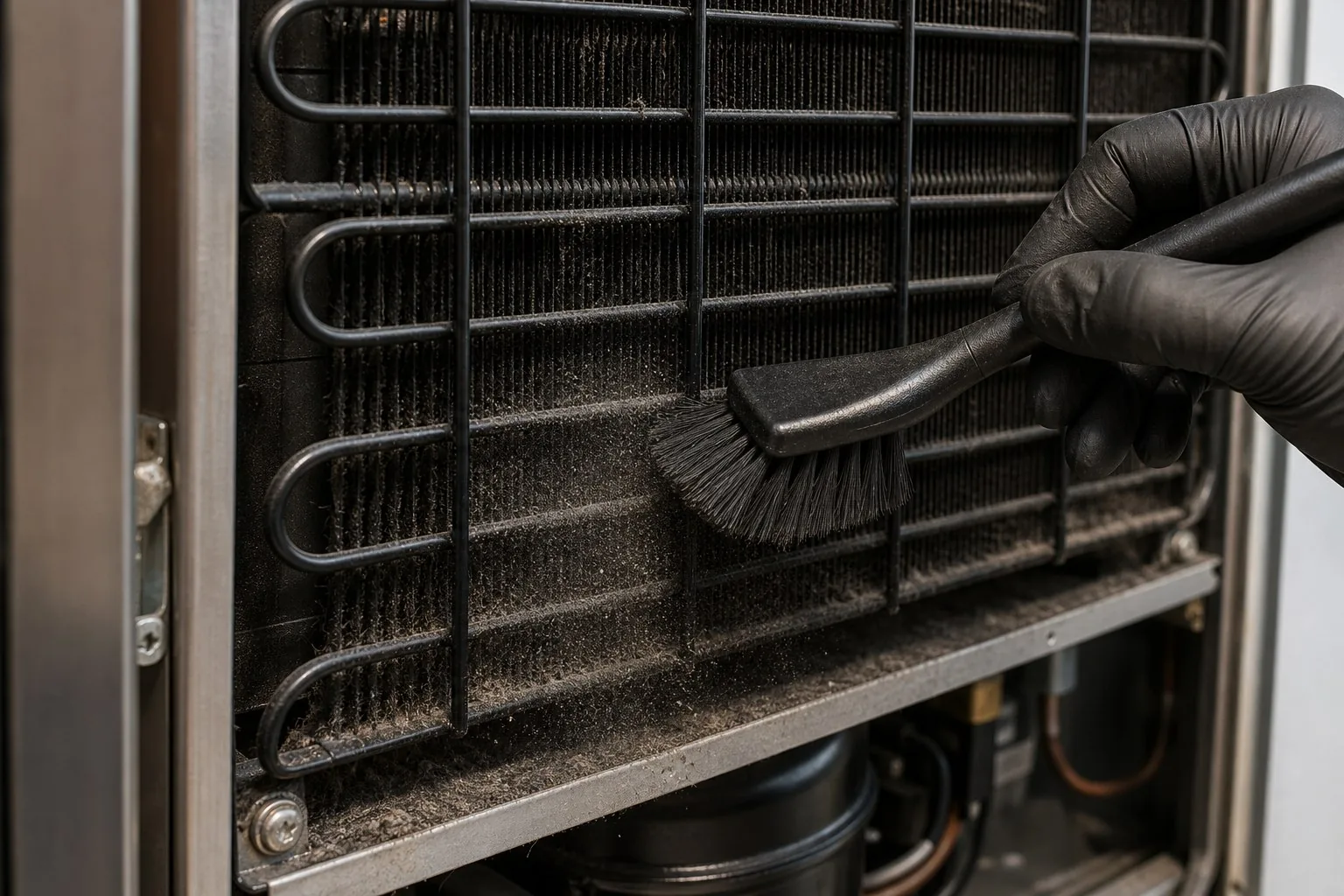
- Clear the toe-kick grille and base-cabinet condenser of dust and pet hair
- Verify the warm zone's setpoint hasn't been bumped on the independent control
- Look for racking — one corner sitting proud means worn glides, not a bad seal
- Note the model and serial from the plate left of the upper drawer interior
Why do refrigerator drawers fail differently than doors?
A built-in refrigerator or freezer drawer has no hinged door. Instead, the gasket is mounted on the moving drawer face and has to travel in and out with the drawer and reseat cleanly every single time it closes. That traveling seal — not a static door gasket — is the defining trait of drawer refrigeration, and it is where a large share of drawer faults begin. Add the glides, rollers, and self-close mechanism that carry a fully loaded drawer, and you have a wear pattern unlike any door unit in the kitchen.
What’s actually wrong with the gasket, glides, and self-close?
The face gasket hardens and compresses with age; when it no longer mates flat, the drawer leaks cold air and runs warm long before you notice frost. Glides and rollers wear unevenly under daily load, so the drawer racks, drags, or sits proud at one corner — and a drawer that doesn’t seat flush cannot seal. Self-close and soft-close mechanisms lose tension and let the drawer drift open a finger’s width, which is enough to lose temperature overnight. We re-tension or replace the slide hardware, re-square the drawer, and confirm the face gasket reseats with even compression across the whole front.
Independent zones and the base-cabinet condenser
Integrated refrigerator drawers typically run independent zones with their own setpoints and sensors, so we read each zone separately rather than assuming the whole unit failed. Because these units live low in base cabinetry, the condenser is tucked behind a toe-kick grille that traps far more dust than a door unit’s coil — so we clear it as part of every drawer service. On Sub-Zero integrated refrigerator drawers, the model and serial plate sits inside the cabinet to the left of the upper drawer; we read it before sourcing genuine OEM gaskets or slide parts so the seal matches the exact unit.
How drawer symptoms map to the fix
Reading the drawer’s behavior before a visit tells us whether it’s a seal, a slide, or the refrigeration that needs attention:
| Symptom or sign | Likely cause | What we do |
|---|---|---|
| One drawer warm, the other cold | Hardened traveling gasket or racked drawer in that zone | Replace the face gasket, re-square the drawer, isolate the zone |
| Drawer drifts open a finger’s width | Worn self-close tension or slide rollers | Re-tension or replace the self-close hardware and rollers |
| Drawer drags or sticks closing | Worn or fouled glides and rollers | Clean, re-tension, or replace the slide set |
| Both drawers slowly warming | Dust-choked toe-kick condenser | Clear the base-cabinet condenser and verify the fan |
| Warm zone with a good seal | Drifted thermistor on the independent control | Test and replace the zone’s temperature sensor |
Where these drawers live in Bay Area kitchens
Drawer refrigeration is a favorite in Bay Area island and butler’s-pantry layouts — from Los Altos Hills and Atherton to Danville and Blackhawk — where homeowners want chilled storage at counter height beside the cooktop. Two local realities punish these units. Inland Tri-Valley kitchens hit 90–100°F in summer, and a drawer’s toe-kick condenser, already dust-trapped and worsened by wildfire-season ash, forces long compressor runs that magnify a marginal seal. We check the traveling gasket, glide alignment, and that low condenser first, isolate the warm zone, and correct it in a single careful visit that protects the custom cabinetry around it.
Drawer units share their refrigeration logic with the rest of the kitchen, so the same diagnostic path applies to Sub-Zero repair across the lineup, to the larger built-in refrigerator repair we handle, and to compact undercounter refrigerator repair under islands and bars. If a drawer’s warm-zone problem turns out to run deeper than the seal, our guide to a Sub-Zero not cooling walks through how the airflow, defrost, and sealed system are tested in order.
Frequently asked questions
Why is my Sub-Zero refrigerator drawer warm?
On a drawer unit the gasket rides on the moving drawer face and must reseat perfectly each time you push it closed. A worn, hardened, or misaligned face gasket — or a drawer that no longer seats flush on its glides — is the most common reason a drawer runs warm.
My refrigerator drawer won't slide or close fully — what's wrong?
Drawer glides, rollers, and the self-close mechanism take constant load from a drawer packed with food. A drawer that drags, racks side to side, or pops back open needs the slide hardware re-tensioned or replaced and the drawer re-squared so it seats flush and seals again.
Why is one drawer cold and the other warm?
Most integrated drawer units run independent zones with separate setpoints and sensors, so one warm drawer points to that drawer's own face gasket, glide alignment, or thermistor — not the whole unit. We isolate the failing zone before opening anything up.
Can panel-ready refrigerator drawers be repaired without ruining the custom front?
Yes. The custom cabinet panel detaches from the drawer with the correct hardware, is set aside on a protected surface during service, and is remounted and re-shimmed to sit flush with the surrounding millwork. Protecting the integrated front is part of the job.
What clients say
4.9 · 327 reviews
My island refrigerator drawer ran warm while the one above stayed cold. The tech showed me the face gasket — the traveling seal that has to reseat on every push — had hardened at the corners. New OEM gasket, re-squared the drawer on its glides, and it held temperature. Smart, tidy work.
Our refrigerator drawer dragged and kept popping back open a finger's width, losing cold overnight. He re-tensioned the worn slide hardware, replaced a roller, and re-seated it flush so the seal finally bit. The dollar-bill test passed at every corner afterward. One clean visit.
Panel-ready drawers under the island, so I was nervous about the custom fronts. They detached the cabinet panel, set it on a protected surface, cleared the dust-choked toe-kick condenser, then fixed the warm zone's thermistor and remounted everything flush. Careful with the millwork the whole time.