
Quick answers
- Why is my built-in refrigerator not cooling?
- Most often a dirty condenser, a defrost failure icing the evaporator, a stalled evaporator fan, or a worn door gasket. Built-ins run hard in tight cabinets, so the condenser clogs fast. Clean it, check the seal, and wait a day before judging.
- Can you pull a built-in fridge without damaging my cabinets?
- Yes — cabinet-safe removal is the whole point of a specialist. We protect the flooring, release the integrated trim and panels correctly, and ease the unit out on its own path so custom cabinetry and stone surrounds stay untouched.
- Why is the top of my built-in warm but the bottom cold?
- Cold is moved from the freezer section through a fan and damper. If that airflow is blocked by frost or a stalled fan, one zone drifts warm while the other stays cold. That split points the diagnosis at defrost, fan, or damper rather than the compressor.
- How often should a built-in refrigerator condenser be cleaned?
- Every three to six months in most Bay Area homes — more often inland where dust and wildfire-season ash settle on the coil. Built-ins hide the condenser behind the grille, so it clogs quietly and the unit overworks long before anyone notices.
Heat rejection
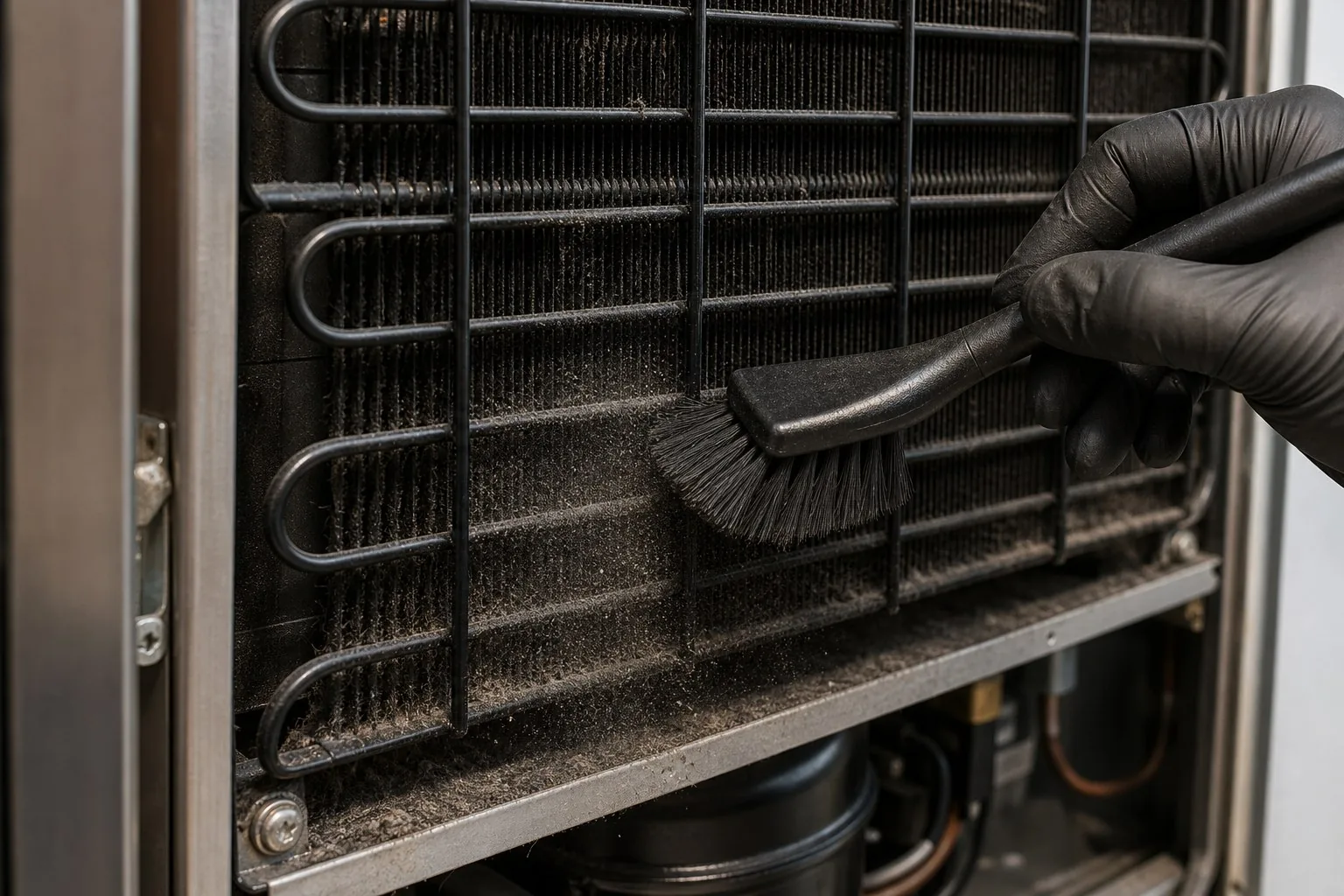
The top-mounted coil is the bottleneck
Built-ins push heat up through a grille into a sealed soffit, not out the back into open air. Lint and ash pack the fins quickly, the compressor runs minutes longer per cycle, and fresh-food temperatures creep up before anyone notices a problem. Most warm built-ins clear once the coil breathes again.
Before you book, rule these out
- Vacuum the grille and any visible condenser fins
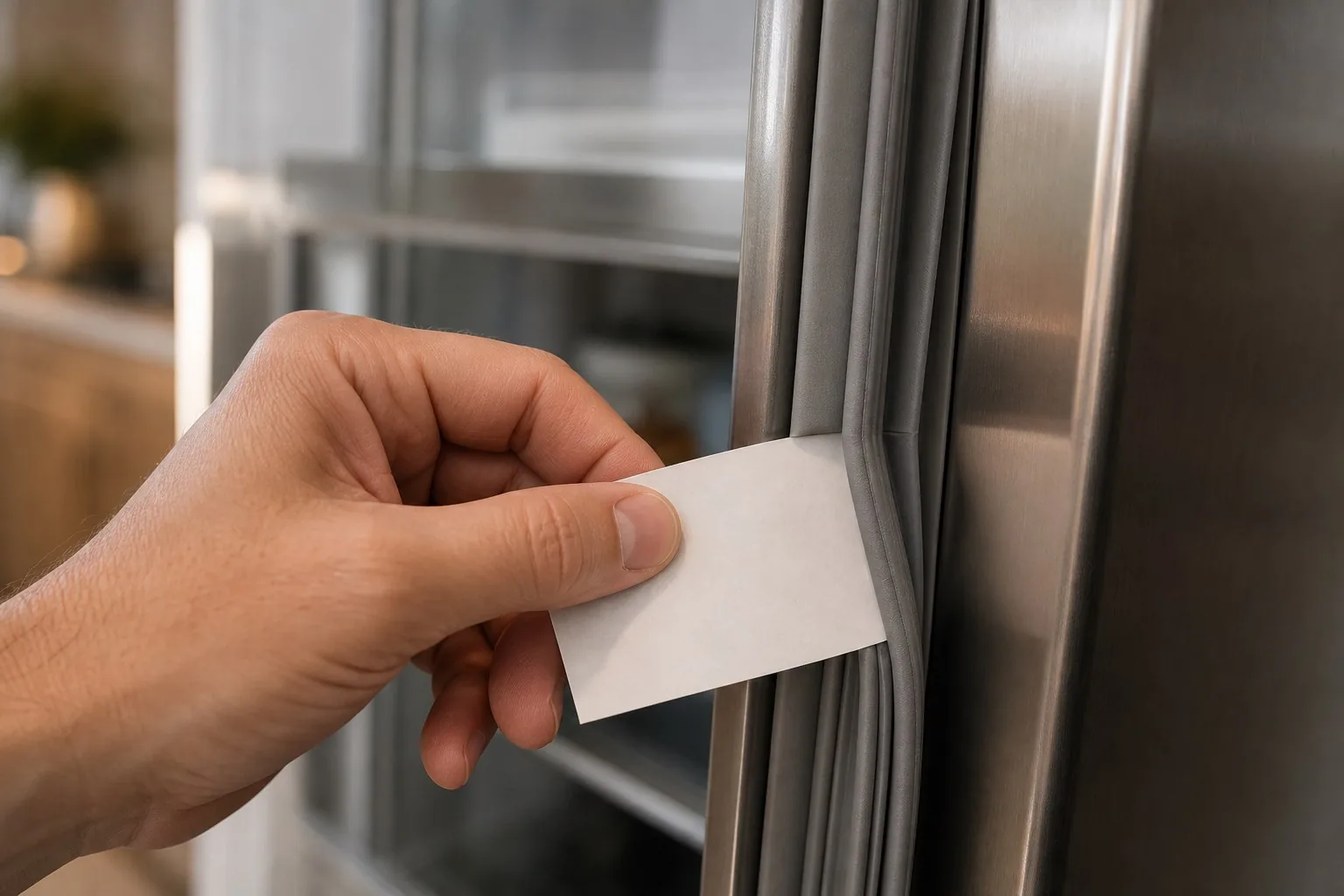
- Confirm both doors close fully and the seal grips a dollar bill all the way around
- Check nothing inside blocks the rear or floor air vents
- Give the unit a full 24 hours after cleaning before judging temperature
- Note whether one zone is warm while the other stays cold
Built-ins are part of the kitchen, not just an appliance
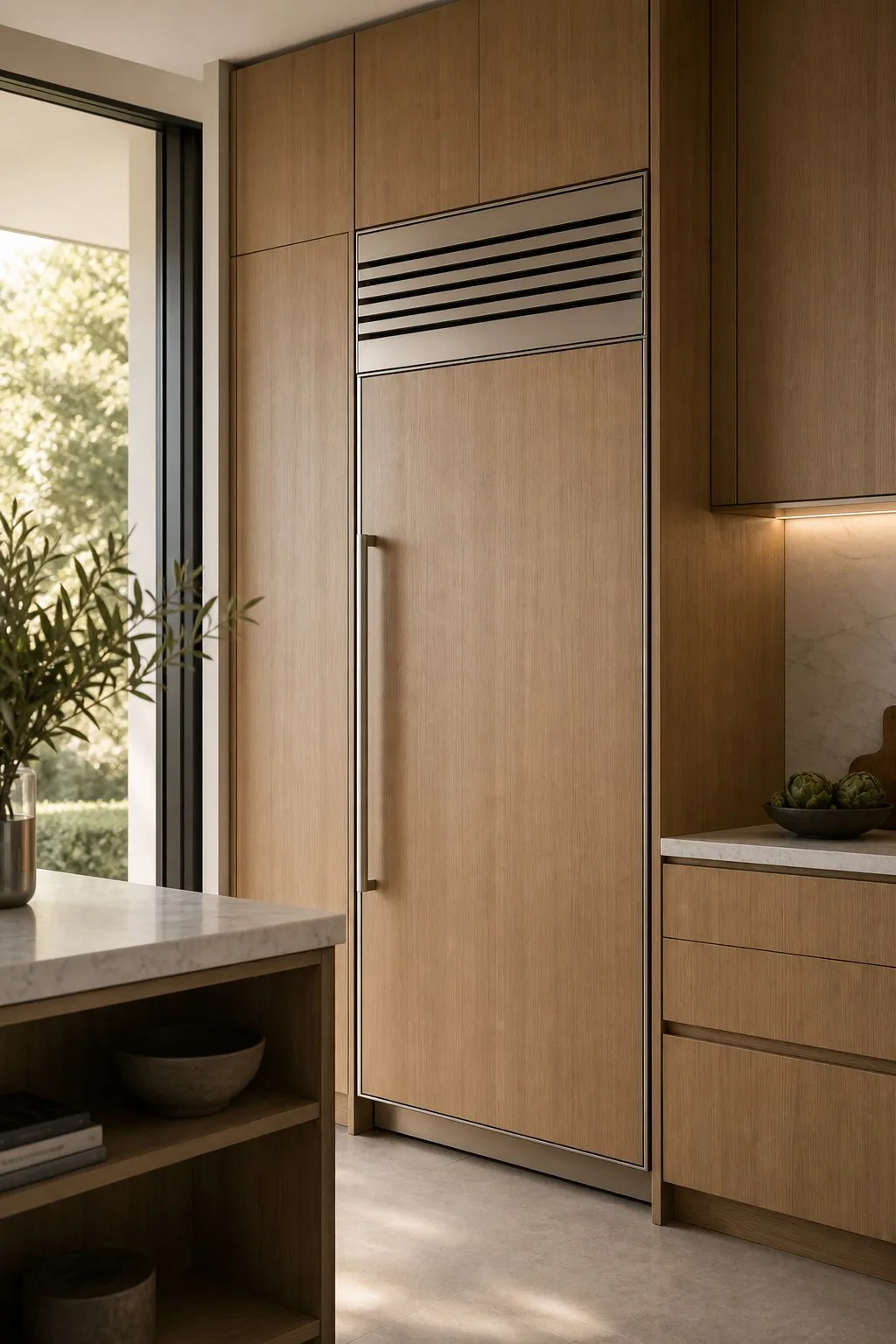
A built-in refrigerator is engineered to sit flush with custom cabinetry, fronted with panels or stainless trim and fed by a top-mounted condenser tucked behind the grille. That installation is exactly what makes service different. The unit can’t simply be wheeled out — it has to be released and eased forward on a planned path so cabinet sides, stone surrounds, and flooring stay unmarked. Cabinet-safe removal is the first skill a built-in deserves, and the reason a generalist’s “we’ll just slide it out” can cost more than the repair. Most built-ins we service are Sub-Zero, so the diagnostic mirrors our general Sub-Zero refrigerator repair approach: rule out the cheap causes first, confirm the real fault, then fix to spec.
Why does a built-in refrigerator run harder than a freestanding one?
Because the condenser lives in a tight, top-mounted space, it sheds heat into a confined area and collects dust faster than a freestanding fridge. That single fact drives most of what we see: a coil that can’t reject heat makes the compressor run long, temperatures drift, and minor faults turn into no-cooling calls.
Why is my built-in warm on the fresh-food side but cold in the freezer?
That split almost always means cold is being made but not delivered, not that the compressor has died. Built-ins move cold from the freezer section to the fresh-food side through an evaporator fan and a damper; when frost, a stalled fan, or a stuck damper blocks that airflow, one zone drifts warm while the other holds. A failing sealed system, by contrast, loses both compartments together, which is why the not-cooling diagnosis starts by asking which zones are affected.
Real failure modes
- Dirty or blocked condenser — the most common cause, and the cheapest to rule out.
- Defrost failure — frost builds on the evaporator and chokes the airflow that feeds the fresh-food side.
- Evaporator fan motor — no fan, no cold air delivered, even with a healthy compressor.
- Worn door gasket — built-in doors are heavy; a tired seal lets warm kitchen air in around the perimeter.
- Control or thermistor drift — the board misreads temperature and stops cooling early.
On Sub-Zero classic built-ins (the BI series, for example) a long-running compressor often shows as a service indicator that’s really just a clogged condenser — clean first, diagnose second.
| Symptom or sign | Likely cause | What we do |
|---|---|---|
| Warm fresh-food side, freezer still cold | Frost-choked evaporator, stalled fan, or stuck damper | Trace the airflow path, clear ice, replace the OEM fan or damper |
| Both compartments slowly drift warm | Dirty condenser or sealed-system fault | Clean the coil and re-check; gauge and amp-test the sealed loop if it persists |
| Frost or condensation around the door edge | Tired door gasket failing the dollar-bill test | Replace the OEM gasket on the affected door |
| Unit runs almost constantly, service light on | Clogged top-grille condenser overworking the compressor | Brush and vacuum the coil, verify heat rejection before any sealed-system talk |
For the full price bands behind each of these fixes, see our Sub-Zero repair cost breakdown, and for column-format integrated units the refrigerator column repair page covers the same cabinet-safe approach.
Bay Area context
Estate kitchens from Hillsborough to Blackhawk are built around these units, and inland heat in the Tri-Valley pushes condensers harder through summer. We log temperatures, confirm the fault, and load the truck for the real repair so a built-in comes back to spec in one careful visit.
Frequently asked questions
Why is my built-in refrigerator not cooling?
Most often a dirty condenser, a defrost failure icing the evaporator, a stalled evaporator fan, or a worn door gasket. Built-ins run hard in tight cabinets, so the condenser clogs fast. Clean it, check the seal, and wait a day before judging.
Can you pull a built-in fridge without damaging my cabinets?
Yes — cabinet-safe removal is the whole point of a specialist. We protect the flooring, release the integrated trim and panels correctly, and ease the unit out on its own path so custom cabinetry and stone surrounds stay untouched.
Why is the top of my built-in warm but the bottom cold?
Cold is moved from the freezer section through a fan and damper. If that airflow is blocked by frost or a stalled fan, one zone drifts warm while the other stays cold. That split points the diagnosis at defrost, fan, or damper rather than the compressor.
How often should a built-in refrigerator condenser be cleaned?
Every three to six months in most Bay Area homes — more often inland where dust and wildfire-season ash settle on the coil. Built-ins hide the condenser behind the grille, so it clogs quietly and the unit overworks long before anyone notices.
What clients say
4.9 · 327 reviews
Our built-in refrigerator drifted warm on the fresh-food side while the freezer stayed cold. The technician eased it out of the cabinetry without touching the stone surround, found the top-grille condenser packed solid, and cleaned it. Temperatures recovered in a day with no sealed-system work needed.
Frost was building on the evaporator behind our integrated panels and choking airflow. He diagnosed a failed defrost circuit, replaced the OEM part, and cleared the ice the same visit. Careful cabinet-safe pull, flooring protected the whole time, and one clean built-in refrigerator repair.
The top of our built-in ran warm but the bottom was fine. The tech traced it to a stalled evaporator fan rather than the compressor, had the motor on the truck, and airflow was restored that afternoon. Honest written quote, no upsell to a bigger repair.