
Quick answers
- What does Vacuum Condenser mean on a Sub-Zero?
- It means the compressor ran long or inefficiently, most often because the condenser is dirty. Clean the coils first. If temperatures are near normal you can hold the bell key about 15 seconds to clear it; if temps are still rising, leave it for the technician to diagnose.
- How do I reset a Sub-Zero refrigerator?
- For the classic bell/door-ajar key, a roughly 15-second hold clears many alarms once temperatures are normal. A full reset is a power-cycle — unplug about 5 minutes, then allow 24 hours to recover. Don't reset repeatedly just to mask a fault that keeps returning.
- Are Sub-Zero error codes the same on every model?
- No. Codes and reset steps vary by series and control board, which is why the rating-plate model number matters — it tells us exactly which logic your unit uses. A 700-series board, a classic built-in, and a newer column can all report faults differently.
- Why does my Sub-Zero keep showing the condenser alarm in summer?
- Inland Bay Area heat and wildfire-season ash load the condenser faster, so a coil that was fine in spring chokes by August. The compressor works harder, run times climb, and the alarm returns. Clean the condenser; if it recurs within weeks, have the sealed system checked.
Error codes & what they mean
| Code / alarm | What it means | What to do |
|---|---|---|
Vacuum Condenser / Service (flashing) | Compressor ran long or inefficiently — most common on older 600-series; usually a dirty condenser. | Clean the condenser, then hold the bell (door-ajar) key ~15 sec to clear — only if temps are near normal. Don't clear while temps are rising. |
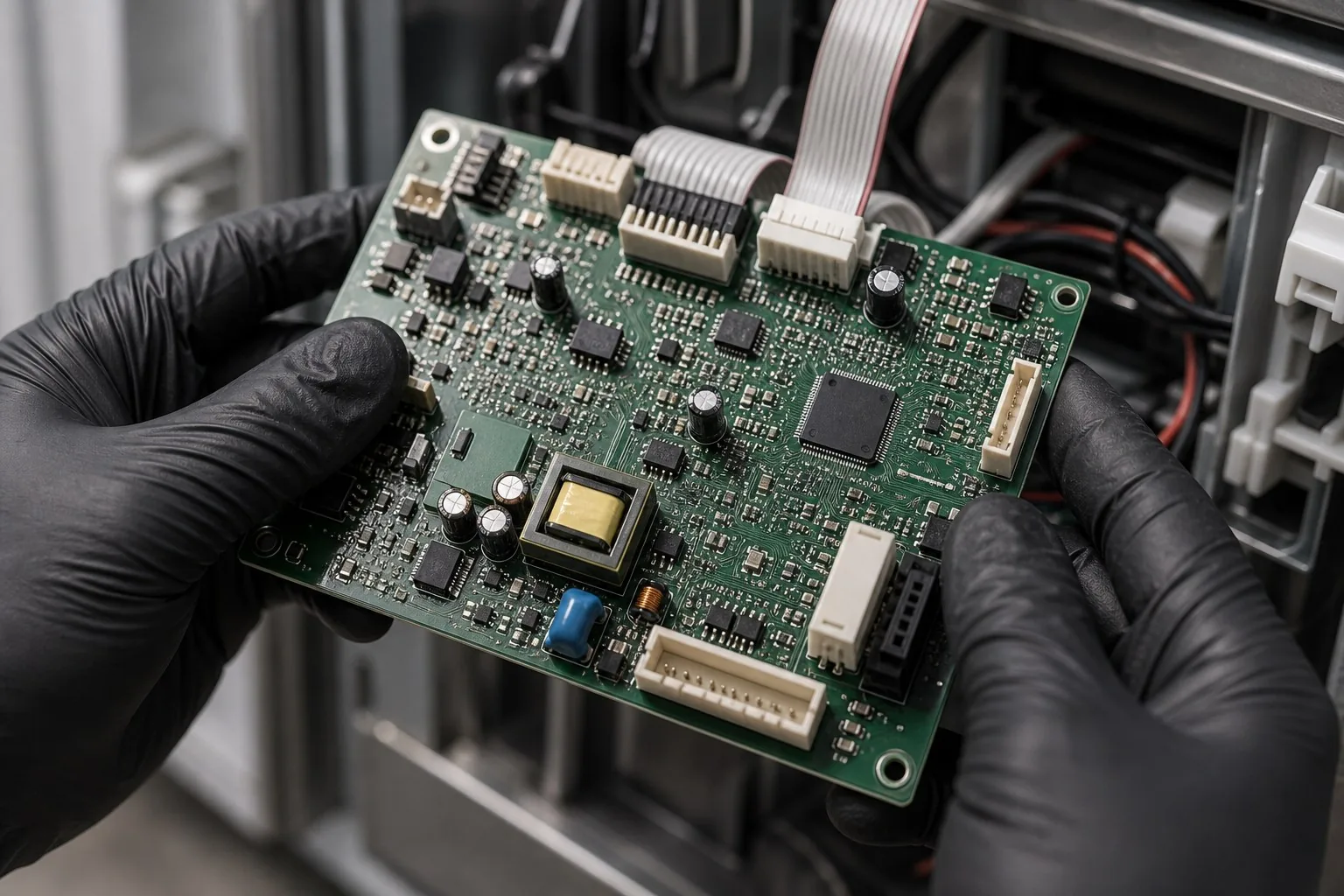
EC-series control-board codes (model-specific) | Electronic control-board fault codes on newer boards; the exact letters/number vary by model and logic version. | Read the rating-plate model number, then diagnose the code against that specific board — there is no single universal EC chart. |
Service light (steady) | The unit is requesting service — a maintenance reminder or a detected fault that hasn't yet shown as a temperature problem. | Note the symptom and book a diagnostic; don't ignore a steady service indicator even if the food still feels cold. |
Door-ajar alarm (tone / icon) | A door or drawer was left open, or a gasket/hinge is letting it sit slightly open — common on tall columns and drawer units. | Confirm the door fully closes and seals (dollar-bill test). Persistent alarms with a closed door point to a worn gasket or a misaligned door. |
Why the code alone isn't enough
The rating plate decides which chart your code belongs to
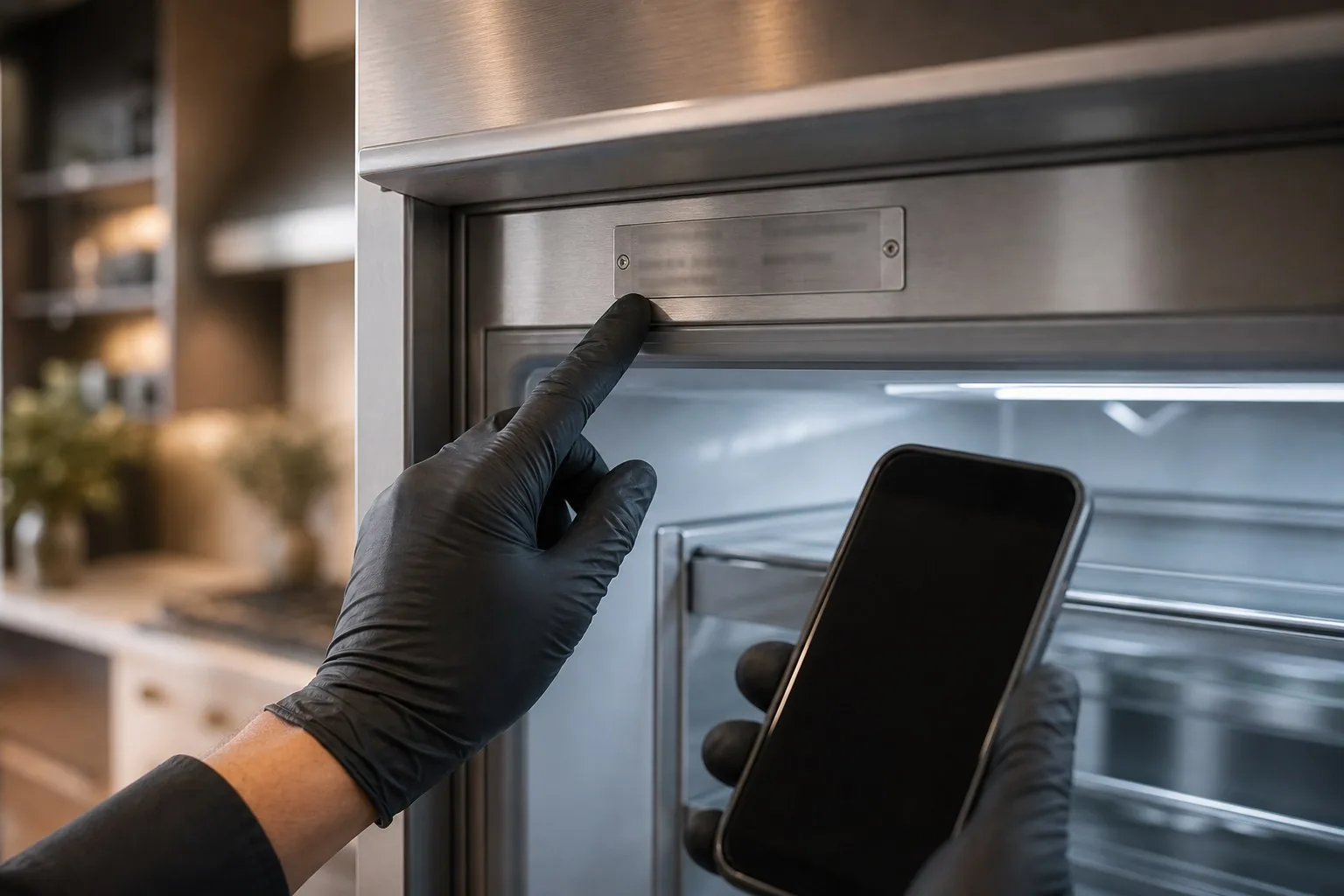
Two Sub-Zeros can flash what looks like the same fault and mean different things, because a 600-series cabinet, a 700-series board, and a newer integrated column each run their own logic. Find the model number before you search a code: Over/Under and side-by-side units carry it inside the door at the top hinge; drawer and 700-series units hide it to the left of the upper drawer.
Read the code, then read the temperatures
A Sub-Zero code is a clue, not a verdict. The single most useful thing you can do before calling is compare what the display says with an independent thermometer in both compartments. Agreement plus long compressor run times points to capacity — a fouled condenser or a sealed-system loss. A normal display with food that’s gone warm usually means a sensor is reading wrong, not that the system has failed. Note both numbers and the code, and the diagnosis is half done before a technician arrives.
What do the common Sub-Zero alarms actually mean?
The Vacuum Condenser / Service alarm is the one most Bay Area owners see. It fires when the compressor has run long or inefficiently, and the cause is almost always a dirty condenser. It’s especially common on older 600-series cabinets, but any unit will trip it once the coil is choked. The steady Service light is broader — the unit is asking to be looked at, sometimes before temperatures ever drift. The EC-series control-board codes are model-specific: the exact letters and number depend on the board and logic version, so there is no single universal chart. Read the rating-plate model number — our model number guide shows exactly where it hides on each series — then match the code to that board. If the alarm is paired with a cabinet that’s genuinely warm, work through the Sub-Zero not cooling diagnosis alongside the code rather than chasing the display alone.
Why does my Sub-Zero keep tripping the condenser alarm in summer?
This region is hard on condensers. Inland Tri-Valley, Diablo Valley, and South Bay summers push 90–100°F, and wildfire-season ash settles into coils faster than dust ever did. A condenser that ran clean in spring can choke by late August, driving up run times until the Vacuum Condenser alarm returns. Coastal and bayside estate kitchens add salt-laden fog that corrodes condenser tubing over years, and hard water leaves scale that compounds the load. Cleaning the condenser every three to six months is the cheapest defense against repeat alarms — the maintenance guide covers the routine, and the troubleshooting guide walks the broader symptom-by-symptom logic when a code points somewhere a cleaning won’t fix.
When clearing a code is the wrong move
Clearing an alarm while temperatures are still rising only hides a live fault — the food keeps warming while the display looks calm. Clear a code only after the cabinet has recovered to near its setpoint, and never reset repeatedly to silence a code that keeps coming back. A recurring alarm after a proper condenser cleaning means the sealed system or control board needs a diagnostic. We carry genuine OEM parts matched to the rating-plate model and handle sealed systems under EPA-608, so a recurring code gets a real fix rather than another reset. If the diagnosis lands on the sealed system or compressor, that’s the costliest job a Sub-Zero owner can face — though the 12-year sealed-system warranty often covers a qualifying unit, so we verify the model and build date first. For the wider service and what each fault tends to cost, see the Sub-Zero repair hub.
Frequently asked questions
What does Vacuum Condenser mean on a Sub-Zero?
It means the compressor ran long or inefficiently, most often because the condenser is dirty. Clean the coils first. If temperatures are near normal you can hold the bell key about 15 seconds to clear it; if temps are still rising, leave it for the technician to diagnose.
How do I reset a Sub-Zero refrigerator?
For the classic bell/door-ajar key, a roughly 15-second hold clears many alarms once temperatures are normal. A full reset is a power-cycle — unplug about 5 minutes, then allow 24 hours to recover. Don't reset repeatedly just to mask a fault that keeps returning.
Are Sub-Zero error codes the same on every model?
No. Codes and reset steps vary by series and control board, which is why the rating-plate model number matters — it tells us exactly which logic your unit uses. A 700-series board, a classic built-in, and a newer column can all report faults differently.
Why does my Sub-Zero keep showing the condenser alarm in summer?
Inland Bay Area heat and wildfire-season ash load the condenser faster, so a coil that was fine in spring chokes by August. The compressor works harder, run times climb, and the alarm returns. Clean the condenser; if it recurs within weeks, have the sealed system checked.
Where is the model number I need to look up a code?
On Over/Under and side-by-side units it's inside the door near the top hinge; on classic French-door models it's inside the left door near the top hinge; on Designer/Integrated, drawer, and 700-series units it's inside the cabinet to the left of the upper drawer.
What clients say
4.9 · 327 reviews
Our 600-series kept flashing the Vacuum Condenser alarm. The technician cleaned the choked condenser, confirmed temperatures had recovered, then held the bell key to clear it the right way. He explained why clearing it earlier just hides the fault. No needless sealed-system upsell.
A newer integrated column threw an EC control-board code I couldn't find online. He read the rating-plate model first and matched the code to that exact board instead of a generic chart, then replaced a drifted thermistor with an OEM part. The Sub-Zero error code finally made sense.
The condenser alarm kept returning every few weeks through summer. He found inland heat and ash were reloading the coil, but a recurring alarm after a proper clean meant a sealed-system check. He verified a slow refrigerant loss under EPA-608 rather than resetting it again. Straight answers.