
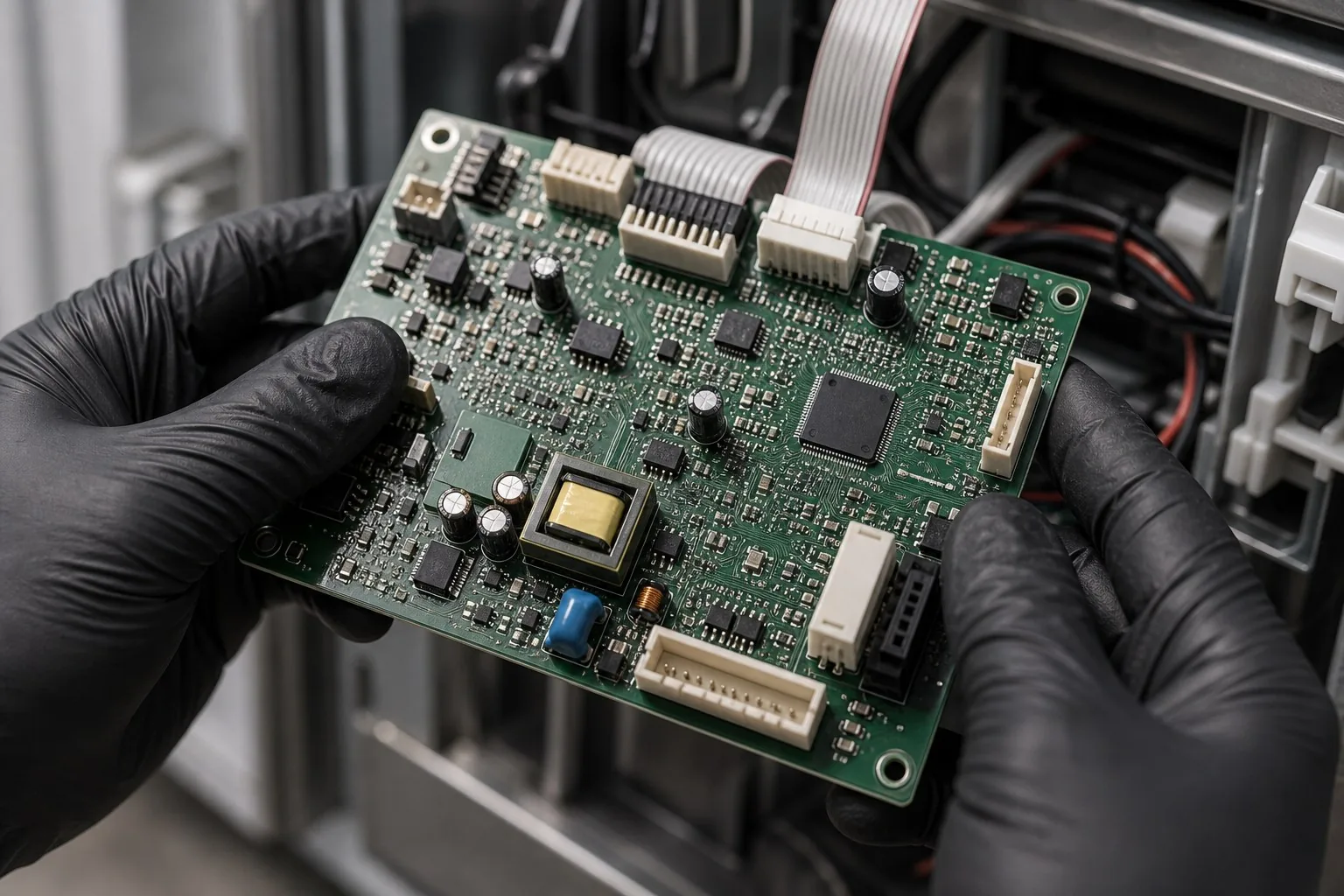
Quick answers
- How do I troubleshoot a Sub-Zero refrigerator?
- Pair the symptom with the display, read both compartment temperatures with your own thermometer, then clean the condenser and wait 24 hours. If the fridge recovers it was overworked; if it stays warm or shows a code, match the symptom to the cause below and book a San Ramon diagnostic.
- What do Sub-Zero refrigerator troubleshooting codes mean?
- Sub-Zero codes are model-specific, not universal. The common Vacuum Condenser / Service alarm means the compressor ran long, usually from a dirty condenser. EC-series board codes vary by logic version. Read the rating-plate model number first, then check the dedicated Sub-Zero error-codes page.
- What's the first thing to check in Sub-Zero fridge troubleshooting?
- The condenser. A dust- or ash-choked coil is the most common root cause behind no-cooling, recurring alarms and long run times. Brush and vacuum it behind the upper grille, give the unit 24 hours, and many San Ramon problems clear without a part at all.
- My Sub-Zero fridge is warm but the freezer is cold — what's wrong?
- That points to airflow or defrost, not a dead compressor. Cold is made in the freezer and moved to the fridge by a fan through a damper; an iced evaporator, stalled fan or stuck damper stops that delivery. See the not-cooling page for the full diagnosis path.
Troubleshoot by symptom, not by guess
Every Sub-Zero problem starts as a symptom you can see — a warm fridge, a flashing display, water on the floor, no ice. The fastest path to a fix is to pair that symptom with the display reading and the actual temperatures, then work down to the likely cause. This hub does exactly that: it gives you a first-steps triage and a symptom-to-cause map, then points you to the deep page that handles your specific fault. Whether you’re in San Ramon, the broader Tri-Valley, or anywhere across the Bay Area, the logic is the same.
The symptom-to-cause map
| Symptom or sign | Likely cause | Where to go next |
|---|---|---|
| Fridge warm, freezer cold | Airflow or defrost — iced evaporator, stalled fan, stuck damper | not-cooling page |
| Everything warm, long run times | Sealed system or a severely choked condenser | clean coil, then sealed-system & compressor |
| Flashing display / Service light | Vacuum Condenser alarm or a board code | read the plate, then error-codes guide |
| Water inside or on the floor | Drain, defrost or water-line fault | leaking water |
| No ice or slow ice | Ice-maker assembly, water line, or hard-water scale | ice maker not working |
In short: fridge warm but freezer cold is almost always airflow or defrost, not a dead compressor, while everything warm with long run times points at the sealed system or a severely choked condenser. Clean the coil first either way — many San Ramon problems clear without a part.
Why do San Ramon kitchens fail in their own ways?
Because local conditions decide which symptom you’ll see first. Inland San Ramon and the Diablo Valley routinely hit 90–100°F in summer, so a condenser already loaded with dust simply can’t shed heat — the fresh-food side warms first and the Vacuum Condenser alarm returns by late August. Wildfire-season ash blankets that same upper grille within weeks, and homes with pets compound it. Closer to the coast and the fog line, salt-laden air corrodes condenser tubing and fan bearings, so stalled evaporator fans turn up more often. Hard water across the region scales the defrost components and ice circuit, accelerating leak and no-ice faults. And because so many of these units are built into hillside and gated estate kitchens with custom panels, condenser airflow is unforgiving and access takes planning.
When should I stop troubleshooting and book a repair?
Once you’ve cleaned the condenser, confirmed the doors seal, and waited a full 24 hours with no improvement — or the display shows a code while temperatures keep rising — troubleshooting is done and it’s time for a diagnostic. We carry genuine OEM parts matched to the rating-plate model and handle sealed systems under EPA-608, so a recurring symptom gets a real fix rather than another reset. You can preview the likely Sub-Zero repair cost before booking, and a regular San Ramon maintenance routine keeps most of these symptoms from returning. Browse the full Sub-Zero repair hub for every symptom and product line we service.
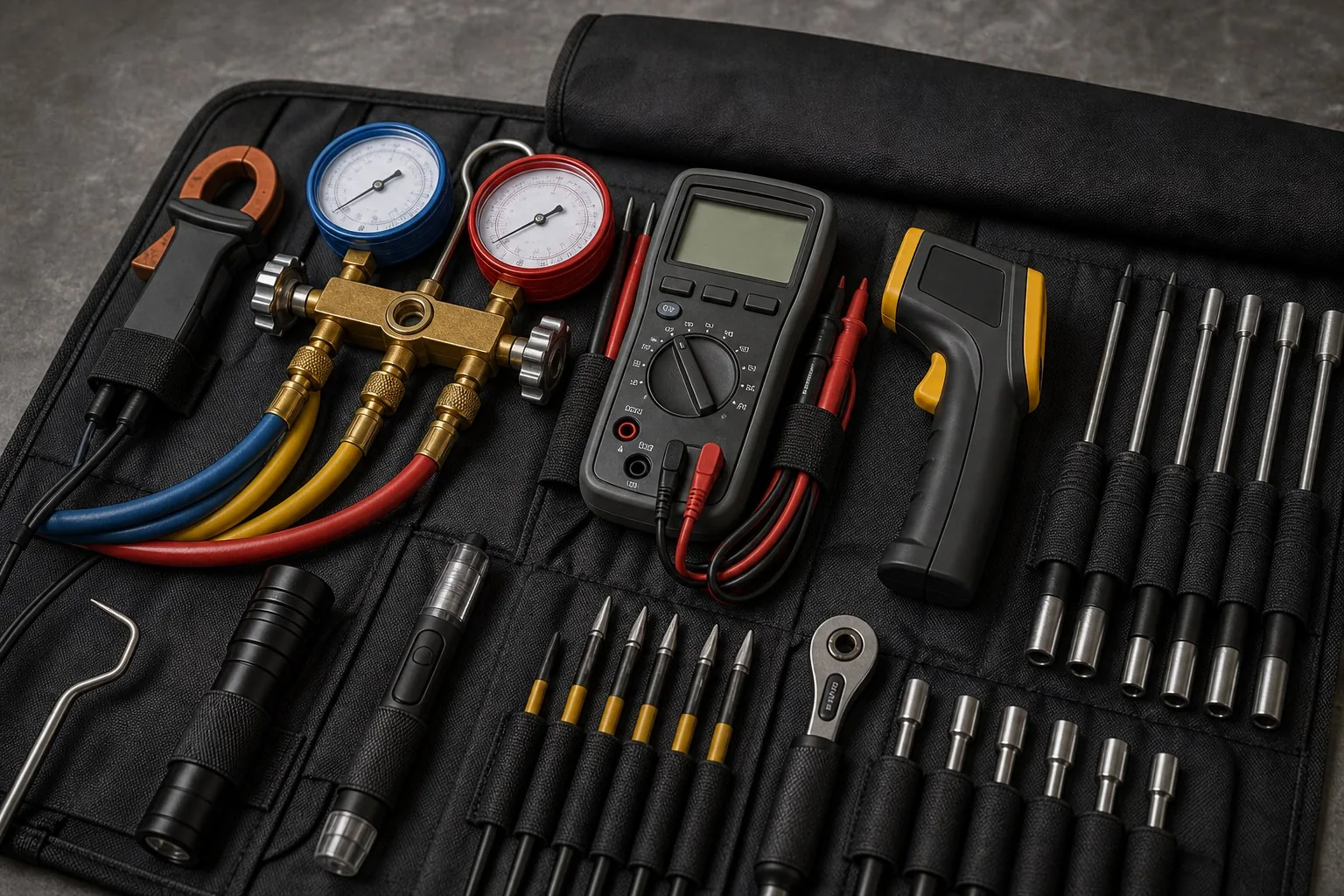
Why a thermometer beats the display
Read the real temperatures before you trust the panel
The single most useful troubleshooting move is to compare what the display claims with an independent thermometer in each compartment. Agreement plus long run times points to capacity — a fouled condenser or a sealed-system loss. A normal display over warming food usually means a sensor is reading wrong. Two numbers and the symptom solve half the diagnosis before anyone touches a tool.
First-steps Sub-Zero troubleshooting triage
- Note the symptom and the code togetherWrite down exactly what's wrong — warm fridge, warm freezer, leaking, flashing light — and any text on the display. The pairing narrows the cause faster than either clue alone.
- Read both temperatures with your own thermometerPut an independent thermometer in each compartment. Fresh-food near 37°F and freezer near 0°F is normal; the gap between them tells you whether it's airflow or capacity.
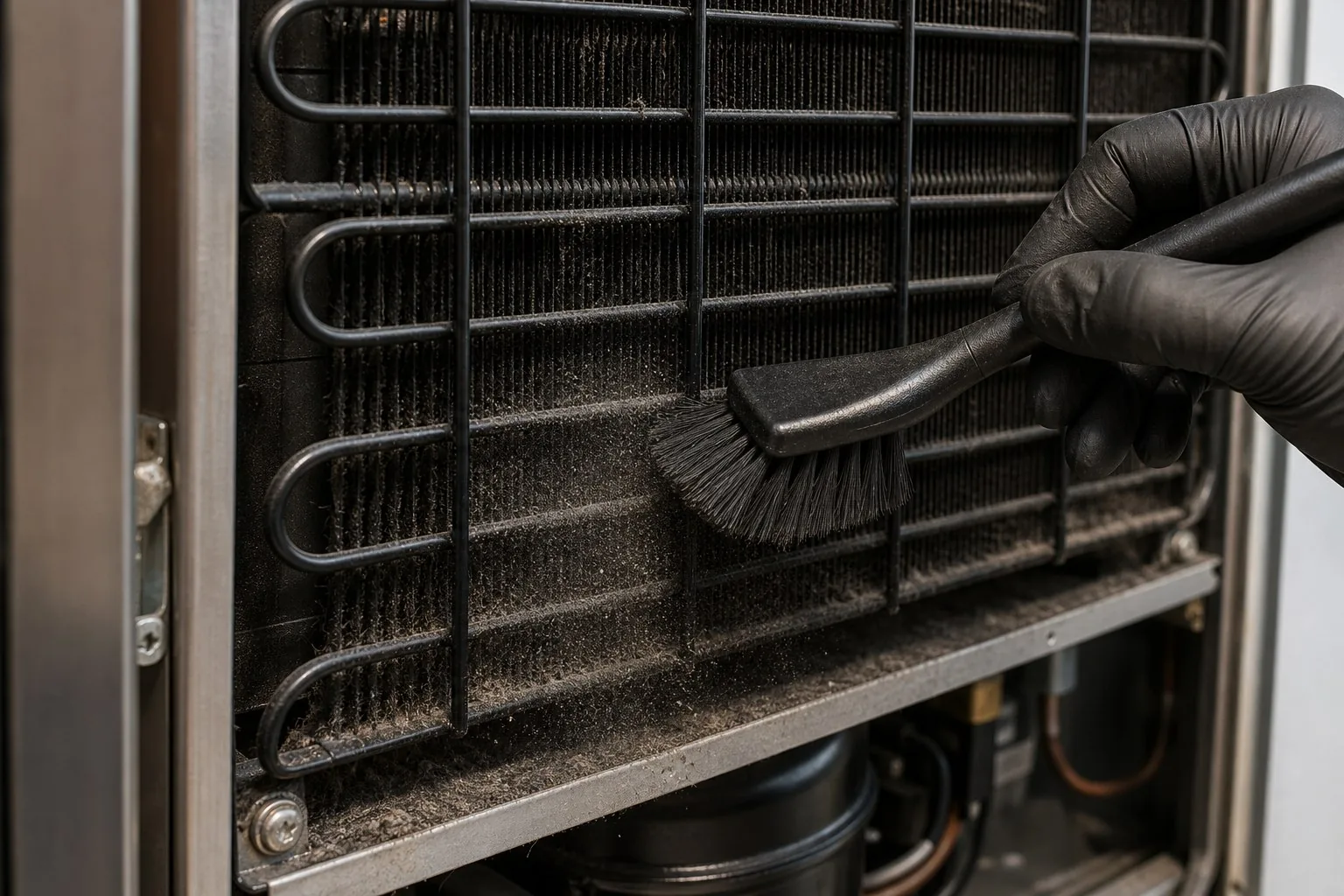
- Clean the condenserPull the upper grille, then brush and vacuum the condenser front to back. In dusty inland San Ramon or wildfire-season air, a choked coil is the single most common root cause.
- Wait 24 hours before judgingGive the cabinet a full day to recover after cleaning — never change the setpoint mid-test. A unit that recovers was simply overworked; one that stays warm has a real fault.
- Match the symptom to the deep pageStill wrong after 24 hours? Use the symptom-to-cause table below to jump to the not-cooling, ice-maker, leaking, sealed-system or error-code page, then book a diagnostic.
Symptom → likely cause → where to go next
- Fridge warm, freezer cold → airflow or defrost (iced evaporator, stalled fan, stuck damper). Go to the not-cooling page.
- Everything warm, long run times → sealed system or a badly choked condenser. Clean the coil, then see the sealed-system page.
- Flashing display / Service light → Vacuum Condenser alarm or a board code. Read the model plate, then the error-codes page.
- Water on the floor or inside → drain, defrost or water-line fault. Go to the leaking-water page.
- No ice or slow ice → ice-maker assembly, water line, or hard-water scale. Go to the ice-maker page.
- Door won't seal / condensation at the seal → worn gasket or misaligned door. Go to the door-gasket page.
Frequently asked questions
How do I troubleshoot a Sub-Zero refrigerator?
Pair the symptom with the display, read both compartment temperatures with your own thermometer, then clean the condenser and wait 24 hours. If the fridge recovers it was overworked; if it stays warm or shows a code, match the symptom to the cause below and book a San Ramon diagnostic.
What do Sub-Zero refrigerator troubleshooting codes mean?
Sub-Zero codes are model-specific, not universal. The common Vacuum Condenser / Service alarm means the compressor ran long, usually from a dirty condenser. EC-series board codes vary by logic version. Read the rating-plate model number first, then check the dedicated Sub-Zero error-codes page.
What's the first thing to check in Sub-Zero fridge troubleshooting?
The condenser. A dust- or ash-choked coil is the most common root cause behind no-cooling, recurring alarms and long run times. Brush and vacuum it behind the upper grille, give the unit 24 hours, and many San Ramon problems clear without a part at all.
My Sub-Zero fridge is warm but the freezer is cold — what's wrong?
That points to airflow or defrost, not a dead compressor. Cold is made in the freezer and moved to the fridge by a fan through a damper; an iced evaporator, stalled fan or stuck damper stops that delivery. See the not-cooling page for the full diagnosis path.
When should I stop troubleshooting and book a repair?
Once you've cleaned the condenser, confirmed the door seals, and waited 24 hours with no improvement — or if the display shows a code while temperatures keep rising. A warm box with food at risk is urgent; move perishables and book the soonest visit.
Can I reset a Sub-Zero to fix a problem?
A reset clears an alarm, not a fault. Holding the bell key about 15 seconds clears many codes once temperatures are normal, and a 5-minute power-cycle restarts the board. But resetting repeatedly only hides a live problem — a code that keeps returning needs a diagnostic.
What clients say
4.9 · 327 reviews
I followed the triage here — paired the symptom with the display, read both compartments with my own thermometer, cleaned the condenser, and waited 24 hours. The fridge recovered on its own; it had just been overworked. When a board code returned weeks later they came out and fixed it properly. Genuinely honest guidance.
Warm fridge, cold freezer. The symptom-to-cause map pointed me at airflow, not the compressor, before I called. The tech confirmed a stalled evaporator fan stopping cold-air delivery through the damper, replaced it with OEM, and saved me from panicking about a sealed-system bill. Spot-on troubleshooting.
Water pooling inside sent me to the leaking-water step, which flagged a drain fault. The tech found a frozen defrost drain line, cleared and warmed it, and confirmed it wasn't the sealed system. He also brushed the ash-choked condenser while there. One careful visit, clear written quote.