Quick answers
- How much is Wolf range repair in the Bay Area?
- Most Wolf range repairs run $200–$700 for red-knob igniters, spark modules, bake or broil elements, sensors and burner parts. A dual-fuel control board can run higher. The San Ramon diagnostic is a flat $89 and is waived with any repair once you approve the work.
- Who does Wolf gas range repair near me in San Ramon?
- We are an independent, diagnostic-first service for Wolf gas and dual-fuel ranges across San Ramon and the wider Bay Area. We test the igniter, spark module, element or sensor against spec, then fit genuine OEM parts matched to the model on the rating plate — never a swap-and-hope guess.
- Can you fix a Wolf dual fuel range repair near me?
- Yes. A dual-fuel Wolf range is two systems in one frame — gas burners on top, an electric convection oven below — so we diagnose both. Cooktop faults are igniters and gas flow; oven faults are elements, the RTD sensor and the control. We cover San Ramon, the Tri-Valley and the Bay Area.
- Do you handle Wolf rangetop repair as well as ranges?
- Yes. A Wolf rangetop is the drop-in gas cooking surface without an oven below, so the work centers on red-knob ignition, sealed-burner ports, caps and the shared spark module. We service rangetops, gas ranges and dual-fuel ranges across San Ramon and the Bay Area with genuine OEM parts.
The Wolf range, by product line
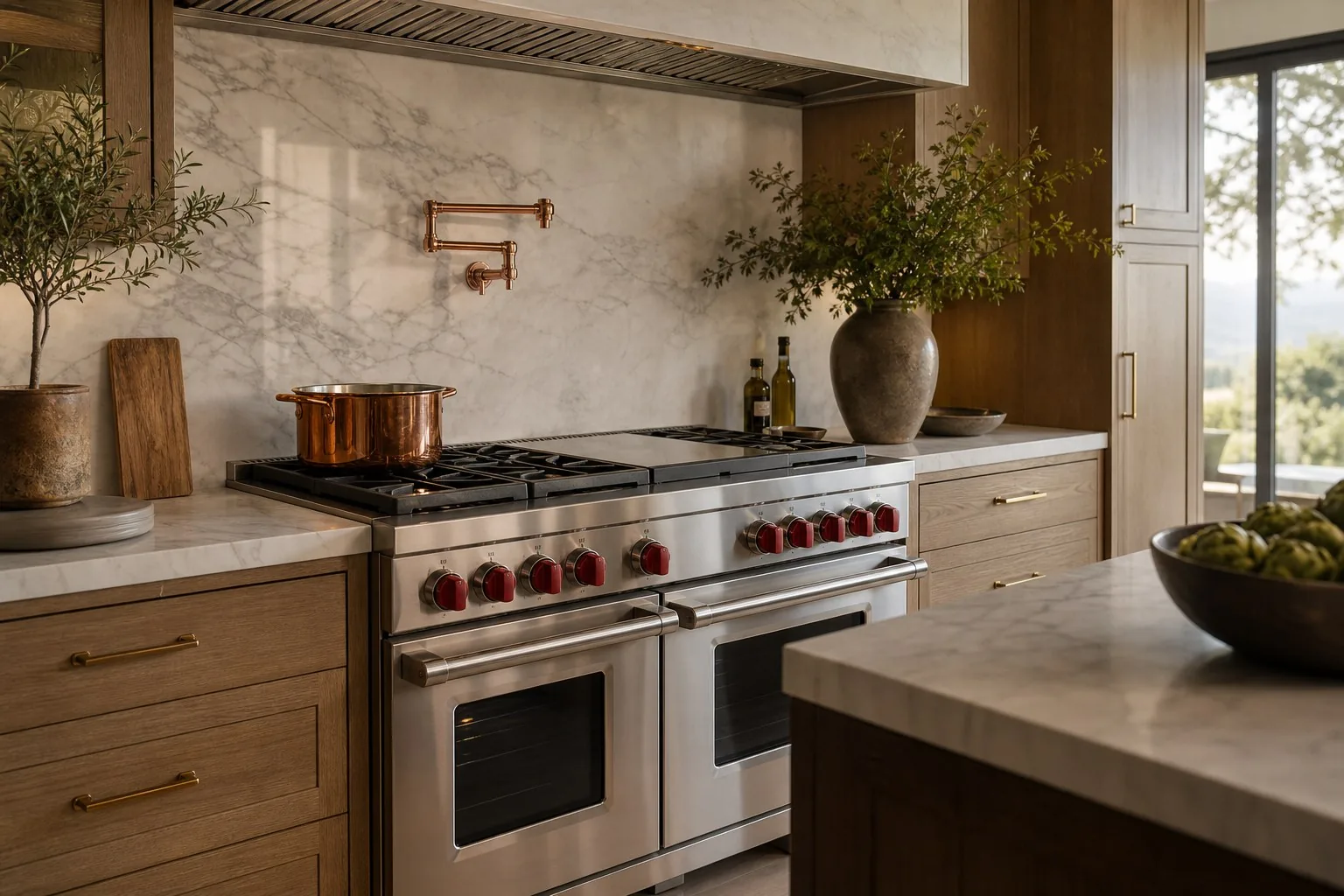
A Wolf range is the centerpiece of the serious San Ramon kitchen, and the first step in any repair is knowing which of three machines you actually own. A dual-fuel range sets sealed gas burners over an electric convection oven — the classic Wolf pairing, and the most common in Tri-Valley estate kitchens. An all-gas range runs both the cooktop and the oven on gas, with a glow-bar igniter feeding the oven. A rangetop is the gas cooking surface on its own, dropped into custom cabinetry with a separate wall oven below or nearby. Each fails in its own place, so naming the type is the diagnosis cutting in half before a technician arrives.
Why won’t my Wolf burner light when it’s still clicking?
Because the spark is firing but the gas isn’t catching — usually a wet or food-soiled igniter, a clogged port, or a cap perched off its alignment post. Every Wolf range and rangetop fires its sealed burners from one shared spark module behind the signature red knobs: turn a knob and the module sparks the igniter while gas flows through the burner-head ports. Because the module is shared, the pattern is the clue — one dead burner is a local fault, while all of them clicking at once points at the module, its harness, or gas supply.
| Symptom or sign | Likely cause | What we do |
|---|---|---|
| One burner clicks but won’t catch | Soiled igniter, clogged port, or cap off its post | Clean and reseat; replace the local igniter if needed |
| All burners click but none light | Shared spark module, harness, or gas supply fault | Test the module and supply before replacing parts |
| Dual-fuel oven cold or overshooting | Failed bake/broil element or drifted RTD sensor | Measure element output and sensor resistance to spec |
| All-gas oven lights slowly or not at all | Weak glow-bar igniter not opening the safety valve | Measure igniter draw, replace with the OEM part |
| Red knob flashing | Oven in a heating/status state, not a break | Read the control behavior before naming the board |
Oven heating and dual-fuel control
On the oven side the two range families diverge. A dual-fuel oven uses electric bake and broil elements cycled by a control against an RTD temperature sensor; a no-heat or off-temperature oven is usually a failed element or a drifted sensor, not the board — the full diagnosis lives on our Wolf oven not heating guide. An all-gas oven leans on a glow-bar igniter that has to draw enough current to open the safety valve — when it weakens, the oven lights slowly or not at all. We measure element output, sensor resistance and igniter draw against spec, so the part we replace is the part that’s actually out. A clicking-but-no-light cooktop instead points to red-knob burner ignition.
Why Wolf ranges fail this way in the Bay Area
Local conditions wear these ranges in specific ways. Inland San Ramon and the Tri-Valley push 90–100°F summer kitchens, heat-soaking spark modules and oven sensors so they drift early. Hard water across the region leaves mineral scale that boil-overs bake onto sealed-burner ports and igniters. Wildfire-season ash settles into burner ports and the convection intake within weeks, fouling ignition and choking airflow. Closer to the coast and fog line, salt air corrodes burner caps and igniter terminals — which is why a clicking-but-no-light burner turns up more on Peninsula and Marin units. We clean and reseat to Wolf’s alignment markings, install genuine OEM parts matched to the rating plate, and work gated, hillside and white-glove estate access by appointment so the repair lands once, cleanly, and to spec. What each fix costs is broken out on our Wolf repair cost page, and a range is one part of the wider Wolf repair coverage spanning ovens, cooktops and rangetops.
Know your Wolf range
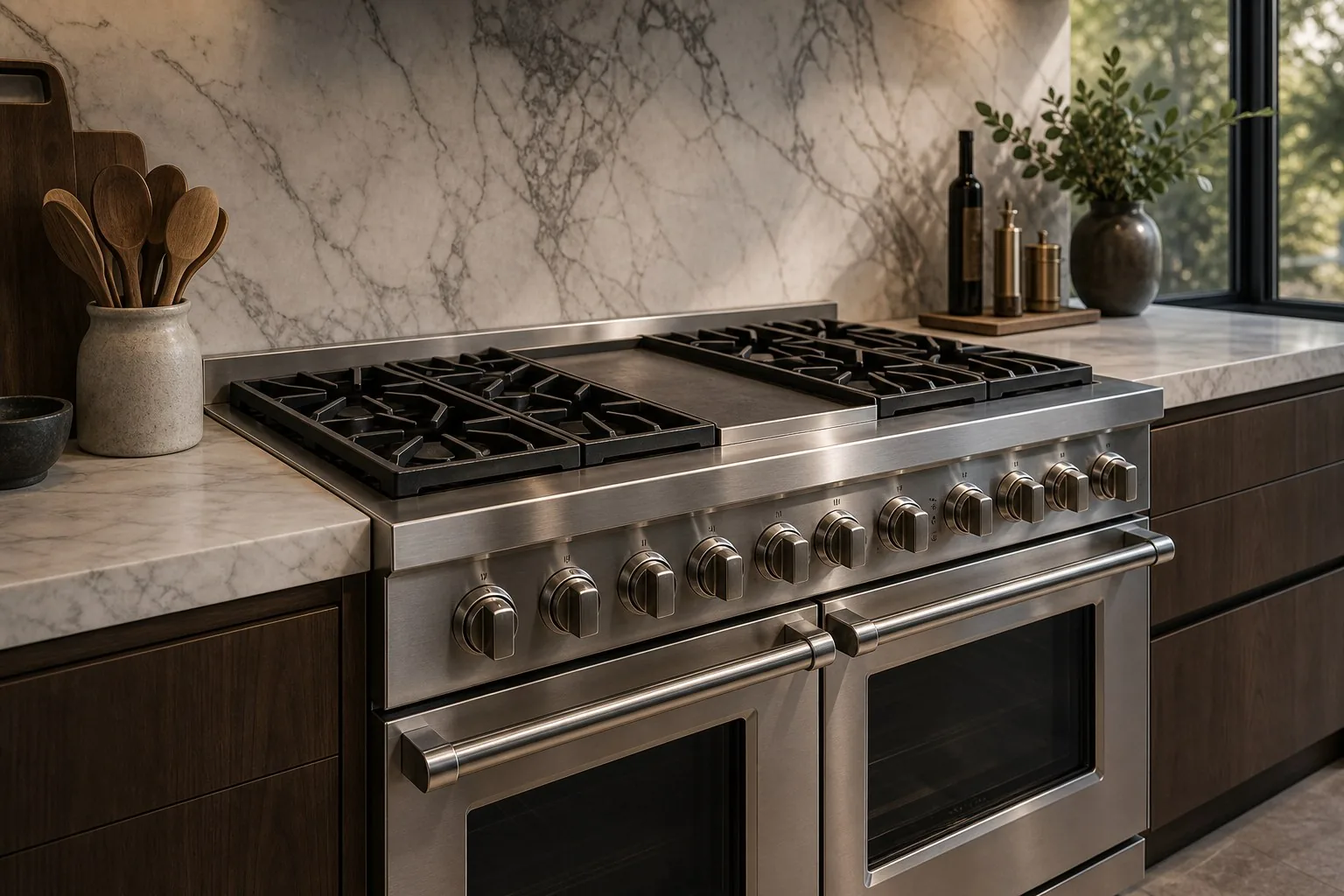
Dual-fuel, all-gas, and rangetop fail in different places
A dual-fuel Wolf range pairs gas burners with an electric convection oven, so ignition lives on the gas side and heating lives on the electric side. An all-gas range runs both off gas, with a glow-bar igniter feeding the oven. A rangetop is the cooktop alone. Telling them apart up front tells us where the fault has to be — and which OEM part rides in the van.
The red-knob brain
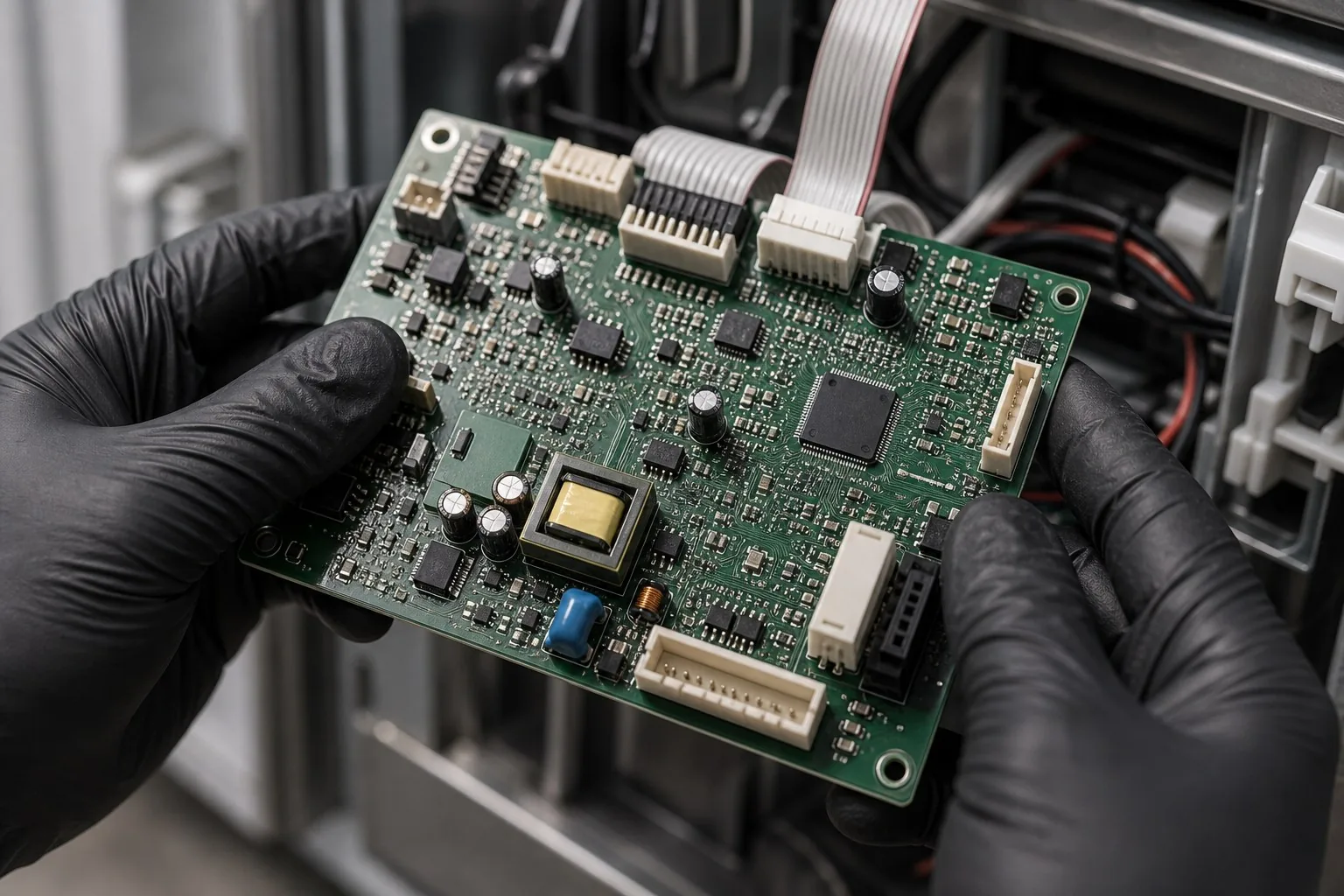
Dual-fuel control ties the burners and oven together
Wolf's illuminated red knobs are more than a look — on dual-fuel and electric ranges they report oven state and feed a control that cycles the bake and broil elements against the RTD sensor. When an oven runs cold, overshoots, or the knob behaves oddly, we measure element output, sensor resistance and control signal before naming the board, because controls fail far less often than the parts they drive.
Quick checks before you book the range
- Note which half is failing — a dead burner is a cooktop fault, a cold oven is a separate problem, and on dual-fuel the two are unrelated.
- For a burner that clicks but won't catch, lift the cap, dry it fully, and reseat it square on its alignment post before suspecting a part.
- For a cold oven, confirm the breaker is set — a dual-fuel electric oven can trip while the gas burners still light normally.
- Watch the red knob: a flashing knob is usually a heating or status state, not a broken control.
- If one burner is dead but its neighbors spark, the fault is local; if none spark, suspect the shared module or gas supply.
Frequently asked questions
How much is Wolf range repair in the Bay Area?
Most Wolf range repairs run $200–$700 for red-knob igniters, spark modules, bake or broil elements, sensors and burner parts. A dual-fuel control board can run higher. The San Ramon diagnostic is a flat $89 and is waived with any repair once you approve the work.
Who does Wolf gas range repair near me in San Ramon?
We are an independent, diagnostic-first service for Wolf gas and dual-fuel ranges across San Ramon and the wider Bay Area. We test the igniter, spark module, element or sensor against spec, then fit genuine OEM parts matched to the model on the rating plate — never a swap-and-hope guess.
Can you fix a Wolf dual fuel range repair near me?
Yes. A dual-fuel Wolf range is two systems in one frame — gas burners on top, an electric convection oven below — so we diagnose both. Cooktop faults are igniters and gas flow; oven faults are elements, the RTD sensor and the control. We cover San Ramon, the Tri-Valley and the Bay Area.
Do you handle Wolf rangetop repair as well as ranges?
Yes. A Wolf rangetop is the drop-in gas cooking surface without an oven below, so the work centers on red-knob ignition, sealed-burner ports, caps and the shared spark module. We service rangetops, gas ranges and dual-fuel ranges across San Ramon and the Bay Area with genuine OEM parts.
Why is the red knob flashing on my Wolf range?
On dual-fuel and electric Wolf ranges the illuminated red knob doubles as a status light: a flashing knob signals the oven is in a heating, cooling or fault state rather than a mechanical break. We read the actual control behavior on site before deciding whether it's the knob, the LED or the control board.
Is a Wolf range worth repairing?
Usually yes. A Wolf dual-fuel or gas range is built to last decades, and most faults are a single igniter, element or sensor well under the cost of replacing a $9,000-plus pro range framed into custom cabinetry. We only suggest replacement when several major parts have failed at once.
What clients say
5 · 1343 reviews
One burner on our dual-fuel Wolf range clicked but wouldn't catch while the others lit fine. The technician knew a single dead burner meant a local fault, not the shared spark module — a food-soiled igniter and a cap off its alignment post. Cleaned, reseated, and replaced the igniter. Lit instantly.
Our dual-fuel Wolf oven ran cold and overshot. Rather than blame the control board, he measured the bake element output and the RTD sensor resistance against spec, found a failed element, and fitted the OEM part. The red knob was just showing a heating state. Even temperatures restored in one visit.
Our all-gas Wolf range oven was lighting slowly or not at all. He measured the glow-bar igniter draw and found it too weak to open the safety valve, then replaced it with a genuine part matched to the rating plate. Careful around our custom cabinetry, written quote first. Wolf range repair done right.