
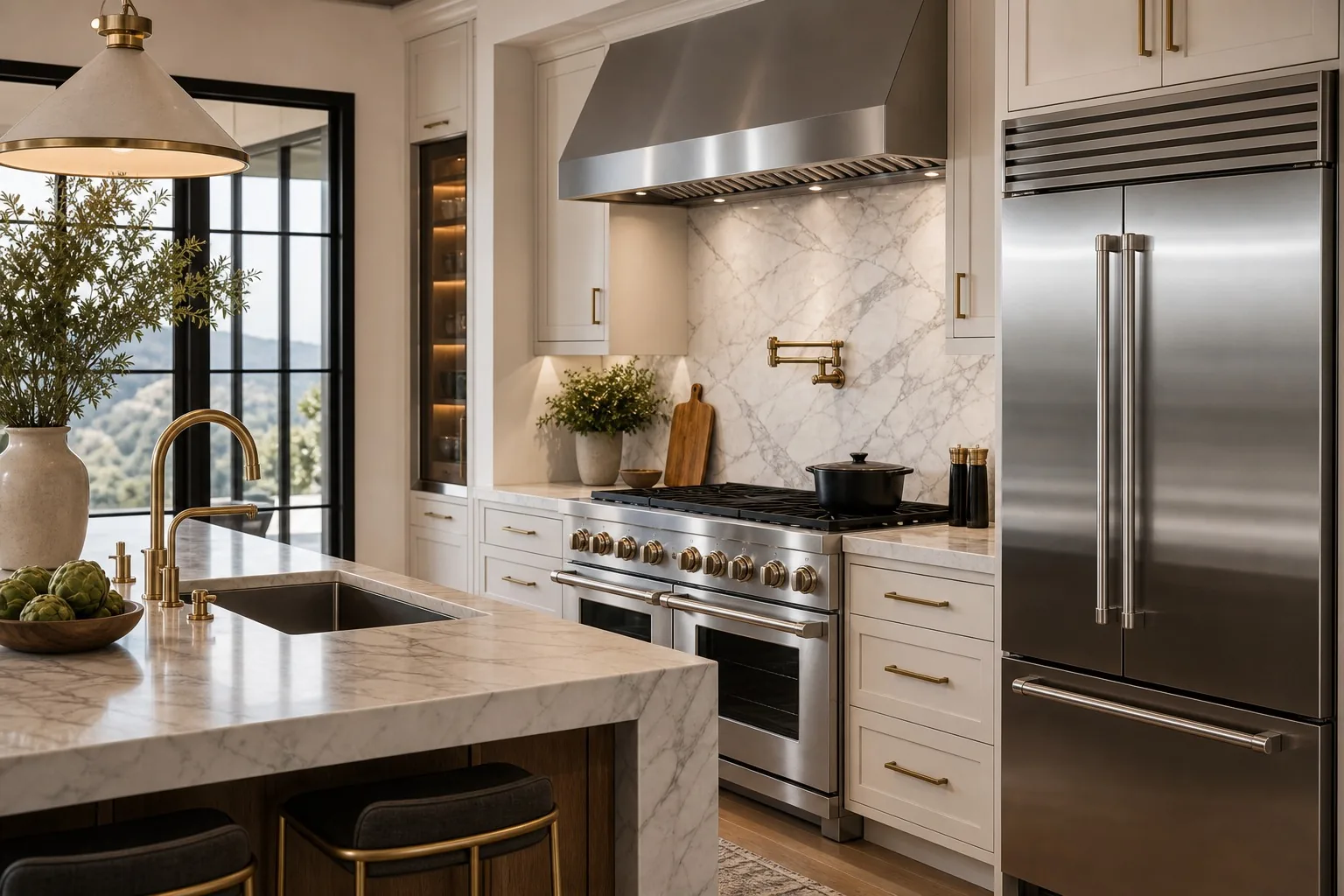
How does a GE Monogram refrigerator make cold?
A GE Monogram refrigerator makes cold at the evaporator and delivers it to the fresh-food compartment through an evaporator fan and a damper, while the condenser sheds the heat the compressor pumps out. A thermistor reports cabinet temperature to the control board so it knows when to run, and a timed defrost cycle melts frost off the evaporator so air keeps moving. When any link in that chain fails, the cabinet runs warm — and which compartment is affected points straight to where the fault lives.
Real causes, in order
- Dirty condenser — the most common and the cheapest to rule out; clean it first.
- Stalled evaporator fan — no fan means no chilled air reaches the fresh-food side.
- Defrost failure — frost builds on the evaporator and chokes airflow.
- Drifted thermistor — the control misreads temperature and stops cooling early.
- Sealed-system loss — a weak compressor or low charge warms both compartments.
Read the symptom
A freezer that holds cold while the fridge warms points to an airflow fault — fan, defrost, or damper. Both compartments drifting warm together points toward the condenser or the sealed system.
What symptom points to which Monogram fault?
The pattern of failure narrows the diagnosis before a technician opens anything, which is why a 24-hour log saves a wasted trip:
| Symptom or sign | Likely cause | What we do |
|---|---|---|
| Freezer cold, fresh-food warm | Iced evaporator, stalled fan, or stuck damper | Test airflow, defrost circuit and fan, free or replace the damper |
| Both compartments slowly warming | Dust-loaded condenser or sealed-system loss | Clean and verify the condenser, then gauge the sealed system if needed |
| Frost spreading on the rear wall | Defrost heater, sensor or control failure | Test the defrost components against spec and replace the failed part |
| Runs constantly but won’t hit setpoint | Drifted thermistor feeding bad readings | Verify the thermistor curve and recalibrate or replace it |
| Loud or silent evaporator area | Seized evaporator fan motor | Install a genuine OEM fan and confirm restored airflow |
Why Bay Area conditions matter for Monogram cooling
Built-in Monograms live in remodeled estate kitchens across Danville, Atherton, and the Peninsula, where the unit is boxed into custom cabinetry that traps heat against the condenser. Inland Tri-Valley summers of 90–100°F push that coil to its limit, and wildfire-season ash plus everyday household dust blanket it faster than owners expect — a coil that coped in spring can stall the cooling cycle by August. Coastal and fog-belt homes from San Francisco to Marin add salt-laden air that corrodes condenser fins and fan hardware over time. Hard water in much of the East Bay also scales ice-maker and water lines, which can mask itself as a cooling complaint. None of this is exotic — it just means the condenser deserves attention more often here than the manual suggests.
What will the repair cost, and is it worth it?
Most warm-Monogram calls are non-sealed work — a stalled evaporator fan, a defrost heater, or a thermistor — which lands in the $200–$700 band; a true sealed-system loss is far rarer and runs higher. The flat $89 service call is waived with any repair, and you can see the full picture on our appliance repair cost page before booking. Monogram built-ins are worth repairing while the cabinet and panels are sound, and our GE Monogram repair overview walks through repair-versus-replace on these units. If the panel ever throws a code alongside the warm cabinet, cross-check it on our GE Monogram error codes reference, and if you also own a Sub-Zero or Viking column, the airflow logic mirrors a Viking refrigerator not cooling.
When should I call for a diagnostic?
Call once the condenser is clean, the vents are clear, the doors seal, and the cabinet is still warm after a full 24 hours. We test the evaporator fan, defrost components, and thermistor against spec, and check the sealed system when both sides are warm, so the repair targets the real fault. We install genuine OEM parts matched to your model from the rating plate, and a 24-hour temperature log of both compartments helps us load the right parts before we arrive.
Quick answers
- Why is my GE Monogram refrigerator not cooling?
- On a Monogram built-in, the four usual culprits are a dust-loaded condenser behind the top or bottom grille, a stalled evaporator fan that stops moving chilled air, a defrost failure that ices over the evaporator coil, and a drifted thermistor that tells the control to quit cooling too early. Clean the condenser, clear the interior vents, then give it a full 24 hours before assuming a part has failed.
- Why is my Monogram freezer cold but the refrigerator section warm?
- Cold is made at the evaporator and pushed to the fresh-food side by a fan through a damper. If that airflow stops — an iced evaporator from a defrost failure, a seized fan motor, or a stuck damper — the freezer holds while the refrigerator drifts warm. A clogged condenser deepens the imbalance.
- How often should I clean a GE Monogram condenser in the Bay Area?
- Every three to six months, and more often in dusty Tri-Valley and inland areas or during wildfire season when ash settles on the coils. A clogged condenser is the most common and cheapest cause of weak Monogram cooling, so always rule it out before booking a diagnostic.
- My Monogram fridge is warm during a Bay Area heat wave — is that the cause?
- Possibly. When inland temperatures hit 90–100°F, a partly clogged condenser that coped in spring can no longer shed heat fast enough, so the cabinet creeps warm. Clean the coils, give the unit a low-traffic 24-hour window to recover, and book a diagnostic if it can't hold setpoint.
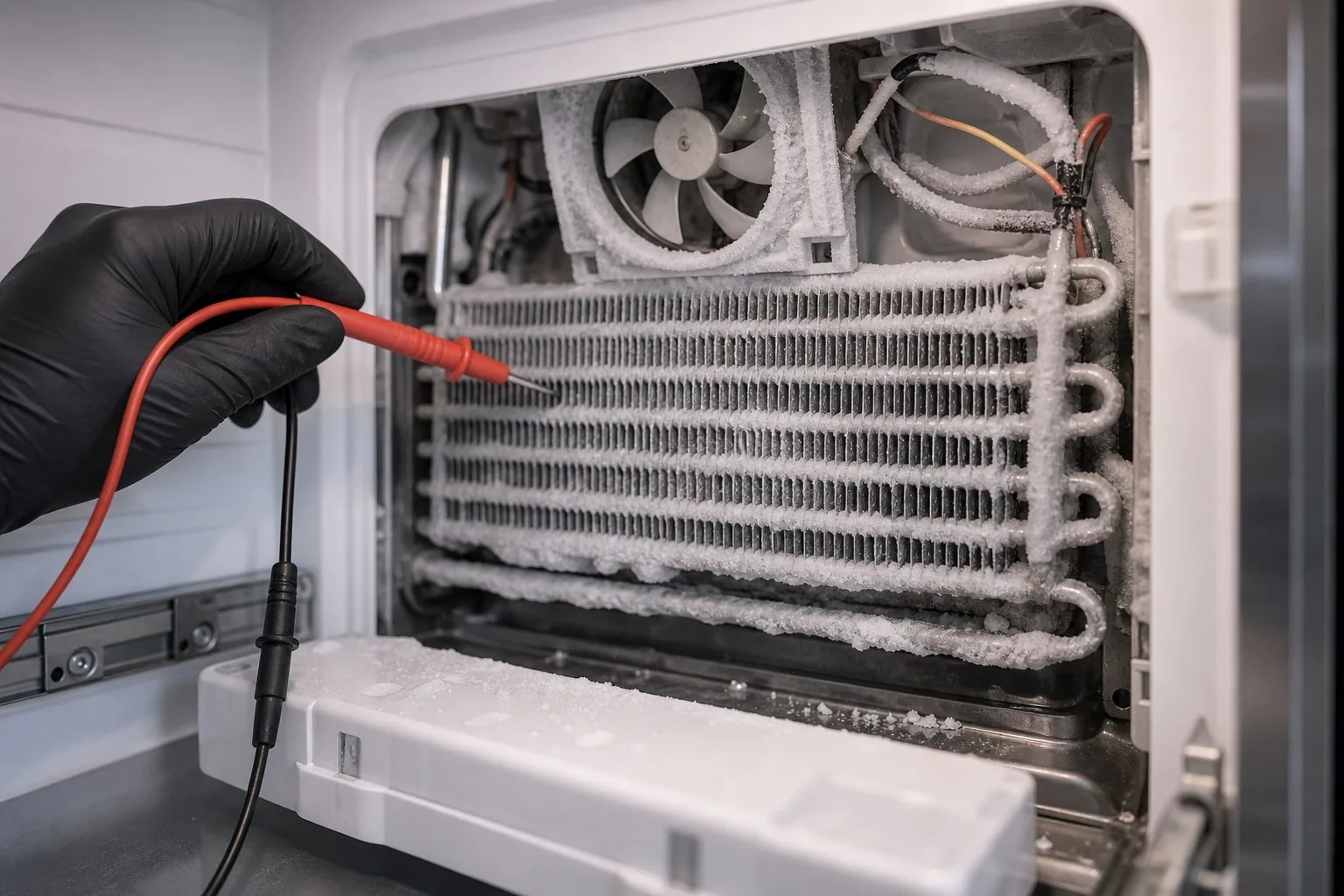
The tell-tale split
Cold freezer, warm fridge is an airflow clue
When the Monogram freezer holds but the fresh-food side creeps up, cold is being made but not delivered. That pattern almost always means the evaporator has iced from a defrost stall, the circulation fan has seized, or the damper is stuck shut. Reading which compartment fails first saves a guess-and-replace diagnostic.
Rule out before you book
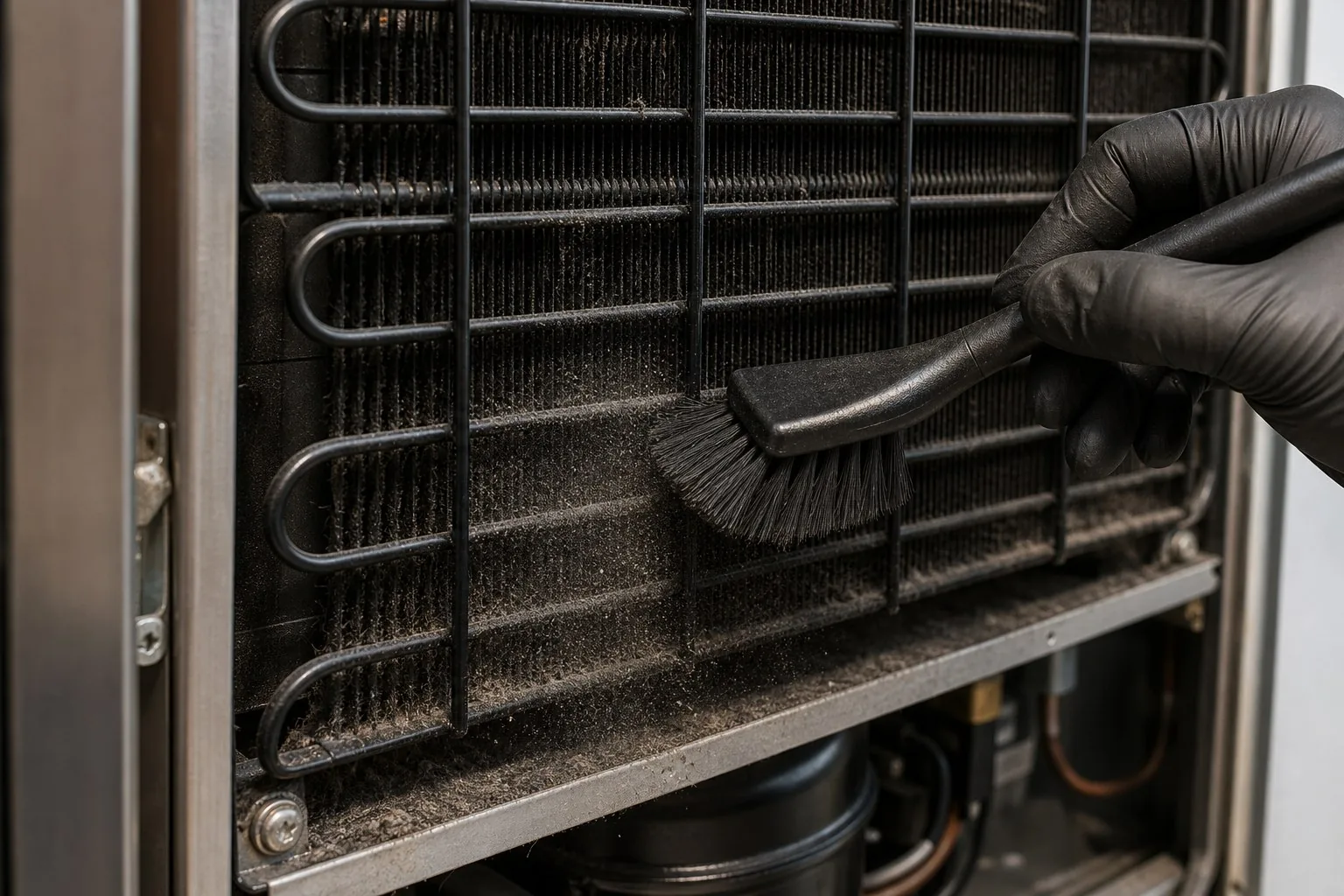
- Brush and vacuum the condenser behind the grille until the fins show clean
- Pull food away from the rear and side vents so air can circulate
- Run the dollar-bill test along both door gaskets for drag
- Confirm the doors fully close and aren't propped by a drawer or bottle
- Note the time, then leave the setpoints alone for a full 24 hours
Quick triage for a GE Monogram refrigerator that isn't cooling
- Clean the condenserBrush and vacuum the condenser behind the grille; in dusty inland or wildfire-season Bay Area conditions, clean every 3–6 months.
- Check airflow and sealsConfirm interior vents aren't blocked by food and the door gaskets seal with the dollar-bill test.
- Wait 24 hoursGive the cabinet a full day to recover before judging, and never change the setpoint mid-test.
- Log temperatures and bookIf both compartments are still off after 24 hours, record a temperature log and book a diagnostic.
Frequently asked questions
Why is my GE Monogram refrigerator not cooling?
On a Monogram built-in, the four usual culprits are a dust-loaded condenser behind the top or bottom grille, a stalled evaporator fan that stops moving chilled air, a defrost failure that ices over the evaporator coil, and a drifted thermistor that tells the control to quit cooling too early. Clean the condenser, clear the interior vents, then give it a full 24 hours before assuming a part has failed.
Why is my Monogram freezer cold but the refrigerator section warm?
Cold is made at the evaporator and pushed to the fresh-food side by a fan through a damper. If that airflow stops — an iced evaporator from a defrost failure, a seized fan motor, or a stuck damper — the freezer holds while the refrigerator drifts warm. A clogged condenser deepens the imbalance.
How often should I clean a GE Monogram condenser in the Bay Area?
Every three to six months, and more often in dusty Tri-Valley and inland areas or during wildfire season when ash settles on the coils. A clogged condenser is the most common and cheapest cause of weak Monogram cooling, so always rule it out before booking a diagnostic.
My Monogram fridge is warm during a Bay Area heat wave — is that the cause?
Possibly. When inland temperatures hit 90–100°F, a partly clogged condenser that coped in spring can no longer shed heat fast enough, so the cabinet creeps warm. Clean the coils, give the unit a low-traffic 24-hour window to recover, and book a diagnostic if it can't hold setpoint.
Is a warm GE Monogram refrigerator an emergency?
If perishables are at risk, treat it as urgent — move the food, then book the soonest visit. After cleaning the condenser, give the cabinet 24 hours. If it's still warm, it needs a diagnostic for the evaporator fan, defrost system, or thermistor.
What clients say
4.9 · 327 reviews
Our Monogram freezer stayed cold but the fresh-food side drifted warm during a heat wave. The tech read it as an airflow fault, found the evaporator iced from a stalled defrost heater, and replaced it plus the thermistor. He had me log temps for a day first so he arrived with the right parts.
GE Monogram running warm in both compartments. Instead of upselling a compressor, he pulled the bottom grille and showed me a condenser packed with dust and pet hair. Cleaned it, confirmed the fan spun, and it held 37 degrees within the 24-hour window. Honest call, fair price.
My Monogram wasn't cooling and I'd been nudging the dial lower for days. The tech explained that doesn't help and traced it to a seized evaporator fan motor. OEM fan installed from his truck, airflow restored. Only knock was a tight scheduling window, but the diagnosis was spot on.