
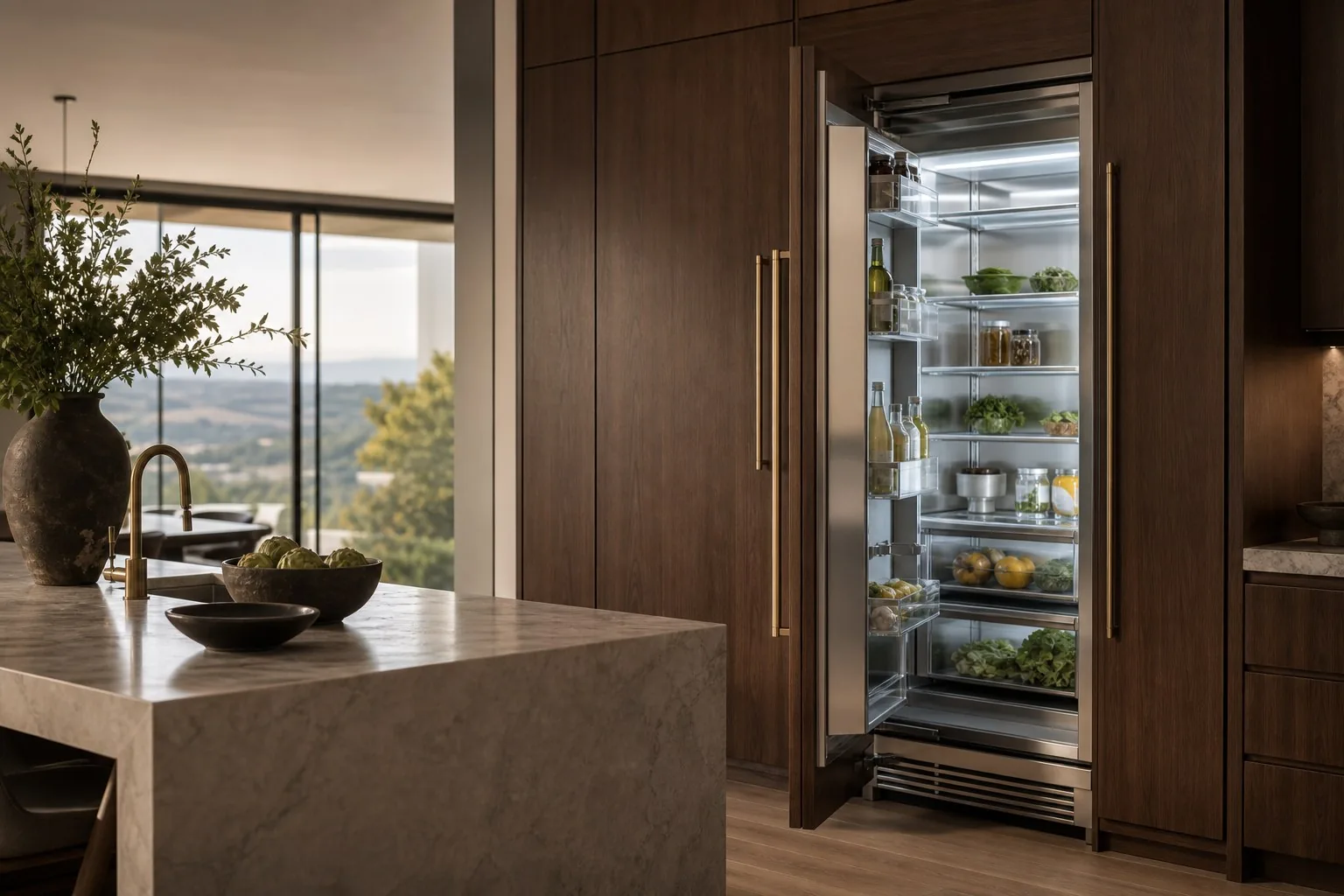
How long do Sub-Zero refrigerators last?
A maintained Sub-Zero refrigerator lasts 25–30 years — roughly two to three times a mass-market unit and well past the 10–13 years most disposable fridges manage. That number is not marketing. Sub-Zero engineers the entire cabinet around a sealed system, including a compressor, built to run that long, which is why the manufacturer backs it with a 12-year sealed-system warranty. The gap between a 12-year failure and a 30-year service life comes down almost entirely to how the unit is treated — not luck, and not which year it was built.
So the real question owners are asking is not whether a Sub-Zero can last 30 years, but what decides where on the 12-to-30 scale a given unit lands. The answer is the condenser, the door seals, and how quickly small faults get fixed.
What shortens a Sub-Zero’s lifespan?
The single biggest lifespan-killer is a neglected condenser. A coil buried in dust forces the compressor to run hot for years, and that constant heat load ages the sealed system from the inside until it can no longer hold temperature. Nothing about it is sudden — it quietly subtracts years. After the condenser, the usual culprits are tired door gaskets, blocked interior airflow, and small faults left to compound. Use the table to see how each one trades against service life.
| Lifespan factor | Effect on service life | Why it matters |
|---|---|---|
| Condenser cleaned on schedule | Reaches 25–30+ years | Compressor runs cool and within design duty |
| Condenser ignored for years | Can fail before year 12 | Sustained heat load ages the sealed system early |
| Door gaskets kept sealing | Adds years | Stops warm-air infiltration and constant running |
| Inland heat + wildfire ash (Tri-Valley) | Cuts years if uncleaned | Coil loads 90–100°F heat far faster than coastal air |
| Early faults fixed with OEM parts | Preserves the unit | Keeps the compressor from carrying extra strain |
| Hard-water scaling, defrost ignored | Trims the top years | Ice and defrost circuits wear and overwork the system |
The pattern is consistent across the units we see in San Ramon and Tri-Valley maintenance homes: the cabinets that reach 30 years had their condenser cleaned and their seals checked; the ones that died young did not.
How to maximize a Sub-Zero’s lifespan, decade by decade
Longevity is a lifecycle, not a one-time chore. Treating the unit differently as it ages is how owners reach the far end of the 25–30 year range — clean and seal-check early, watch the sealed system as it matures, and lean on genuine OEM parts once it is decades old. The stage-by-stage breakdown above maps to the same logic our maintenance guide follows in detail.
Are Sub-Zero refrigerators worth it?
Spread across a 25–30 year service life, a Sub-Zero’s cost per year frequently undercuts buying and discarding a $1,500 mass-market fridge two or three times over the same span — before you count the fitted built-in look, the dual-compressor food preservation, and a sealed-system that a budget unit simply doesn’t have. The catch is that the value only materializes if the unit actually reaches its lifespan, which loops straight back to maintenance.
That long horizon is also why repair almost always beats replacement on these units while parts are sound. A 12-year-old Sub-Zero with one fault has well over a decade of service ahead, so the same repair bill that would total a cheap fridge is a sound investment here. When the math does get close, our repair vs replace guide walks the 50% line, and the sub-zero repair cost ranges show where common faults land — most non-sealed work runs $200–$700, while a compressor or sealed-system job runs $900–$2,000 and may be absorbed by that 12-year warranty.
Why Bay Area kitchens change the lifespan math
Inland Tri-Valley summers routinely sit at 90–100°F, and Diablo-wind dust plus wildfire-season ash blanket the condenser far faster than coastal air ever would. The same Sub-Zero that might coast on a 6-to-12-month cleaning schedule near the bay needs attention every 3–6 months in San Ramon, Danville and Alamo — otherwise the heat load quietly trims years off the sealed system. Hillside and estate homes add their own wrinkle: a unit running hard during a heat wave on a poorly ventilated grille ages faster still. Keep the coil clear here and a Sub-Zero will live every bit of its 25–30 years. Let the climate work on a dirty condenser and it won’t — which is the one variable owners fully control.
Quick answers
- How long do Sub-Zero refrigerators last?
- A well-kept Sub-Zero refrigerator reaches 25–30 years of service, against roughly 10–13 for a mass-market unit. The compressor and sealed system are engineered for that horizon, and units that get past year 30 almost always had their condenser cleaned on schedule and faults fixed early rather than ignored.
- What is the average lifespan of a Sub-Zero compressor?
- A Sub-Zero compressor is built to run 25–30 years and is the component the rest of the unit is engineered around. It is also covered by the 12-year sealed-system warranty, so an early compressor fault on a younger unit often costs far less than the part's sticker price suggests.
- What shortens a Sub-Zero's lifespan the most?
- A dust-choked condenser, by a wide margin. A clogged coil forces the compressor to run hot for years, aging the sealed system from the inside. Weak door gaskets, blocked airflow and ignored early faults follow. None of these are sudden — they quietly subtract years.
- Are Sub-Zero refrigerators worth it?
- Spread across a 25–30 year life, a Sub-Zero's cost per year often undercuts buying and tossing a $1,500 fridge twice in the same span. Add the dual-compressor preservation, the fitted built-in look and a 12-year sealed-system warranty, and the long-haul math favors keeping and maintaining one.
What sets the ceiling
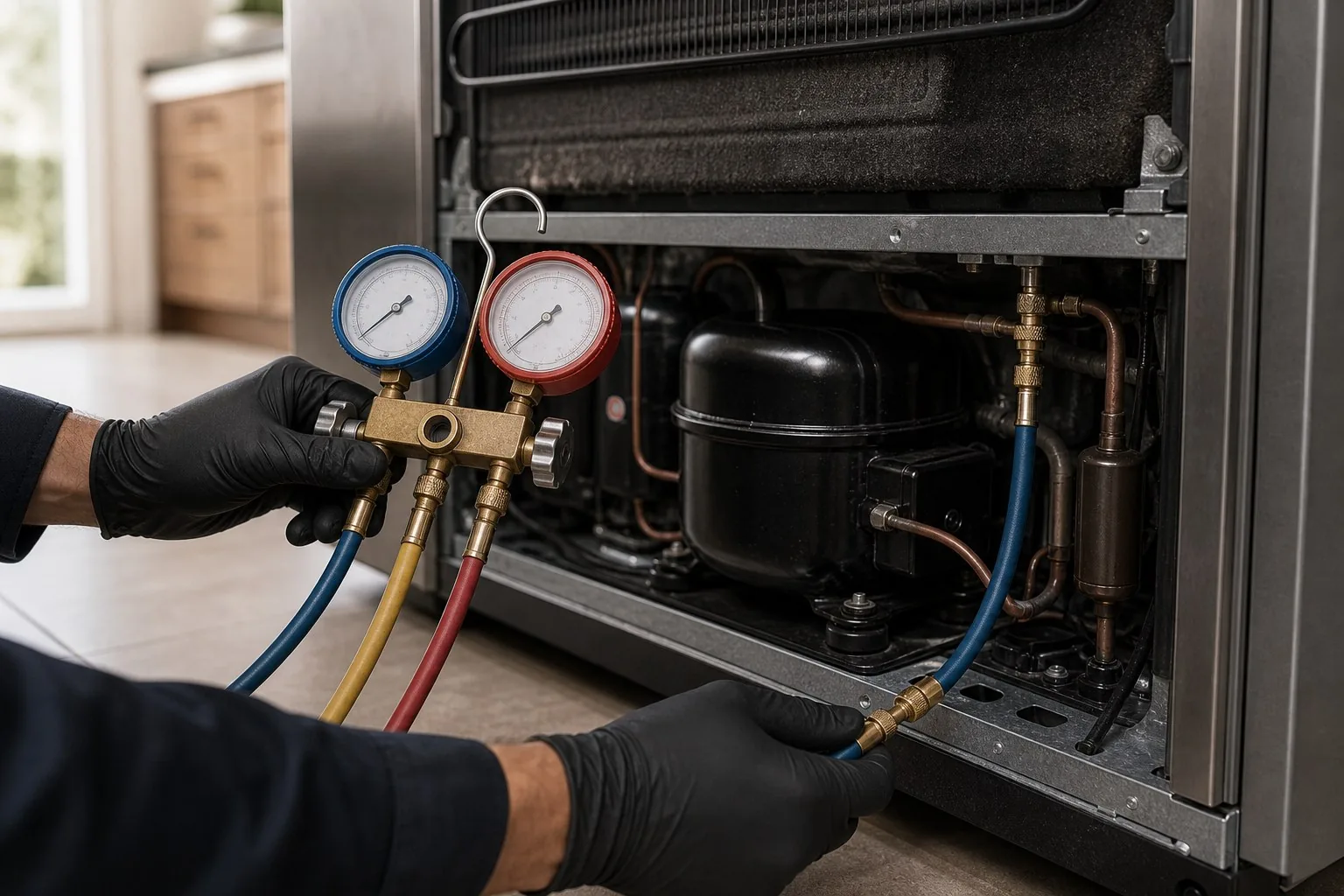
The sealed system decides how long the unit lives
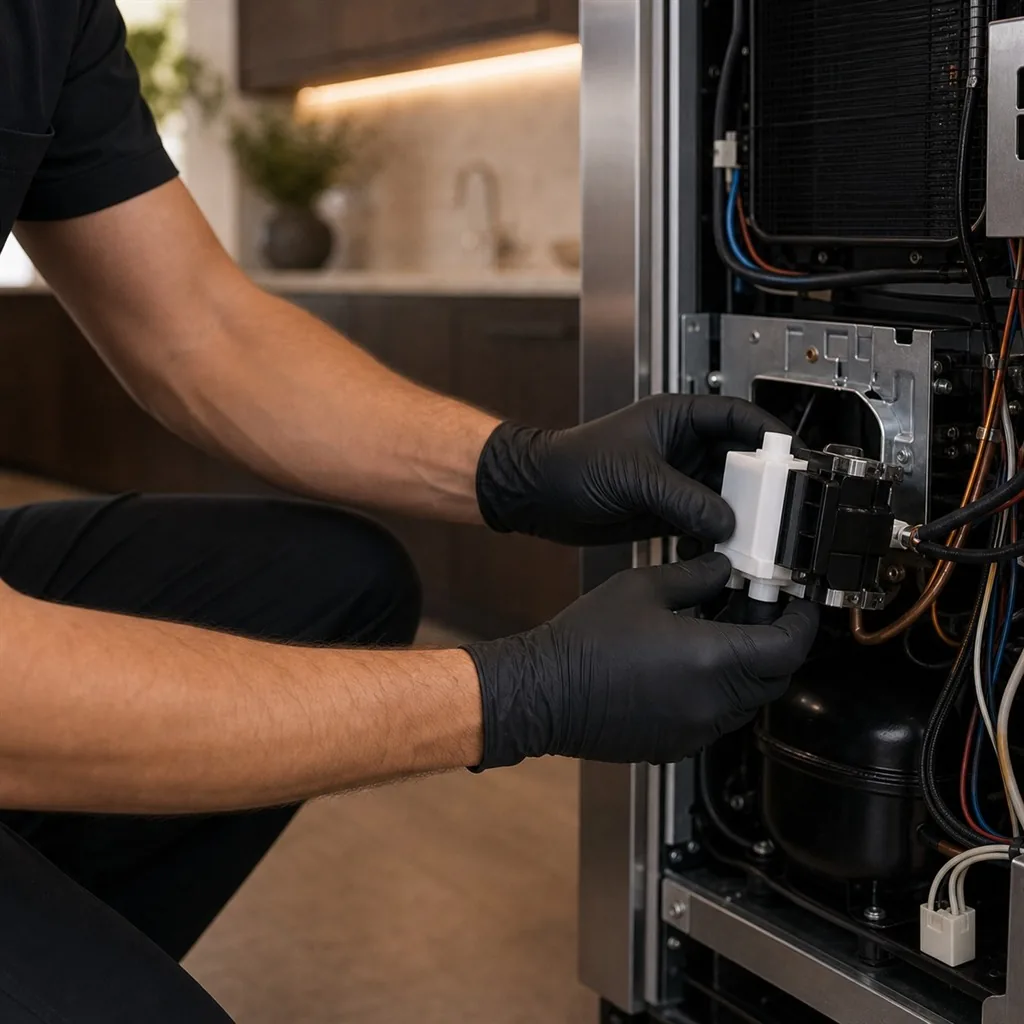
Sub-Zero builds the whole refrigerator around a compressor rated for decades of duty, paired with a condenser, evaporator and drier that must stay clean to last. Spare that loop and the cabinet outlives two or three throwaway fridges. Cook it with a clogged coil and the same unit can quit before year twelve — which is exactly why the manufacturer backs the sealed system for a full 12 years.
The quiet subtractor
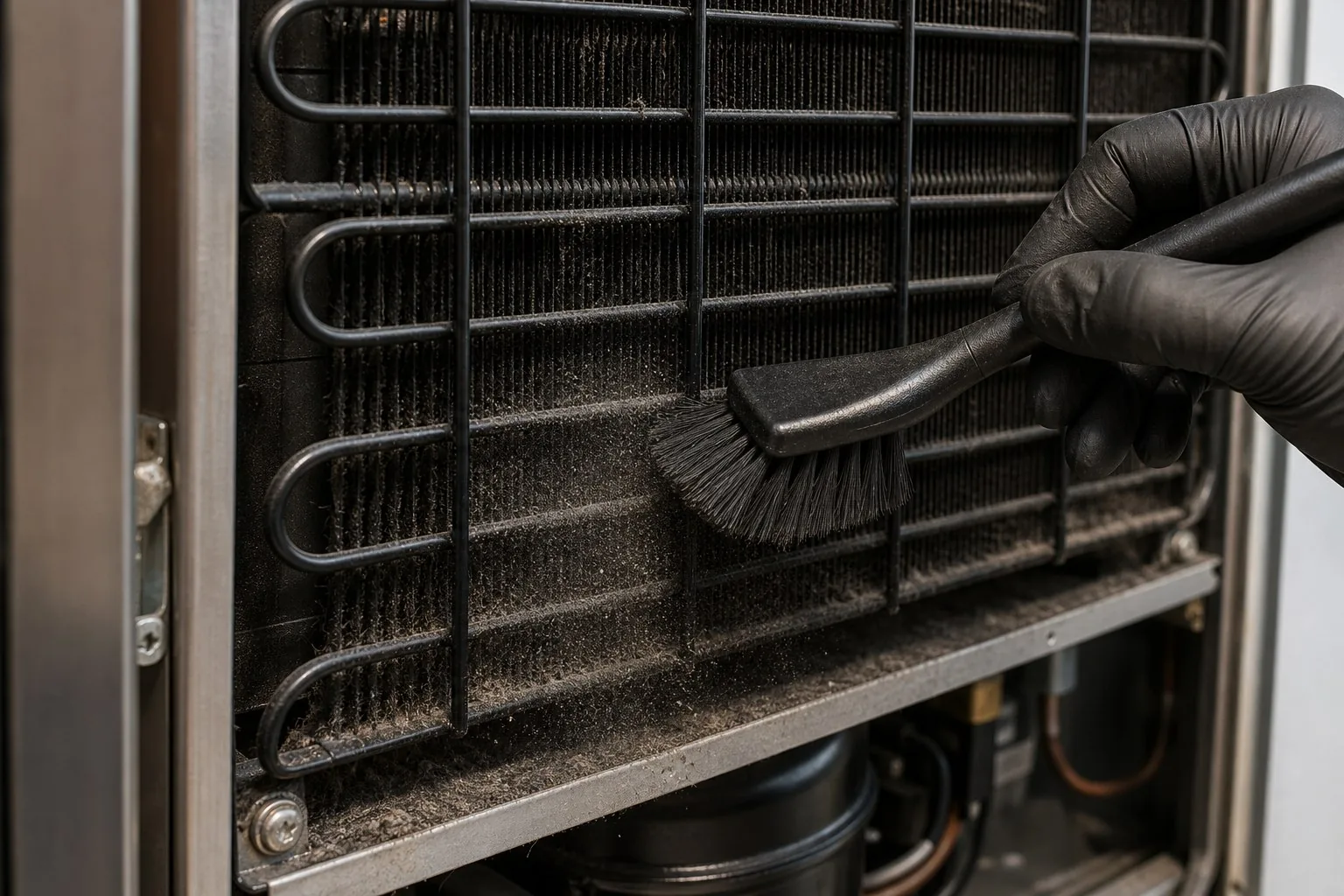
A clogged condenser steals years, not days
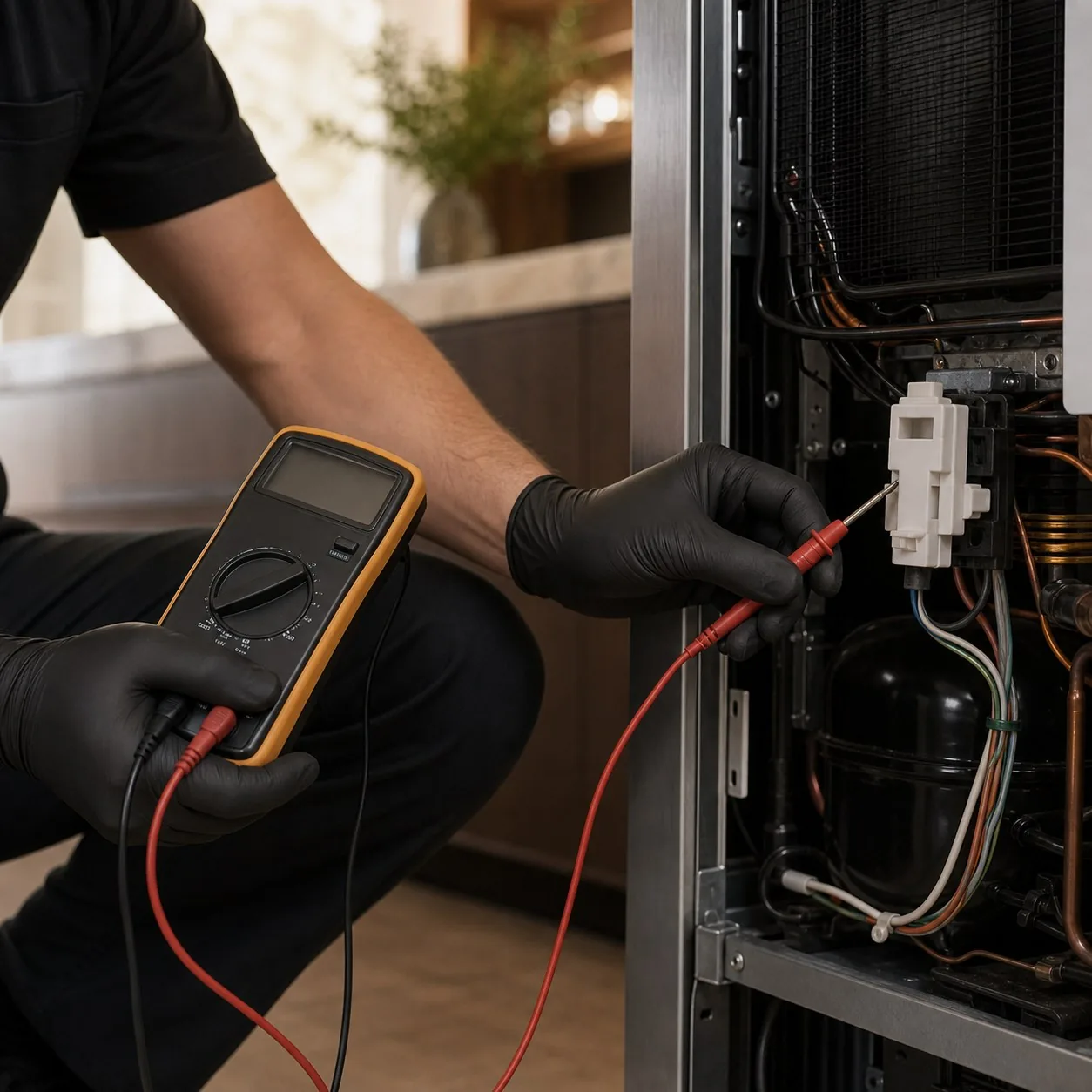
Lifespan rarely ends with a bang. A coil packed with dust makes the compressor run hot every hour of every day, and that constant heat load ages the sealed system from the inside. The damage is invisible until the unit can no longer hold temperature — by which point years of service life are already gone. It is the cheapest thing to prevent and the most expensive thing to ignore.
How a visit works
Frequently asked questions
How long do Sub-Zero refrigerators last?
A well-kept Sub-Zero refrigerator reaches 25–30 years of service, against roughly 10–13 for a mass-market unit. The compressor and sealed system are engineered for that horizon, and units that get past year 30 almost always had their condenser cleaned on schedule and faults fixed early rather than ignored.
What is the average lifespan of a Sub-Zero compressor?
A Sub-Zero compressor is built to run 25–30 years and is the component the rest of the unit is engineered around. It is also covered by the 12-year sealed-system warranty, so an early compressor fault on a younger unit often costs far less than the part's sticker price suggests.
What shortens a Sub-Zero's lifespan the most?
A dust-choked condenser, by a wide margin. A clogged coil forces the compressor to run hot for years, aging the sealed system from the inside. Weak door gaskets, blocked airflow and ignored early faults follow. None of these are sudden — they quietly subtract years.
Are Sub-Zero refrigerators worth it?
Spread across a 25–30 year life, a Sub-Zero's cost per year often undercuts buying and tossing a $1,500 fridge twice in the same span. Add the dual-compressor preservation, the fitted built-in look and a 12-year sealed-system warranty, and the long-haul math favors keeping and maintaining one.
Can a Sub-Zero last longer than 30 years?
Yes — units past 35 years are not rare in Bay Area estate kitchens. Reaching that range takes disciplined condenser cleaning, gasket care and genuine OEM parts at each repair. The sealed system is the limiting factor, so anything that spares the compressor adds years.
Does Bay Area weather affect how long a Sub-Zero lasts?
It does. Inland Tri-Valley summers of 90–100°F, Diablo-wind dust and wildfire ash blanket the condenser far faster than coastal air, so the same unit needs cleaning every 3–6 months here. Neglect that and the heat load shortens the sealed system's life noticeably.
What clients say
4.9 · 327 reviews
Our BI-48 was 27 years old and I assumed it was finished. The technician checked the compressor amp-draw, found it healthy, and traced the warm fresh-food side to a coil packed solid with dust. He cleaned it, replaced one tired gasket with a genuine part, and explained these units run 25–30 years when the condenser is kept clear. Saved us a built-in replacement.
I called to ask whether our 14-year-old Sub-Zero was worth keeping. Instead of an upsell he ran the numbers with me: spread over its remaining lifespan it cost less per year than buying two cheap fridges. He cleaned the condenser, confirmed the sealed system was sound, and we kept it. Honest math, no pressure.
After two wildfire seasons our unit was running constantly and I worried it was dying early. He showed me how inland heat and ash had loaded the coil and shortened things, set a 3-month cleaning schedule for our hillside home, and the compressor stopped laboring. Wish I'd known sooner how much the climate matters here.