
What a high-end range hood actually has to do
Over a professional range, ventilation is not a luxury — it is the only thing standing between a 60,000-BTU cooktop and a kitchen full of grease vapor, steam and combustion byproducts. That is why pro hoods run internal, remote or in-line blowers rated from 600 to 1,500 CFM, with heavy baffle filters, makeup-air interlocks and ducted runs that can climb two stories through a Bay Area hillside home. Each of those parts can fail on its own, and each fails with a different signature. The hood is the partner of the professional range repair we do every day, and the same diagnostic-first method applies: read the rating plate, measure what the hood is actually doing, then fix the real fault.
Why is my vent hood not working — and is it the motor?
Usually not. A vent hood that is completely dead — no fan, no lights — points upstream of the blower to power, a control board, or a broken connection, because one failed motor cannot kill the lights too. A hood that runs but barely pulls air points the other way, to a restriction in the airflow path. So the first question is never “which part,” it is “is this an electrical fault or an airflow fault?” The table below splits the common symptoms along exactly that line.
| Symptom or sign | Likely cause | What we do |
|---|---|---|
| Completely dead — no fan, no lights | Tripped breaker, failed control board, or broken junction wiring | Test power at the hood, then the board, before touching the blower |
| Fan dead but lights still work | Burned blower winding, failed run capacitor, or tripped thermal cutout | Test the motor and capacitor; fit an OEM blower matched to the CFM rating |
| Fan runs but suction is weak | Grease-loaded baffle filters or a packed/collapsed duct run | Measure capture, clear filters and the duct, free the backdraft damper |
| Loud rattle, hum or vibration | Seized or worn blower bearing, or a loose mount | Replace the bearing or blower, re-secure the housing |
| Lights out, fan fine | Failed LED driver, halogen socket, or switch | Isolate the lighting circuit and replace only the failed part |
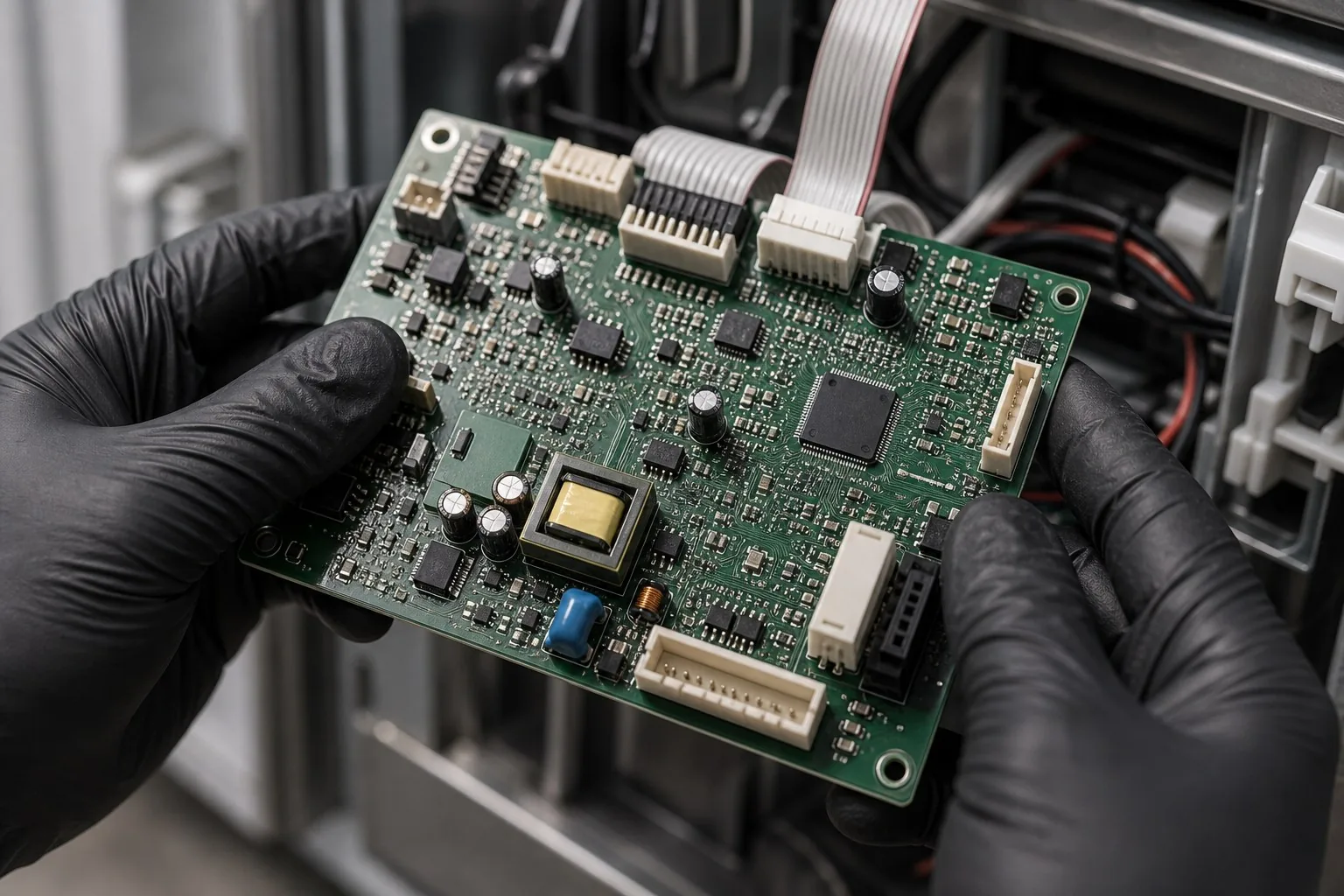
| Controls unresponsive or stuck on one speed | Touch panel or speed-control board fault | Diagnose the board, replace the failed control assembly |
Range hood fan repair, without replacing a healthy blower
A dead fan does not always mean a dead motor. A high-output blower that hums but won’t turn has usually lost its run capacitor; one that cuts out after a few minutes of hard cooking has tripped a thermal cutout buried in grease heat; one that grinds has a worn bearing. Each of those is a targeted range hood fan repair, not a wholesale swap. We only fit a complete OEM blower assembly when a winding has burned or a cutout keeps tripping — and then we match it to the hood’s original airflow rating so capture comes back to spec. The major makes are covered through their own hubs: Wolf range repair, Viking repair and Thermador repair.
Why Bay Area pro kitchens are hard on hoods
How much a hood works — and how fast it fouls — depends on where it lives. A serious Bay Area cooking suite, from a Lafayette estate kitchen to a Los Altos Hills wine-country-style build, runs its hood hard and long, so baffle filters saturate and the duct interior builds hardened grease that quietly strangles airflow. Hillside homes route ducting through long vertical runs with multiple elbows, where a single collapsed flex section or a backdraft damper stuck by grease can cost half the rated CFM. Coastal and fog-line homes add salt air that corrodes blower housings and damper springs over time. None of that shows up as a dead hood — it shows up as a hood that “still runs but doesn’t pull,” which is exactly why we measure capture at the face before we quote a motor.
These hoods are also built into custom millwork, soffits and stone surrounds, so a careless pull scratches a fitted panel and a wrong-size blower throws off the whole ventilation balance. We work by appointment around gated and white-glove access, carry genuine OEM parts matched to the rating plate, and finish the repair once and to spec. Most hood work lands in the non-sealed band on our repair cost page, and the flat $89 diagnostic is waived with any repair.
Quick answers
- Why is my vent hood not working at all — no fan, no lights?
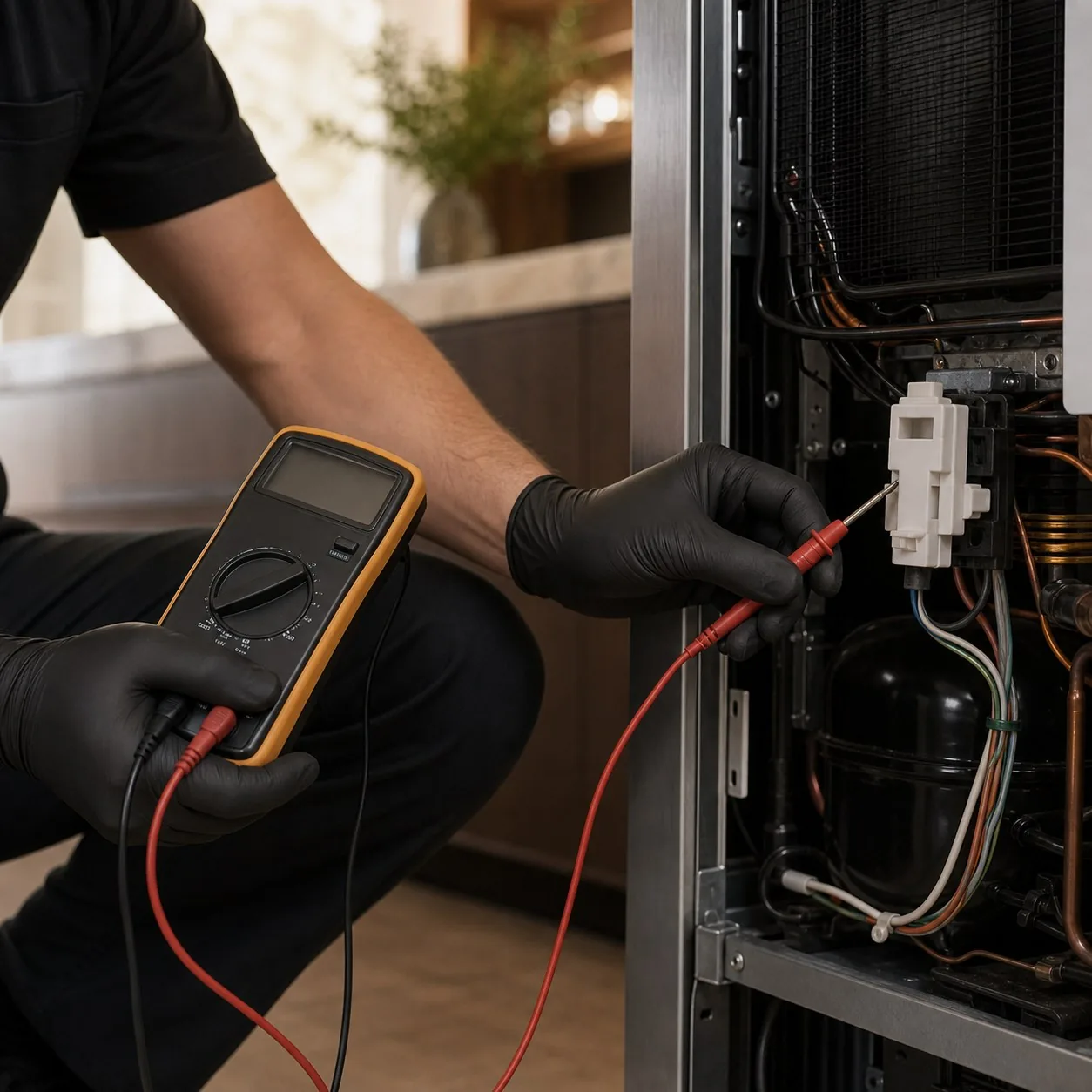
- When a hood goes completely dead, the fault is upstream of the motor: a tripped breaker, a failed control board or touch panel, or a broken wiring connection at the junction. We test power at the hood first, then the board, before condemning the blower, since a dead panel mimics a dead motor.
- What does range hood repair cost in the Bay Area?
- Most range hood repairs fall in the $200-$700 band — blower motor, run capacitor, control board, switch or light driver are non-sealed parts and labor. A flat $89 diagnostic is waived with any repair, and you approve a written price before work starts. Severe in-duct grease cleaning is quoted separately.
- Why does my range hood have weak suction even though the fan runs?
- Weak suction with a running fan is almost never the motor. Grease-clogged baffle filters, a duct packed with hardened grease, a collapsed flex run, or a stuck backdraft damper all choke airflow. We measure capture at the hood, then clear the real restriction rather than replacing a healthy blower.
- Can you do range hood fan repair, or does the whole blower get replaced?
- Often the fan motor itself is fine and only its run capacitor, speed control, or a seized bearing has failed — those we repair. When an internal blower has burned a winding or tripped its thermal cutout repeatedly, we fit a genuine OEM blower assembly matched to the hood's CFM rating so capture returns to spec.
How a visit works
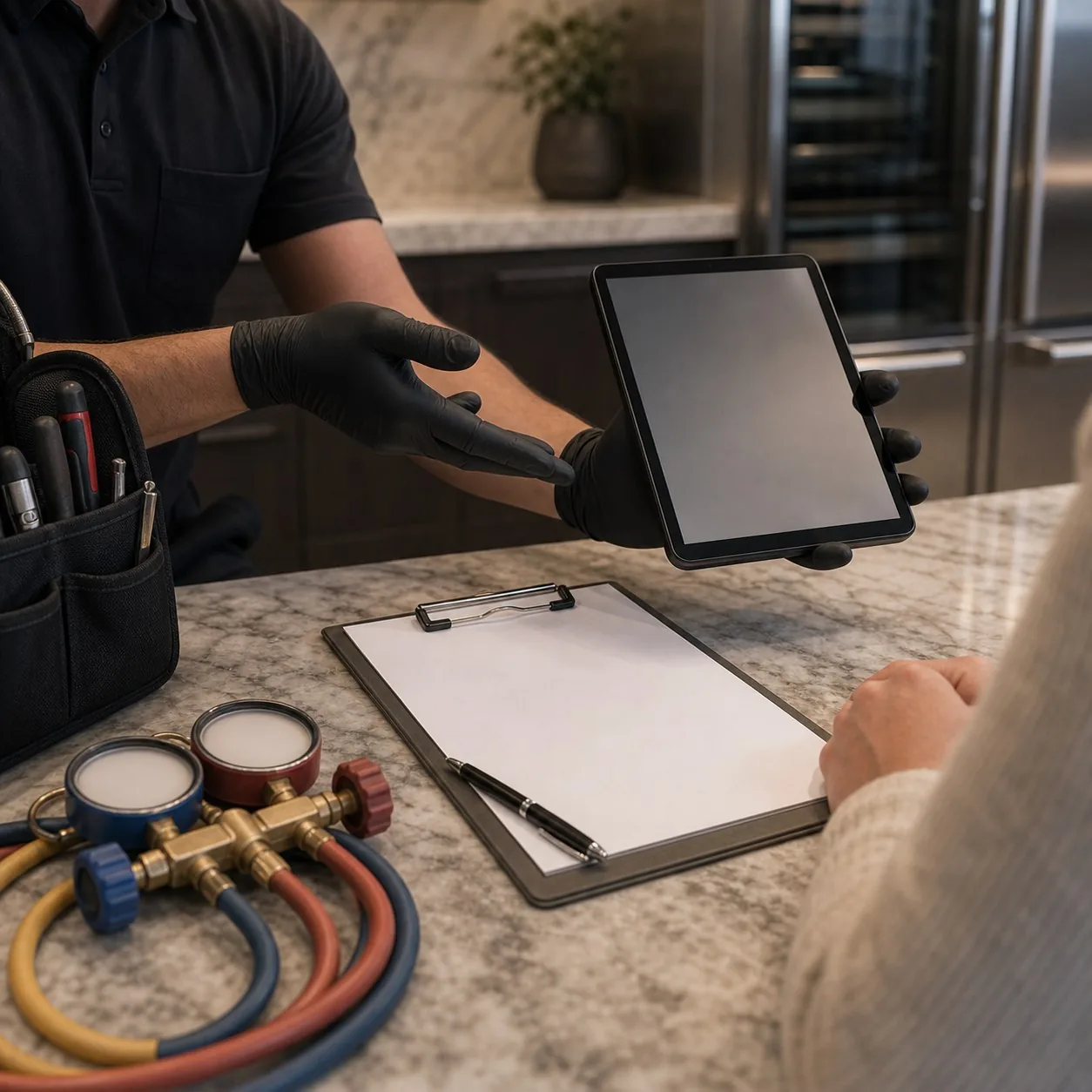
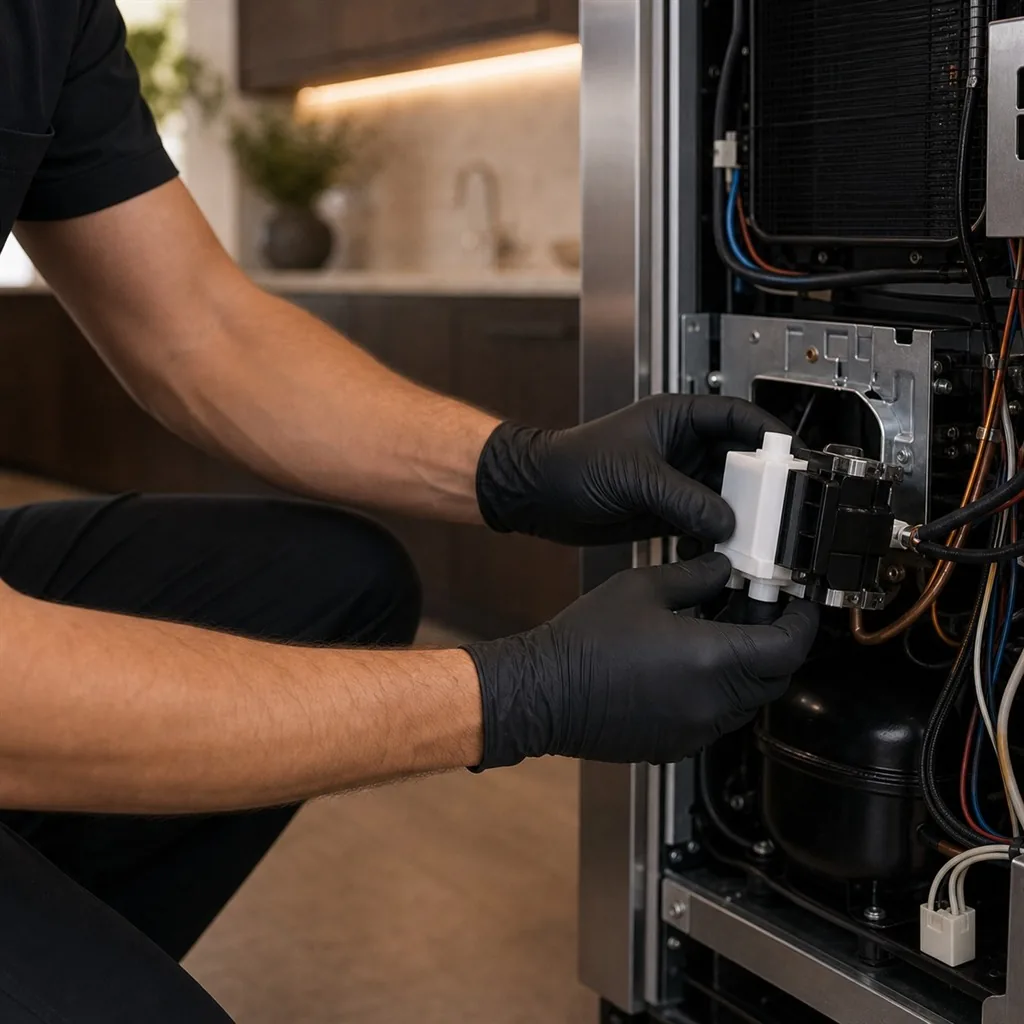
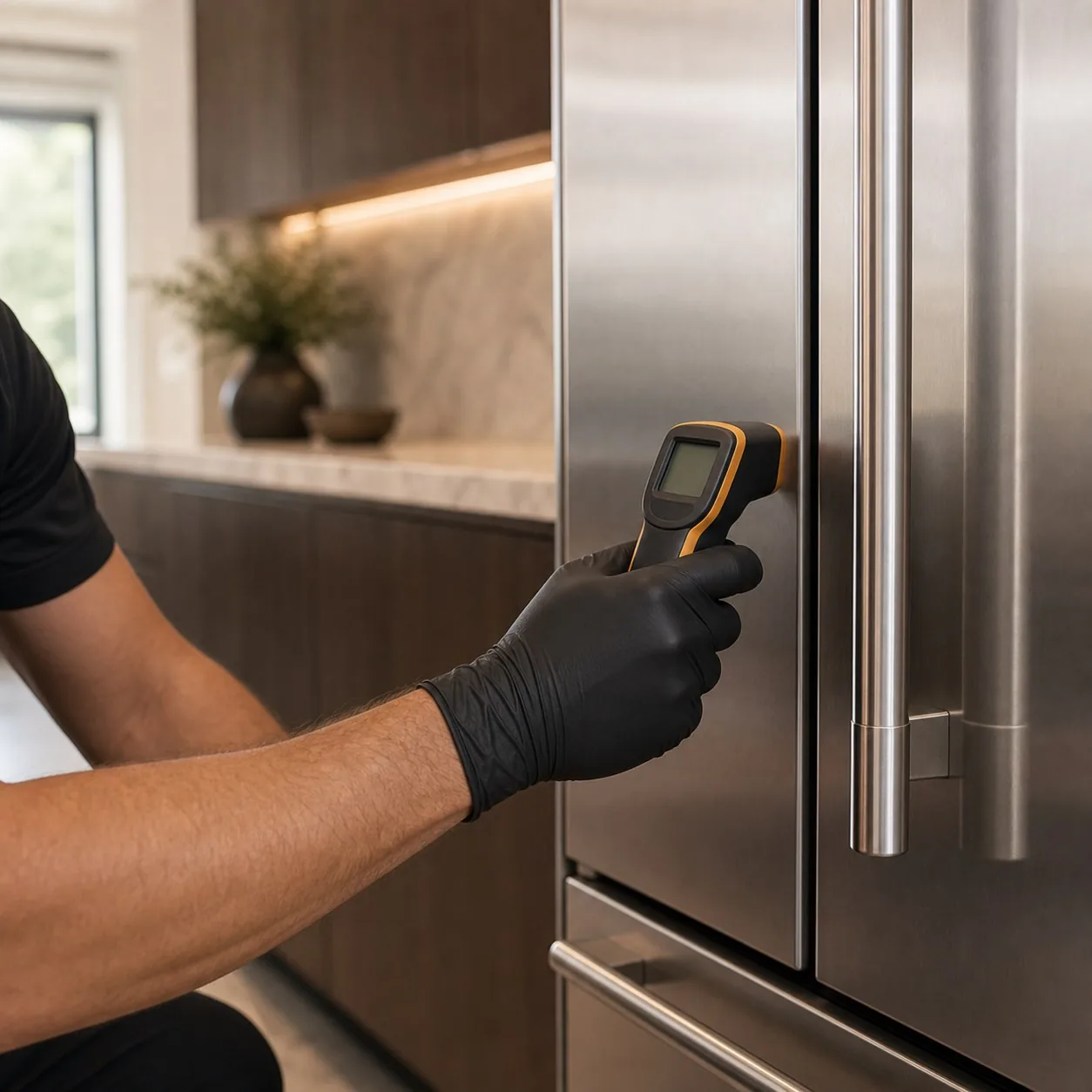
Frequently asked questions
Why is my vent hood not working at all — no fan, no lights?
When a hood goes completely dead, the fault is upstream of the motor: a tripped breaker, a failed control board or touch panel, or a broken wiring connection at the junction. We test power at the hood first, then the board, before condemning the blower, since a dead panel mimics a dead motor.
What does range hood repair cost in the Bay Area?
Most range hood repairs fall in the $200-$700 band — blower motor, run capacitor, control board, switch or light driver are non-sealed parts and labor. A flat $89 diagnostic is waived with any repair, and you approve a written price before work starts. Severe in-duct grease cleaning is quoted separately.
Why does my range hood have weak suction even though the fan runs?
Weak suction with a running fan is almost never the motor. Grease-clogged baffle filters, a duct packed with hardened grease, a collapsed flex run, or a stuck backdraft damper all choke airflow. We measure capture at the hood, then clear the real restriction rather than replacing a healthy blower.
Can you do range hood fan repair, or does the whole blower get replaced?
Often the fan motor itself is fine and only its run capacitor, speed control, or a seized bearing has failed — those we repair. When an internal blower has burned a winding or tripped its thermal cutout repeatedly, we fit a genuine OEM blower assembly matched to the hood's CFM rating so capture returns to spec.
Why won't my range hood lights work when the fan still runs?
Hood lights run on their own circuit, so they fail independently of the blower. On modern hoods that means a failed LED driver, a bad halogen socket, or a control-board light channel; on older hoods, a switch or transformer. We isolate the lighting circuit and replace only the failed component.
Do you repair range hoods for all the high-end brands?
Yes. We service Wolf, Viking, Thermador, Sub-Zero and GE Monogram wall-mount, island, under-cabinet and insert hoods, plus the remote and in-line blowers many pro kitchens use. Genuine OEM parts are matched to the model on the rating plate, so a repaired hood meets its original airflow rating.
What clients say
4.9 · 327 reviews
Our 48-inch island hood over a Wolf range had gone almost silent on high — barely pulling smoke off the cooktop. I assumed a dead blower. The tech measured capture at the face, found the baffle filters glued solid with grease and a backdraft damper stuck half-shut, cleared both, and airflow snapped back to full. No part needed.
Thermador wall hood: lights worked, fan was dead. He confirmed power at the junction, isolated a failed control board rather than the motor, and fit a genuine OEM board. He also tested the blower so we didn't pay twice. Capture verified before he left and a clean written quote up front.
Remote in-line blower for a Viking rangetop hummed but wouldn't spin. Turned out to be the run capacitor, not the whole motor — a fraction of what a full blower swap would have cost. He replaced it, freed a slightly seized bearing, and the hood pulls strong again. Honest diagnosis on an expensive setup.