

Quick answers
- Why is my Thermador oven not heating?
- On electric Thermador ovens, a no-heat is usually a failed bake or broil element or a control fault. On gas ovens, it's often a weak igniter that no longer glows hot enough to open the safety gas valve. A drifted temperature sensor can also make the oven shut off before it reaches the setpoint.
- Why does my Thermador oven run cold or bake unevenly?
- Low or uneven temperature usually means a partly failed bake element, a temperature sensor reading the wrong heat, or a convection fan that isn't circulating air. We test the element and sensor against their real specs so we replace the component that's actually out of range rather than guessing.
- How do I know if my Thermador oven igniter is bad?
- On a gas Thermador oven, watch the igniter when you call for heat. It should glow bright and the burner should light within about a minute. If it glows weakly or stays dark, or you smell gas without a flame, the igniter has lost the current draw needed to open the safety valve and should be replaced.
- Is it the element or the control board?
- A visibly blistered or broken bake element points to the element. If the element looks intact but the oven still won't heat, we test the element, the temperature sensor, and the control's output before condemning the board — elements and sensors fail far more often than the control.
How does a Thermador oven actually make heat?
A Thermador oven makes heat one of two ways. Electric wall ovens use bake and broil elements, with a temperature sensor feeding the control so it cycles the elements to hold your setpoint and a convection fan to circulate the heat. Gas ovens use a glow-bar igniter: when you call for heat the igniter draws current and glows, and only once it’s hot enough does the safety valve open and the gas light. Identifying which type you have narrows the fault fast, and it’s the same split a professional range repair diagnostic settles before any part is quoted.
What causes a Thermador oven to stop heating?
The order below runs from most to least common. A no-heat or uneven-heat complaint on an electric oven usually traces to an element; on a gas oven it’s the igniter first.
| Symptom or sign | Likely cause | What we do |
|---|---|---|
| No heat at all, electric oven | Failed bake or broil element | Inspect for blistering, measure element resistance against spec |
| No flame, gas oven, weak igniter glow | Glow-bar igniter can’t draw enough current to open the valve | Test igniter current draw, replace with an OEM glow bar |
| Oven cycles off before setpoint | Drifted temperature sensor (RTD) | Check the sensor against its temperature curve, replace if out of range |
| Bakes unevenly but oven gets hot | Convection fan not circulating air | Confirm fan rotation and motor, replace the fan, not the element |
| Display or relays misbehave | Control fault | Verify the control’s power output only after element, igniter, and sensor test clean |
A blistered or broken element is usually visible to the eye, a failing igniter glows weak or not at all, and a drifted sensor reads wrong but looks fine — which is why we test each against spec instead of swapping parts blind. The same igniter-vs-sensor logic applies on a gas oven covered in our Wolf oven not heating guide.
When should I call for Thermador oven repair?
If the breaker is set and the oven still won’t reach or hold temperature, book a diagnostic. We confirm the oven type, then test the element, igniter, sensor and control output before quoting, so it’s a single trip with the correct OEM part. An element, igniter, or sensor swap is a non-sealed repair in the $200–$700 band with the flat $89 diagnostic waived on any repair — see Thermador repair cost for the full ranges, and the Thermador repair hub for cooktop and refrigeration faults. If the panel is showing a fault code instead, our Thermador error codes guide decodes it. Inland Bay Area heat and hard water shorten igniter and element life, so we check the neighbors of any failed part while we’re in the oven.
Check these before you call
- Reset the breaker for the oven circuit — a wall oven can lose one leg of 240V and run warm but never hot.
- Listen for the convection fan on bake; if baking is uneven but the oven gets hot, suspect the fan, not the element.
- On a gas model, watch the igniter glow when you call for heat — weak orange or no glow means it can't open the valve.
- Note whether bake fails but broil still works (or the reverse) — each runs a separate element on its own circuit.
- Stop using the oven if it won't hold temperature; a wandering setpoint wastes energy and can leave food unsafe.
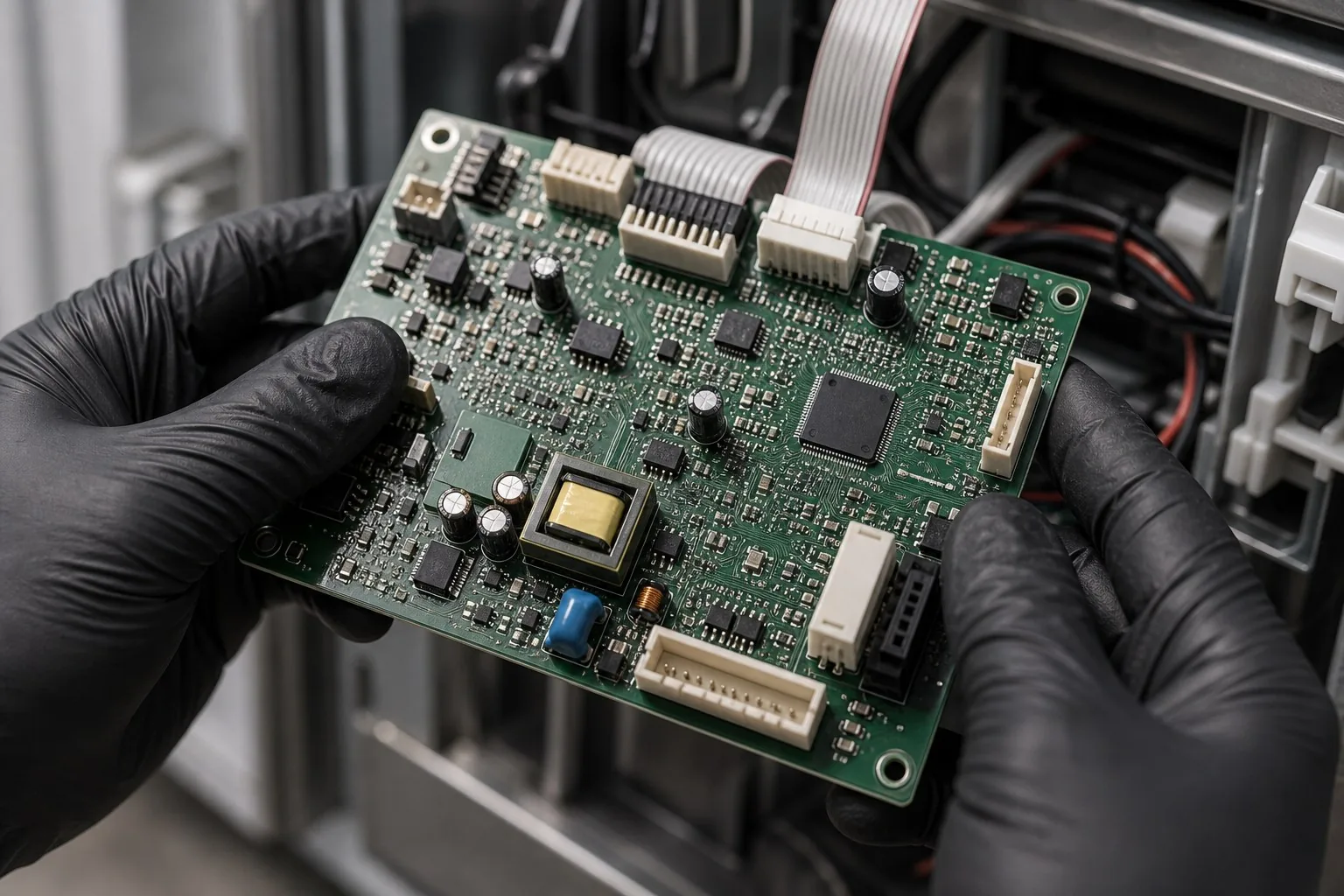
Element or board?
Why we test before condemning the control
When the element looks intact but the oven still runs cold, it's tempting to blame the board — and expensive to be wrong. Elements and sensors fail far more often than controls. We measure the bake element's resistance, check the RTD sensor against its temperature curve, and confirm the control is actually sending power before any board is even quoted.
Frequently asked questions
Why is my Thermador oven not heating?
On electric Thermador ovens, a no-heat is usually a failed bake or broil element or a control fault. On gas ovens, it's often a weak igniter that no longer glows hot enough to open the safety gas valve. A drifted temperature sensor can also make the oven shut off before it reaches the setpoint.
Why does my Thermador oven run cold or bake unevenly?
Low or uneven temperature usually means a partly failed bake element, a temperature sensor reading the wrong heat, or a convection fan that isn't circulating air. We test the element and sensor against their real specs so we replace the component that's actually out of range rather than guessing.
How do I know if my Thermador oven igniter is bad?
On a gas Thermador oven, watch the igniter when you call for heat. It should glow bright and the burner should light within about a minute. If it glows weakly or stays dark, or you smell gas without a flame, the igniter has lost the current draw needed to open the safety valve and should be replaced.
Is it the element or the control board?
A visibly blistered or broken bake element points to the element. If the element looks intact but the oven still won't heat, we test the element, the temperature sensor, and the control's output before condemning the board — elements and sensors fail far more often than the control.
Should I keep using a Thermador oven that won't reach temperature?
No. An oven that won't hold temperature wastes energy and can leave food unsafe, and on a gas model a weak igniter may admit unburned gas to the cavity. Stop using it, check the breaker, and book a diagnostic so the element, igniter, sensor, and control are properly tested.
What clients say
4.9 · 327 reviews
Our gas Thermador wall oven wouldn't heat at all. The technician watched the igniter glow weak orange and explained it could no longer draw enough current to open the safety valve. He fitted a genuine glow-bar igniter and it lit within a minute. No guessing, no needless board talk.
Electric Thermador was running cold and baking unevenly. Instead of blaming the control, he measured the bake element resistance and checked the temperature sensor against its curve. The element had partly failed; replaced with the OEM part and it holds setpoint now. Refreshingly methodical.
Oven reached heat but bakes came out lopsided. The tech listened for the convection fan, found it wasn't circulating, and traced a failed fan motor rather than the element everyone assumes. Swapped the genuine part and even tones returned. Tested the neighbors while he was in the cavity.