
Quick answers
- Where can I find Thermador oven repair near me in the Bay Area?
- We are an independent, diagnostic-first Thermador oven service based in San Ramon and covering the Tri-Valley, East Bay, Peninsula and beyond. We repair both wall ovens and range ovens — element, igniter, sensor, self-clean and control faults — with genuine OEM parts matched to the rating plate.
- What does Thermador wall oven repair usually involve?
- Thermador wall oven repair most often means a failed bake or broil element, a drifted temperature sensor, a stuck self-clean door latch, or a control fault. Single and double wall ovens are built flush into cabinetry, so we confirm the exact model from the plate before pulling the unit to keep panels and trim intact.
- How much does Thermador oven repair cost?
- Most Thermador oven repairs run $200–$700 — elements, igniters, sensors, hinges, gaskets and latches. A failed control board or touch panel runs higher. The on-site diagnostic is a flat $89 and is waived with any repair once you approve a written, flat quote.
- Why won't my Thermador oven finish a self-clean cycle?
- A stalled self-clean usually means the motorized door latch failed to lock, or a thermal cutout tripped from the extreme cycle heat. The control won't run pyrolytic cleaning until the latch confirms locked, so we test the latch motor, switch and thermal fuse before clearing the fault.
Wall ovens and range ovens — two cavities, one diagnosis
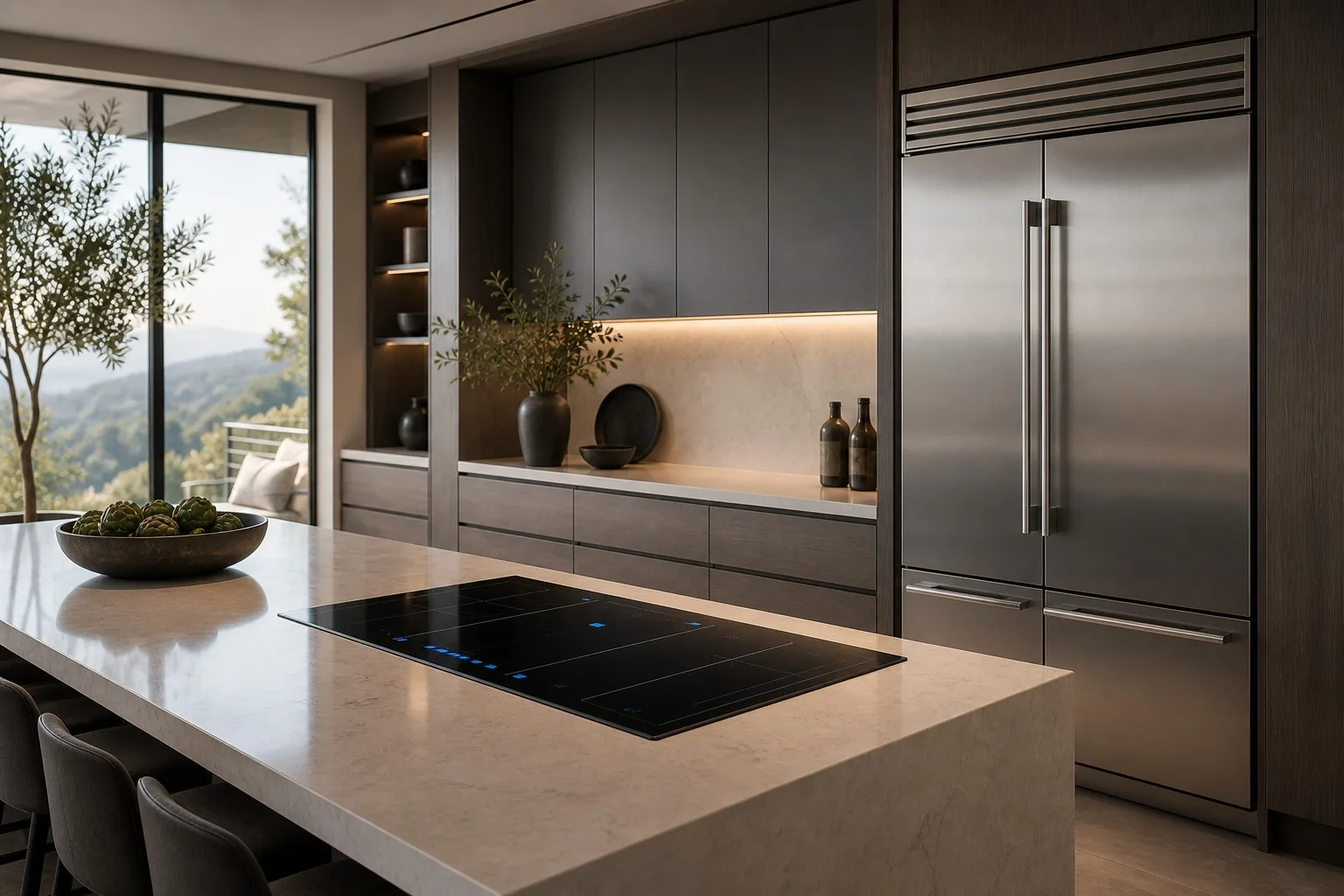
A Thermador oven lives in one of two places: a built-in wall oven cavity (single, double, or a steam-and-convection combo) or the oven beneath a Thermador professional range. Both heat the same way and fail in the same families, but they’re reached differently — a wall oven is set flush into cabinetry behind trim and panels, while a range oven sits under the cooktop. We start by reading the model and serial from the rating plate, because the correct element, igniter, sensor or latch depends on the exact cavity you own.
What goes wrong on a Thermador oven?
- Bake or broil element — the most common heating fault on electric cavities; a blistered or broken element bakes cold or unevenly.
- Gas igniter — on gas range ovens, a tired glow-bar igniter can’t draw enough current to open the safety valve, so there’s no flame.
- Temperature sensor — a drifted RTD sensor reports the wrong heat, so the oven cycles off early or overshoots.
- Self-clean latch and thermal cutout — a failed motorized latch won’t lock for a pyrolytic cycle, and the cleaning heat can trip a thermal fuse that then blocks normal baking.
- Control fault — less common, checked only after the element, igniter and sensor test clean.
| Symptom or sign | Likely cause | What we do |
|---|---|---|
| Oven bakes cold or unevenly | Failed bake/broil element on an electric cavity | Measure element resistance, fit the OEM element that matches the cavity |
| Gas range oven won’t light | Tired glow-bar igniter below the valve’s current spec | Test igniter amp draw, replace so the safety valve opens |
| Runs off-temperature, burns edges | Drifted RTD temperature sensor | Read the sensor against its temperature curve, replace or recalibrate |
| Dead right after a self-clean cycle | Tripped thermal cutout or latch never confirmed locked | Test latch motor, switch and thermal fuse before touching the board |
| Fault code on the display | Sensor, latch, or control-circuit fault | Match the code to the model, then verify by measurement |
Why won’t my Thermador oven heat after a self-clean cycle?
A Thermador oven that quit right after a cleaning cycle usually hasn’t died — a thermal cutout tripped during the pyrolytic run, or the door latch never confirmed locked. We test the latch motor and switch, check the thermal fuse, and verify the cavity wiring survived the heat before touching the control board. If the failure is purely a no-heat one rather than a self-clean lockout, our Thermador oven not heating page walks the element-versus-igniter logic in depth, and a fault code on the display is decoded on the Thermador error codes reference.
How does the diagnostic work?
You approve a written, flat price before any work starts, and the diagnostic fee is waived toward the repair. The technician confirms whether it’s a wall oven or a range oven, identifies the symptom (no heat, runs cold, won’t self-clean, fault on the display), tests the element, igniter, sensor and control against spec, then fits the genuine OEM part. Most oven repairs run $200–$700; the Thermador repair cost page lists bands by part, and a gas-range oven that shares a cooktop with burner faults often makes a single professional range repair visit the efficient call.
Is it worth repairing a Thermador oven, or should I replace it?
Usually repair wins. A wall oven is built into custom cabinetry, so replacement means matching the cutout and refacing trim — work that dwarfs a $200–$700 element, igniter, or sensor job. We only recommend replacement when several major parts have failed together or the repair would exceed roughly half the price of a comparable new oven. For the full range of Thermador work beyond the oven, start at the Thermador repair hub.
Why Bay Area kitchens are hard on Thermador ovens
These ovens anchor estate kitchens from San Ramon and Danville out to the Peninsula, and local conditions shorten part life. Inland Tri-Valley and Silicon Valley kitchens sit at 90–100°F in summer, so a self-clean cycle adds enormous heat to an already hot cavity and pushes thermal cutouts and latches harder. Wildfire-season ash works into vents and cooling fans, and pets compound it. Closer to the coast and the fog line, salt-laden air corrodes igniters and spark modules on Marin and Peninsula ranges, and hard water scales steam-oven components. Because so many of these ovens sit flush in custom cabinetry behind stone and fitted panels — often in gated or hillside homes — we work by appointment with genuine OEM parts matched to the rating plate, so the repair is done once and cleanly.
Diagnose, don't swap
Element, sensor, or control — tested, not guessed
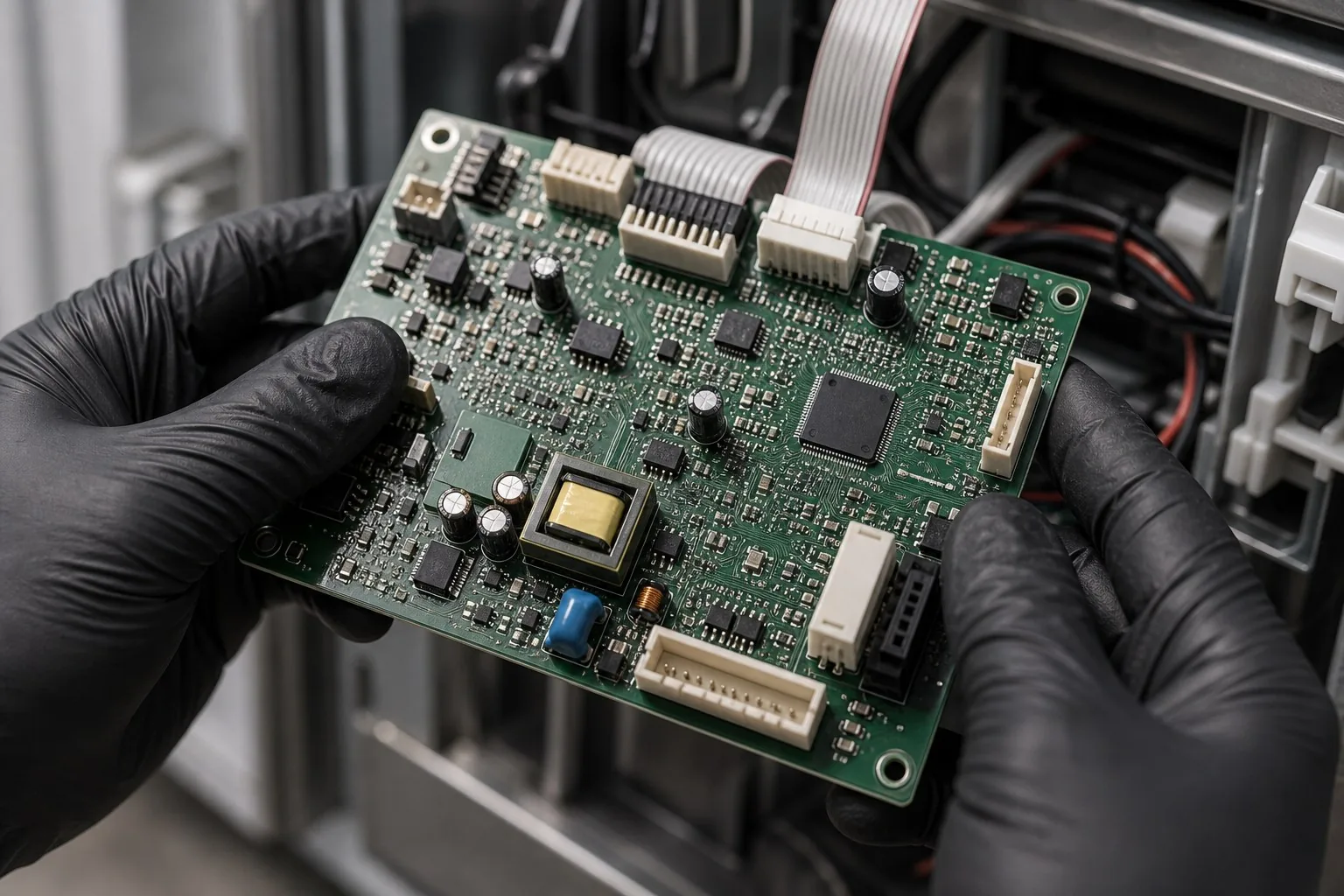
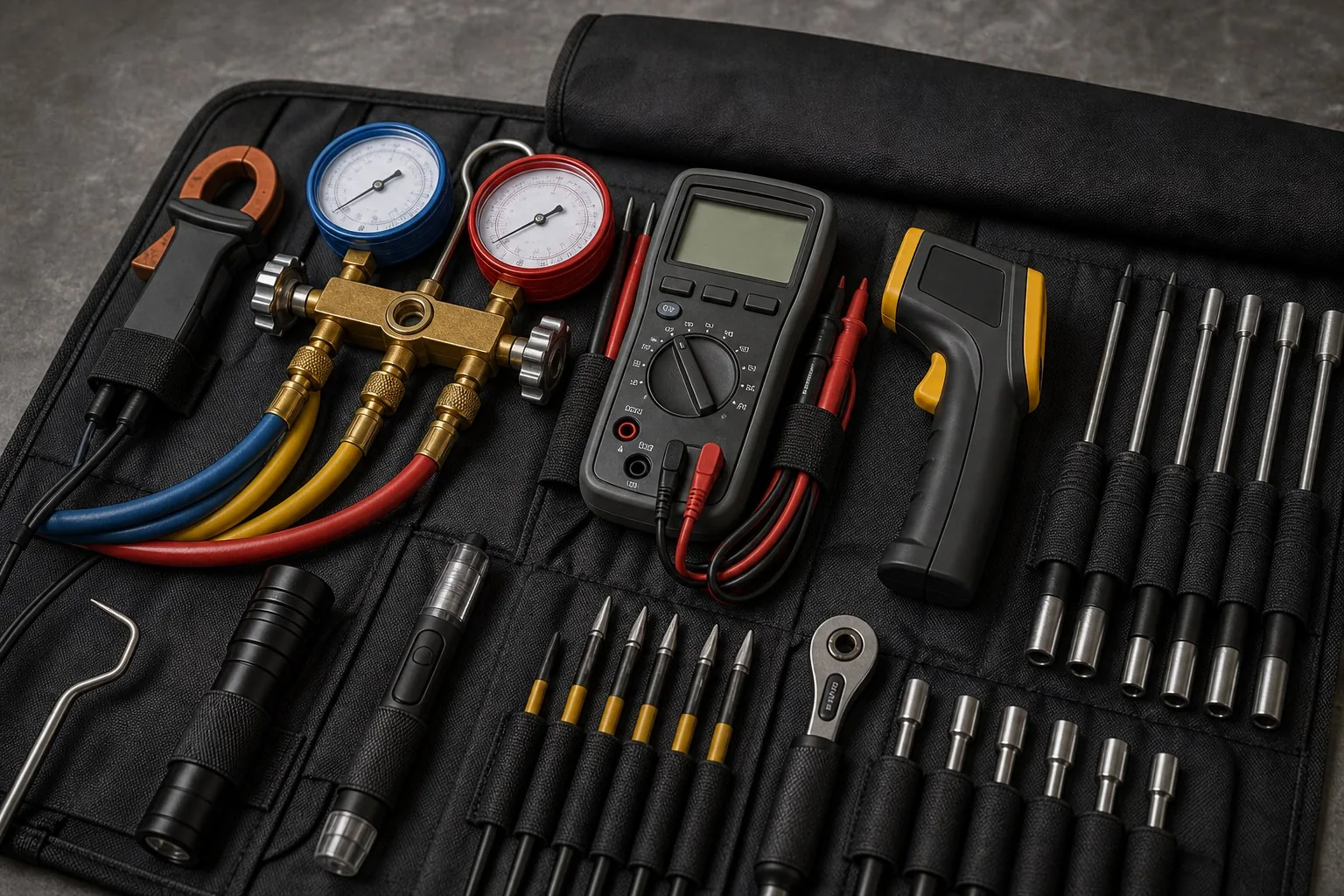
A no-heat or off-temperature Thermador oven has three usual suspects: the bake or broil element, the RTD temperature sensor, and the control. We measure element resistance, read the sensor against its temperature curve, and confirm the control is actually sending power before any board is quoted — because elements and sensors fail far more often than controls.
One trip, correct part
Genuine OEM parts matched to your oven
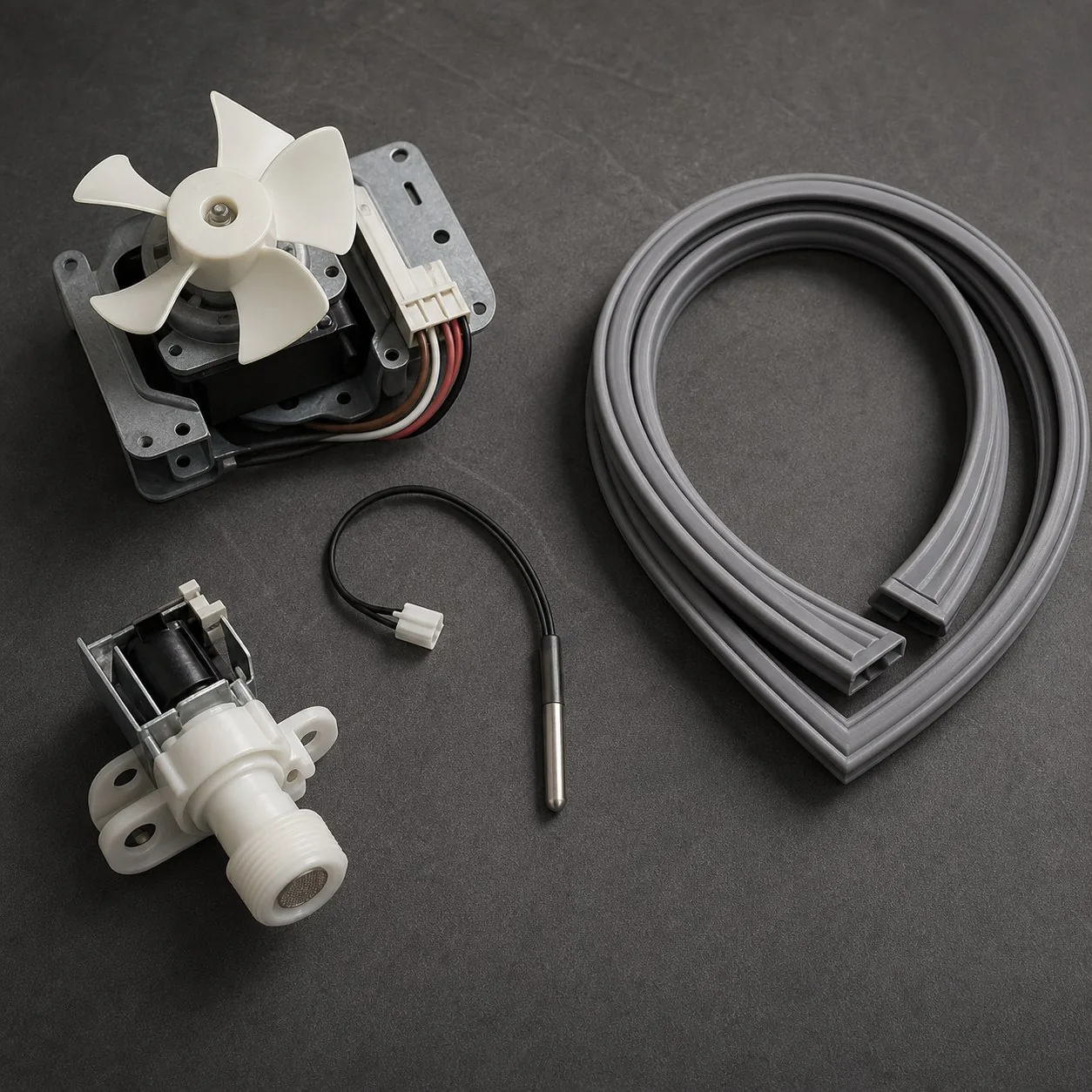
Thermador wall ovens and range ovens share families but not every part. We read the model and serial from the rating plate first, then carry the OEM element, igniter, sensor, latch or hinge that fits your cavity — so the repair is a single clean visit rather than a parts-store guess.
Frequently asked questions
Where can I find Thermador oven repair near me in the Bay Area?
We are an independent, diagnostic-first Thermador oven service based in San Ramon and covering the Tri-Valley, East Bay, Peninsula and beyond. We repair both wall ovens and range ovens — element, igniter, sensor, self-clean and control faults — with genuine OEM parts matched to the rating plate.
What does Thermador wall oven repair usually involve?
Thermador wall oven repair most often means a failed bake or broil element, a drifted temperature sensor, a stuck self-clean door latch, or a control fault. Single and double wall ovens are built flush into cabinetry, so we confirm the exact model from the plate before pulling the unit to keep panels and trim intact.
How much does Thermador oven repair cost?
Most Thermador oven repairs run $200–$700 — elements, igniters, sensors, hinges, gaskets and latches. A failed control board or touch panel runs higher. The on-site diagnostic is a flat $89 and is waived with any repair once you approve a written, flat quote.
Why won't my Thermador oven finish a self-clean cycle?
A stalled self-clean usually means the motorized door latch failed to lock, or a thermal cutout tripped from the extreme cycle heat. The control won't run pyrolytic cleaning until the latch confirms locked, so we test the latch motor, switch and thermal fuse before clearing the fault.
Is it worth repairing a Thermador wall oven?
Usually yes. A Thermador wall oven is built into custom cabinetry, so replacement means matching the cutout and refacing trim — often costlier than a $200–$700 repair. We recommend replacement only when several major parts have failed or the repair exceeds roughly half the price of a comparable new oven.
What clients say
4.9 · 327 reviews
Our Thermador double wall oven baked cold no matter the setting. He measured the bake element resistance, found it broken, and read the model off the plate before pulling the flush-mounted cavity so the trim stayed intact. Genuine OEM element fitted, and it held temperature on the test bake.
The oven quit right after a self-clean cycle and I thought it was dead. The technician explained a thermal cutout had tripped from the pyrolytic heat and the door latch never confirmed locked. He tested the latch motor and switch, replaced the failed latch, and normal baking returned.
Thermador range oven was running well off temperature, overshooting and burning edges. Rather than guessing the control board, he read the RTD sensor against its temperature curve and found it drifted. A genuine OEM sensor fixed it in one trip and the flat quote held exactly as written.