Quick answers
- My Wolf oven temperature is off — can I just recalibrate it?
- Often yes. Wolf dual-fuel and E-series ovens accept a calibration offset entered in the control menu, which corrects a steady reading that sits within roughly 35°F of the setpoint. First measure the real cavity heat with a rack-center thermometer; only adjust the offset once a fault probe and element are ruled out.
- Why does my Wolf oven run hot or cold even after I recalibrate?
- If a fresh offset doesn't hold, the control isn't the problem — the temperature probe is feeding it a wrong reading, or a tired bake element can no longer reach the demand. The menu can only shift a steady, correct curve; it cannot fix a sensor that drifts or an element that under-delivers.
- How do I know if it's calibration or a broken sensor?
- Bake at 350°F for 20 minutes with a thermometer at rack center. A steady 15–35°F error, even across the cavity, is calibration. A reading that swings, climbs forever, or shuts off early signals a drifted RTD probe; uneven browning front-to-back points to the convection fan or a partial element.
- How much does a Wolf oven calibration or temperature repair cost?
- A menu calibration is part of the diagnostic — no parts. If a probe, element or fan is the cause, those non-sealed repairs run $200–$700. Our service call is a flat $89 and is waived with any repair. See our [Wolf repair cost](/wolf-repair-cost) page for the part-by-part breakdown.
How to measure a Wolf oven that reads hot or cold
- Place a thermometer at rack centerSet an independent oven thermometer on the middle rack, centered, not touching a wall or the probe.
- Bake at 350°F and wait for cyclingSet 350°F conventional bake and let the oven cycle for 20 minutes so the reading settles around the setpoint.
- Read the gapCompare the thermometer to 350°F. A steady 15–35°F error, even across the cavity, is a calibration offset.
- Watch the behavior, not just the numberIf the reading swings, climbs past setpoint, or one side browns harder, suspect the probe, element or fan — not the offset.
- Adjust the offset only if it's steadyEnter the offset in the control menu to correct a steady gap; if the swing returns, book a diagnostic for the probe.
Before you book a Wolf temperature diagnostic
- Run the 350F thermometer test above and write down the steady gap and any swing
- Note whether the error is even across the cavity or worse on one side or rack
- Have your model and serial from the rating plate ready so we match the right RTD probe
- Tell us if a control offset was already entered and whether it held or drifted back
- Mention any fault indicator on the display so the right control parts ride on the truck
Calibration offset
When the menu offset is the right answer
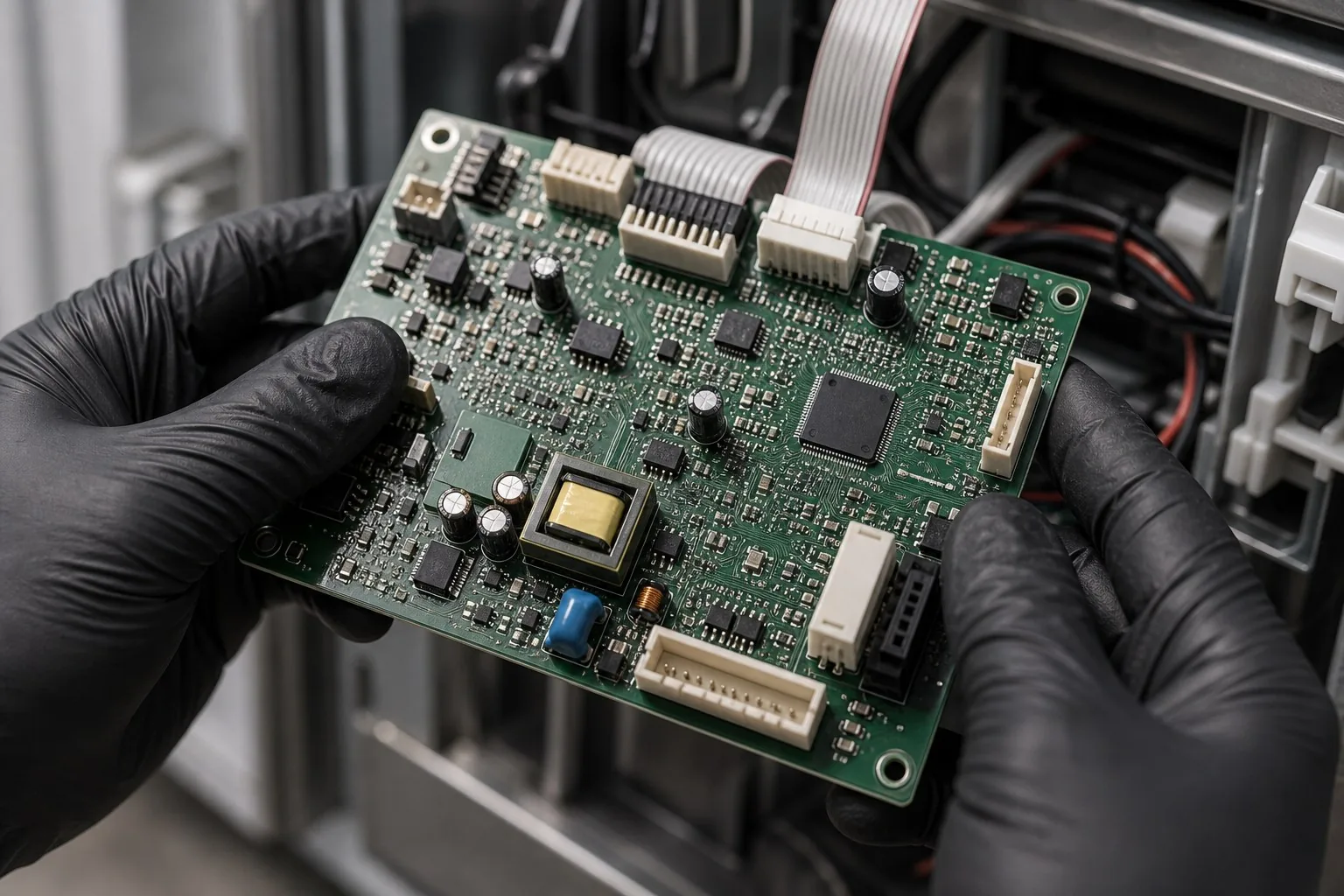
A Wolf oven that bakes a touch hot or cool but evenly, with a steady reading 15-35F off, is a calibration case. The control menu offset shifts the whole curve back onto the setpoint, no parts and no pull-out. We confirm the gap is steady across a full cycle before we touch the setting, so the correction sticks instead of masking a deeper fault.
Real fault
When the offset can't fix it
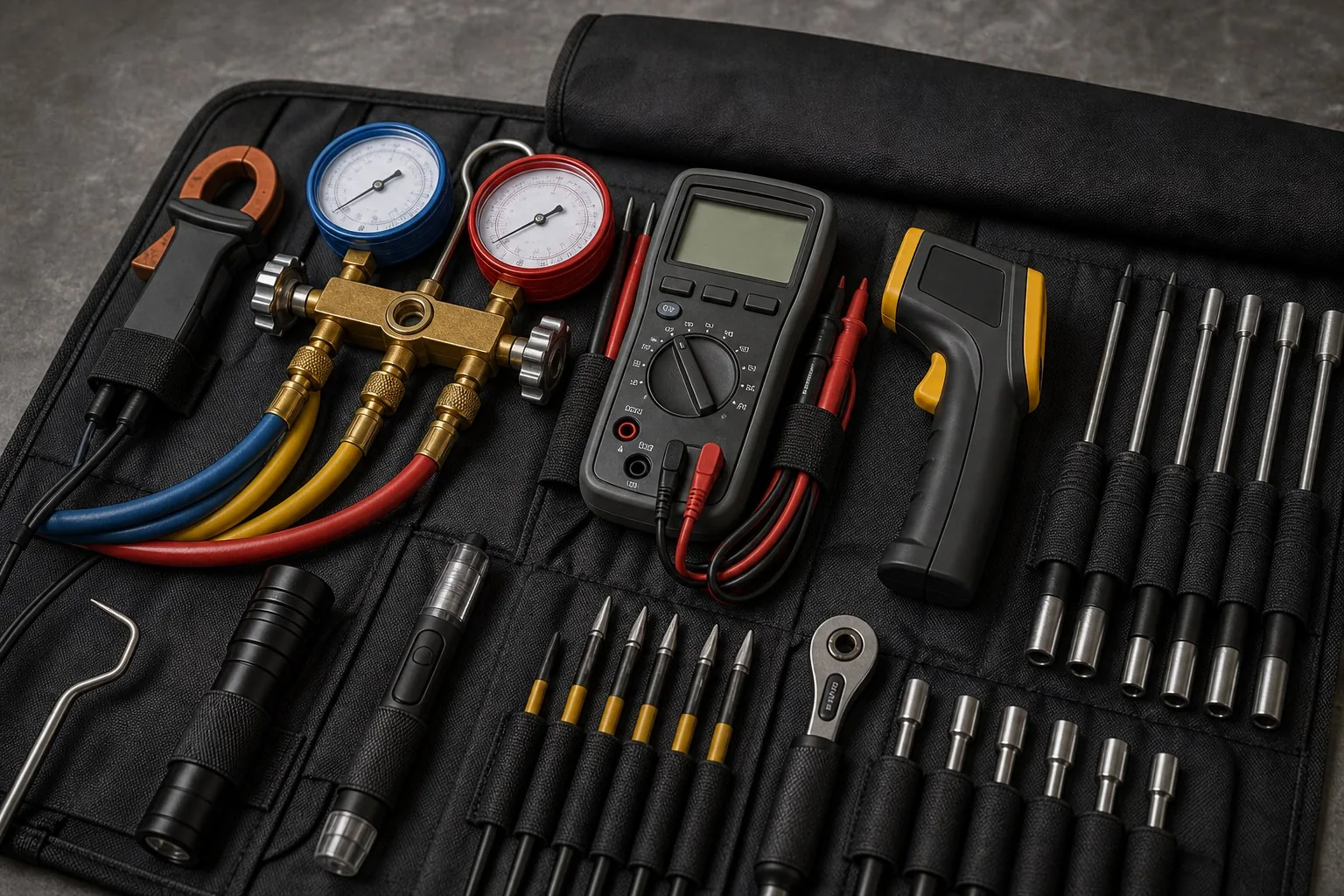
A reading that wanders, a 50F-plus gap, or one-sided browning is not a calibration problem. The RTD temperature probe may have drifted out of its resistance band, the bake or broil element may under-deliver, or the convection fan may have stalled. We measure probe resistance and element draw against spec so the part that's actually out is the one replaced.
Is my Wolf oven off because of calibration or a real fault?
Start by measuring it: a Wolf oven that reads hot or cold is a calibration case only when the error is steady and even across the cavity, and a real component fault when the reading wanders, runs away, or browns one side. The control on a Wolf dual-fuel or E-series wall oven holds your setpoint by reading a resistance-type probe (an RTD) and cycling the bake and broil elements, with a convection fan moving the heat. A small, even gap means the control’s reference has drifted and an offset can shift it back. A swinging or lopsided result means the probe, an element, or the fan has changed — and no menu setting will absorb that. The Wolf oven not heating page covers the no-heat extreme; this page is about the in-between, where the oven still works but the temperature is wrong.
How far off is “just calibration”?
A genuine calibration drift is small and consistent — typically within about 35°F of the setpoint and the same wherever you measure in the cavity. Within that band, entering an offset in the control menu puts the curve back on target without a single part. Past it, you’re no longer correcting a reference; you’re masking a fault. The table below sorts the symptom you actually see into the cause and the fix, so you know before you book whether this is a five-minute menu change or a probe that needs testing against spec.
| What you measure | Likely cause | What we do |
|---|---|---|
| Steady 15–35°F off, even across the cavity | Calibration reference drift | Enter the control-menu offset and verify it holds a full cycle |
| Reading swings or climbs past setpoint | Drifted RTD temperature probe | Read probe resistance vs. spec, fit a genuine OEM probe |
| Oven shuts off well before setpoint | Probe reading high, or control fault | Test probe and control output, replace only the part that’s out |
| One side or rack browns far harder | Stalled convection fan or partial element | Confirm config from the plate, replace the failed zone |
| Runs far hot, won’t stop heating | Stuck heat-call relay on the control | Test the control output and replace the board if the relay is welded |
What does the calibration offset actually do?
The offset shifts the entire temperature curve up or down by a fixed amount — it tells the control “read 25°F lower than you think you see,” which is perfect for a probe that ages evenly but useless for one that drifts unpredictably. That distinction is the whole job. We run the 20-minute thermometer test in the steps above, confirm the gap is the same on a second cycle, and only then enter the offset. If the same oven needs a bigger offset a week later, the reference isn’t drifting in a straight line — the RTD probe is failing, and we test its resistance against the spec for your model rather than burying the problem under a larger number. For a display showing a fault rather than just a wrong temperature, our Wolf error codes reference explains why we read the behavior and the rating plate before trusting any number on the screen.
Why Wolf ovens drift in Bay Area kitchens
The way a Wolf is used here shapes how its temperature wanders. Across the Tri-Valley — Pleasanton, Danville, Dublin and the San Ramon valley — inland summer kitchens push 90–100°F while the oven runs, and that constant thermal soak ages the RTD probe and the control’s reference faster than a mild coastal climate, so calibration drift shows up earlier on hard-working estate ovens. Closer to the fog line on the Peninsula and in Marin, salt-laden air corrodes the probe leads and terminal connections, which produces the wandering, swinging reading that an offset can’t tame. Hard water across the region leaves scale that bakes onto sealed-burner ports and self-clean circuits, adding heat load the control has to fight. Because these ovens are framed into custom cabinetry with fitted panels and tight returns, a clean pull matters whenever a probe or element does need replacing; we work gated, hillside and white-glove-access homes by appointment. Most of these corrections fall in the non-sealed band — see the Wolf repair cost ranges — and the wider service lives on our Wolf repair page. A flat $89 service call applies and is waived with any repair.
Frequently asked questions
My Wolf oven temperature is off — can I just recalibrate it?
Often yes. Wolf dual-fuel and E-series ovens accept a calibration offset entered in the control menu, which corrects a steady reading that sits within roughly 35°F of the setpoint. First measure the real cavity heat with a rack-center thermometer; only adjust the offset once a fault probe and element are ruled out.
Why does my Wolf oven run hot or cold even after I recalibrate?
If a fresh offset doesn't hold, the control isn't the problem — the temperature probe is feeding it a wrong reading, or a tired bake element can no longer reach the demand. The menu can only shift a steady, correct curve; it cannot fix a sensor that drifts or an element that under-delivers.
How do I know if it's calibration or a broken sensor?
Bake at 350°F for 20 minutes with a thermometer at rack center. A steady 15–35°F error, even across the cavity, is calibration. A reading that swings, climbs forever, or shuts off early signals a drifted RTD probe; uneven browning front-to-back points to the convection fan or a partial element.
How much does a Wolf oven calibration or temperature repair cost?
A menu calibration is part of the diagnostic — no parts. If a probe, element or fan is the cause, those non-sealed repairs run $200–$700. Our service call is a flat $89 and is waived with any repair. See our [Wolf repair cost](/wolf-repair-cost) page for the part-by-part breakdown.
Does Wolf oven calibration drift on its own over time?
A small drift is normal as the oven ages and the probe's resistance shifts slightly, which is why Wolf provides the offset adjustment. A large, sudden change is not normal aging — it usually means the RTD probe has moved out of its resistance band and needs testing against spec, not recalibrating.
Should I keep baking with a Wolf oven that's running hot?
For light baking you can compensate by lowering the dial, but a Wolf running far hot stresses the door gasket, scorches food, and may signal a control relay stuck closed. Have the probe and control output tested before relying on it — a stuck heat call is one of the few calibration symptoms that is genuinely urgent.
What clients say
5 · 920 reviews
Our Wolf dual-fuel oven was baking about 30 degrees hot and scorching cookie bottoms. The technician set a thermometer at rack center, confirmed the gap was steady all the way across, and entered a calibration offset in the menu — no parts. He showed me the new curve held through a full cycle. Cakes are level again.
I had recalibrated our Wolf E-series wall oven twice and it kept drifting cold within days. He measured the RTD probe resistance against spec and it was clearly out of band — the menu was never going to hold it. Replaced the probe with a genuine OEM part, re-verified at 350, and the swing is gone. Honest call.
Convection roasts browned hard on the back and pale up front, which I assumed was calibration. He explained an even offset can't fix a one-sided pattern and traced it to a weak rear convection element, not the sensor. Replaced just that part. One trip; the scheduling window ran a little long, otherwise great.