
Quick answers
- Why is my GE Monogram ice maker not working?
- Start with the simple switches: a wire feeler arm parked in the raised (off) position, a freezer drifting above 0°F, a supply line that is shut off or kinked, a filter past its rating, or a fill tube iced shut. Lower the arm and check water flow before assuming the module failed.
- Why does my Monogram refrigerator make no ice at all?
- No ice with the arm down and a cold freezer usually means water never reaches the mold — a closed saddle valve, a frozen fill tube, or a dead inlet valve. The control module can also fail to harvest. Confirm the line is open and unfrozen, then book a diagnostic if the bin stays empty.
- Why is my GE Monogram making small or hollow ice cubes?
- Small, hollow, or clumped cubes mean water is trickling instead of filling the mold each cycle. The usual cause is a tired filter, a half-open saddle valve, a kinked line, or a fill tube starting to glaze with ice. Restore full flow and replace the filter; if cubes stay thin, the inlet valve is weak.
- What freezer temperature does a Monogram ice maker need?
- Set the freezer near 0°F. The harvest cycle relies on the mold freezing fully between fills, and above roughly 8°F the ice maker slows or stops before any part has actually failed. Verify the setpoint, let the freezer stabilize for a full day, and recheck production before calling it broken.
Why is my GE Monogram ice maker not working?
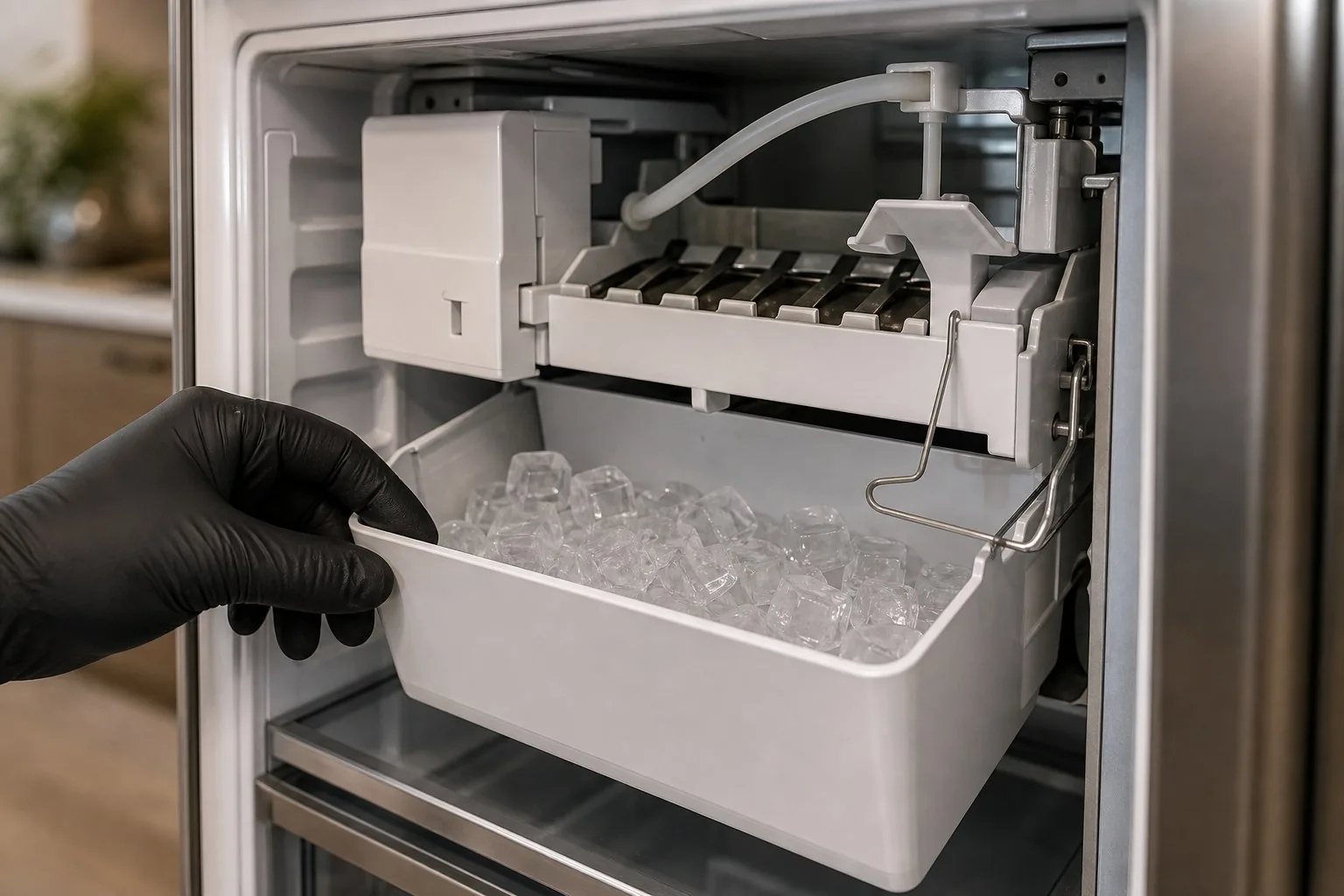
Because one of five things in the ice cycle has stopped: the feeler arm is parked up, the freezer has drifted warm, water is not reaching the mold, the filter is choking flow, or the control module is not harvesting. A GE Monogram ice maker fills a mold from your home water line, freezes it solid near 0°F, and a wire feeler arm rides the ice level to switch the maker off when the bin is full. For the cycle to repeat, two things must both be true every time — the freezer has to be cold enough to freeze a full mold, and water has to arrive at full flow. Lose either one and the bin runs empty, slow, or full of hollow cubes.
The single most common “dead ice maker” call is the simplest: the feeler arm was lifted out of the ice during a bin clean-out or a frozen-food shuffle and never dropped back. Check that first, then work down the flow path.
What do no ice, slow ice, and hollow cubes each mean?
Read the failure pattern before opening anything — each symptom points at a different part of the chain, which is how a careful diagnosis avoids a parts-cannon guess:
| Symptom | Likely cause | What we do |
|---|---|---|
| No ice, arm down, freezer cold | Iced fill tube or dead inlet valve | Trace the weeping valve, replace it so the tube stops re-icing |
| No ice, bin filled earlier | Feeler arm left raised | Drop the wire arm back into the on position |
| Small, hollow or clumped cubes | Low water flow — spent filter, half-open valve, kinked line | Restore full flow, fit a fresh filter or inlet valve |
| Slow or stalled production | Freezer running above ~8°F | Verify the 0°F setpoint and the cooling, defrost and fan path |
| Cleared the fill-tube ice, locked again | Inlet valve seeping water that refreezes | Replace the valve or correct the fill geometry |
What can I check before booking a Monogram ice-maker visit?
Four things, in order, because each is owner-checkable and together they account for most “no ice” calls. First, push the wire feeler arm fully down into the on position. Second, confirm the freezer is holding near 0°F — if the box is warm, the ice problem is downstream of a cooling fault, and our GE Monogram refrigerator not cooling walkthrough covers the airflow and defrost path that starves the ice maker. Third, trace the supply line from the saddle valve to the cabinet for a half-shut valve or a tight kink behind the unit. Fourth, swap a filter that is past roughly six months or 300 gallons, then flush a few quarts through the dispenser to purge trapped air. Power-cycle, leave it untouched for 24 hours, and discard the first thin harvests.
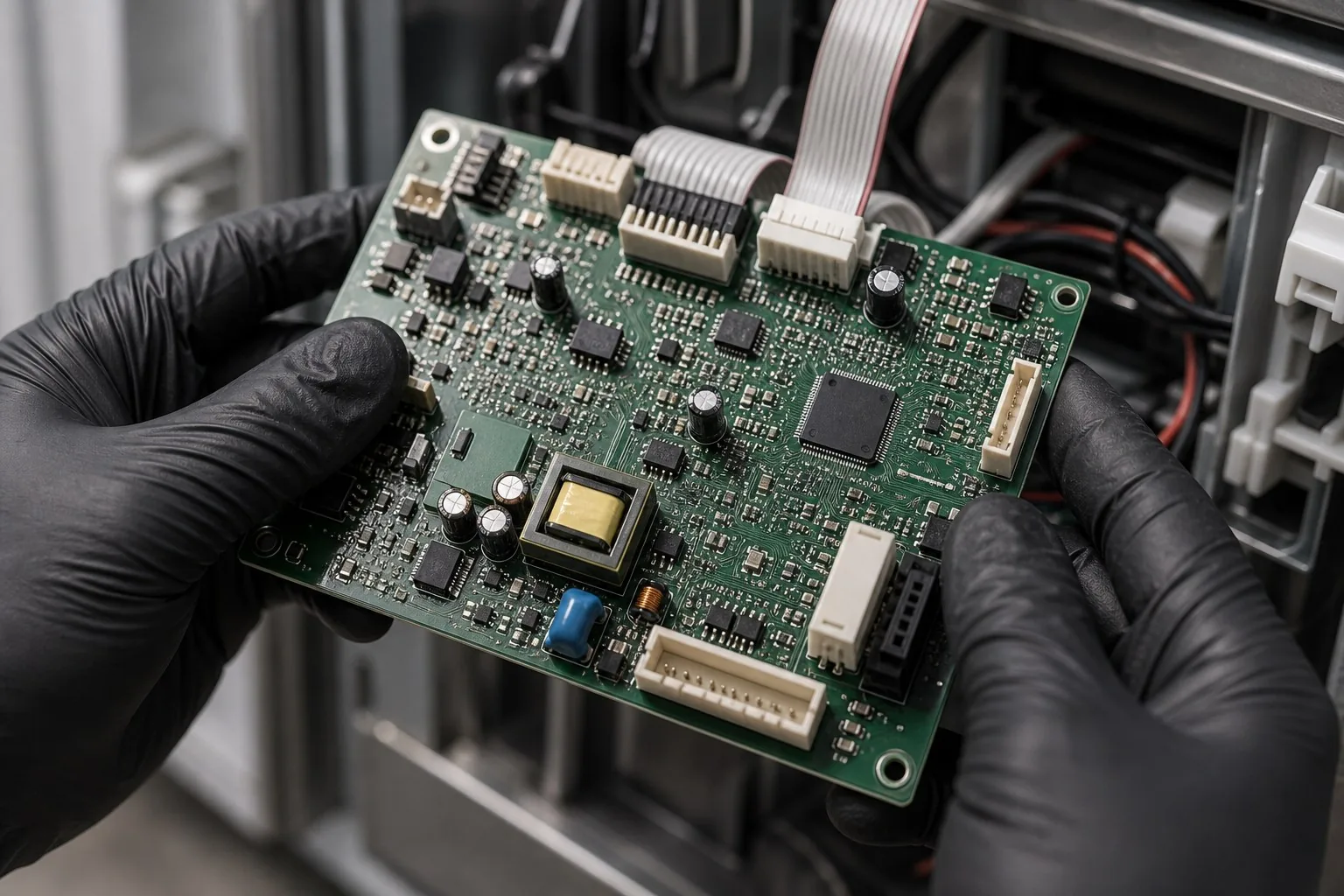
If the bin is still empty after a full day with the arm down and the freezer at 0°F, the fault is past the owner-checkable items — typically the inlet valve, the fill tube, or the ice-maker control module — and it needs a technician.
When does a Monogram ice maker actually need a technician?
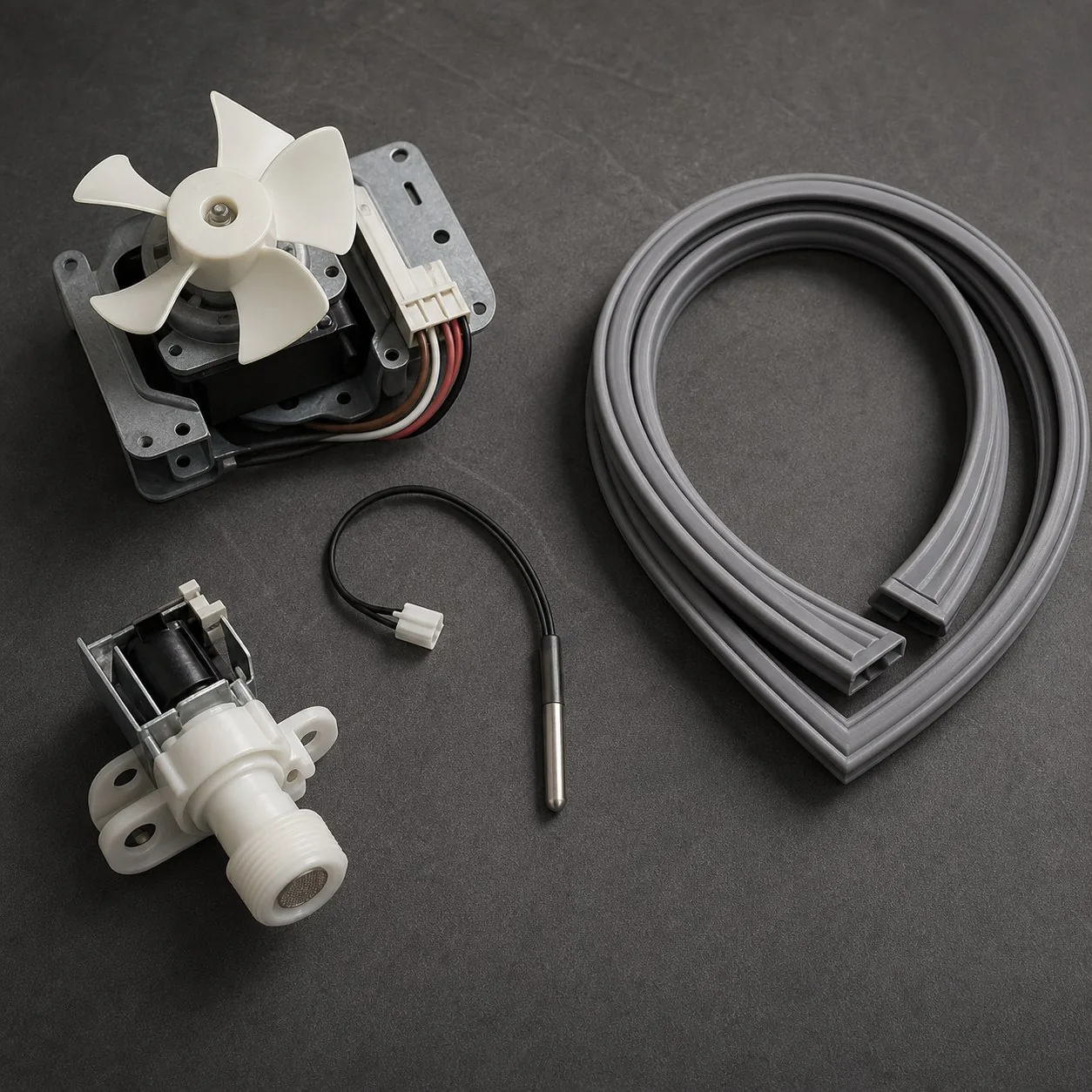
When water flow and freezer temperature are both confirmed good and there is still no ice. A frozen fill tube and a weeping inlet valve travel together, so simply thawing the tube lets it refreeze within a day; the valve has to be replaced to break that loop. A control module that fills but never harvests, or harvests but never fills, also needs bench testing rather than a blind swap. We test water pressure at the valve and the module against spec, so we replace the part that genuinely failed instead of the whole assembly. Most Monogram ice-maker repairs land in the non-sealed band — the flat $89 service call is waived with any repair — and you can preview ranges on our appliance repair cost page. The work sits inside our wider GE Monogram repair coverage, and if your panel also shows a fault alongside the empty bin, cross-check it on the GE Monogram error codes reference. The same flow-versus-temperature logic applies if you also run a built-in Sub-Zero ice maker elsewhere in the kitchen.
Why Bay Area conditions reach the ice maker
The ice circuit is the quiet victim of two local realities. Hard water across much of the Tri-Valley and East Bay scales the fill tube, the inlet valve, and the mold faster than the manual assumes, so Danville, Pleasanton, and Lafayette Monograms tend to need filters and valves sooner. Inland summer kitchens running 90-100°F push the condenser hard, and a freezer that drifts a few degrees warm in that heat is enough to stall ice production before anyone suspects the cooling side. We carry genuine OEM inlet valves and ice-maker modules matched to the model on the rating plate, work cleanly around panel-ready and custom-cabinet installs, and finish in one trip whenever the flow path is confirmed ahead of the visit.
How a visit works
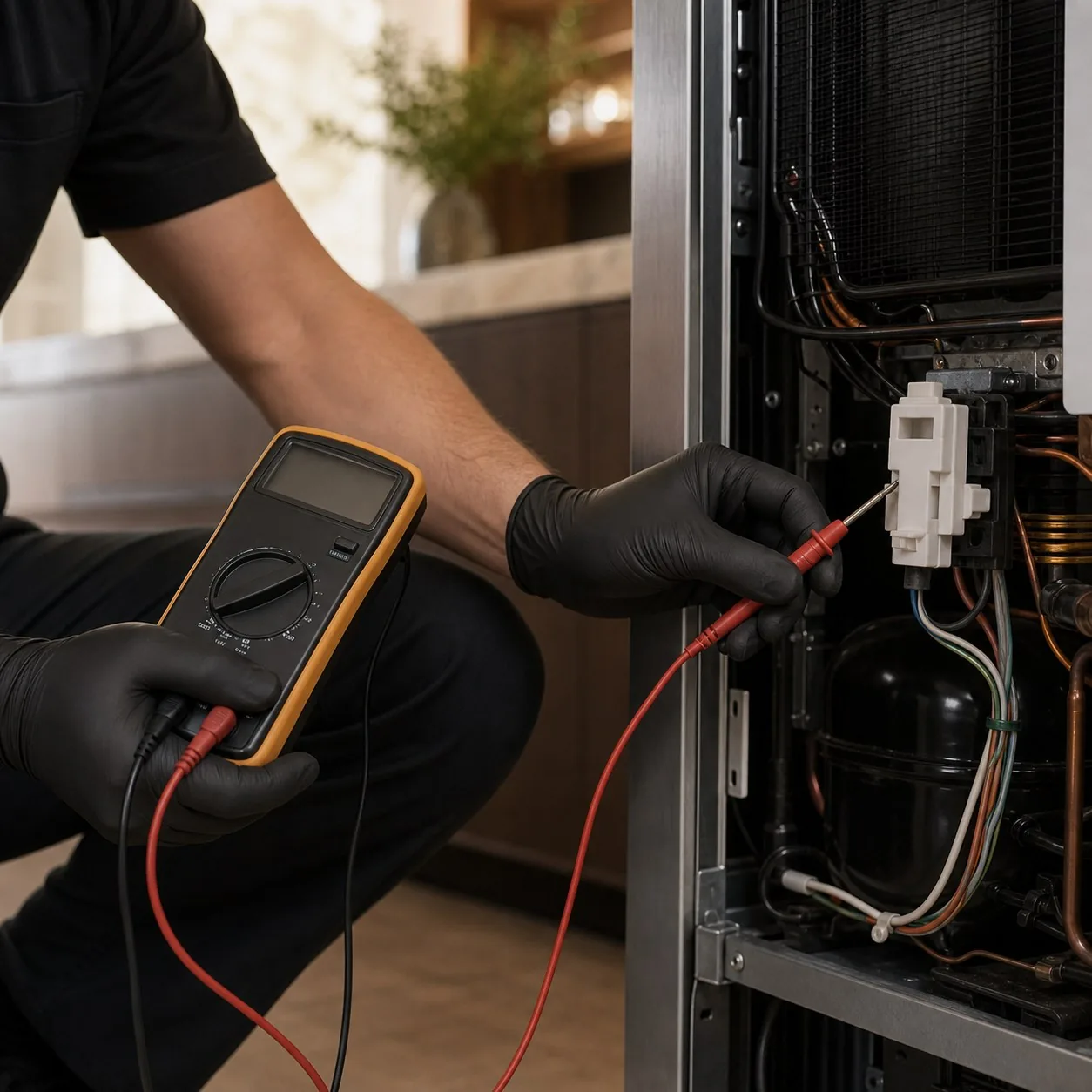
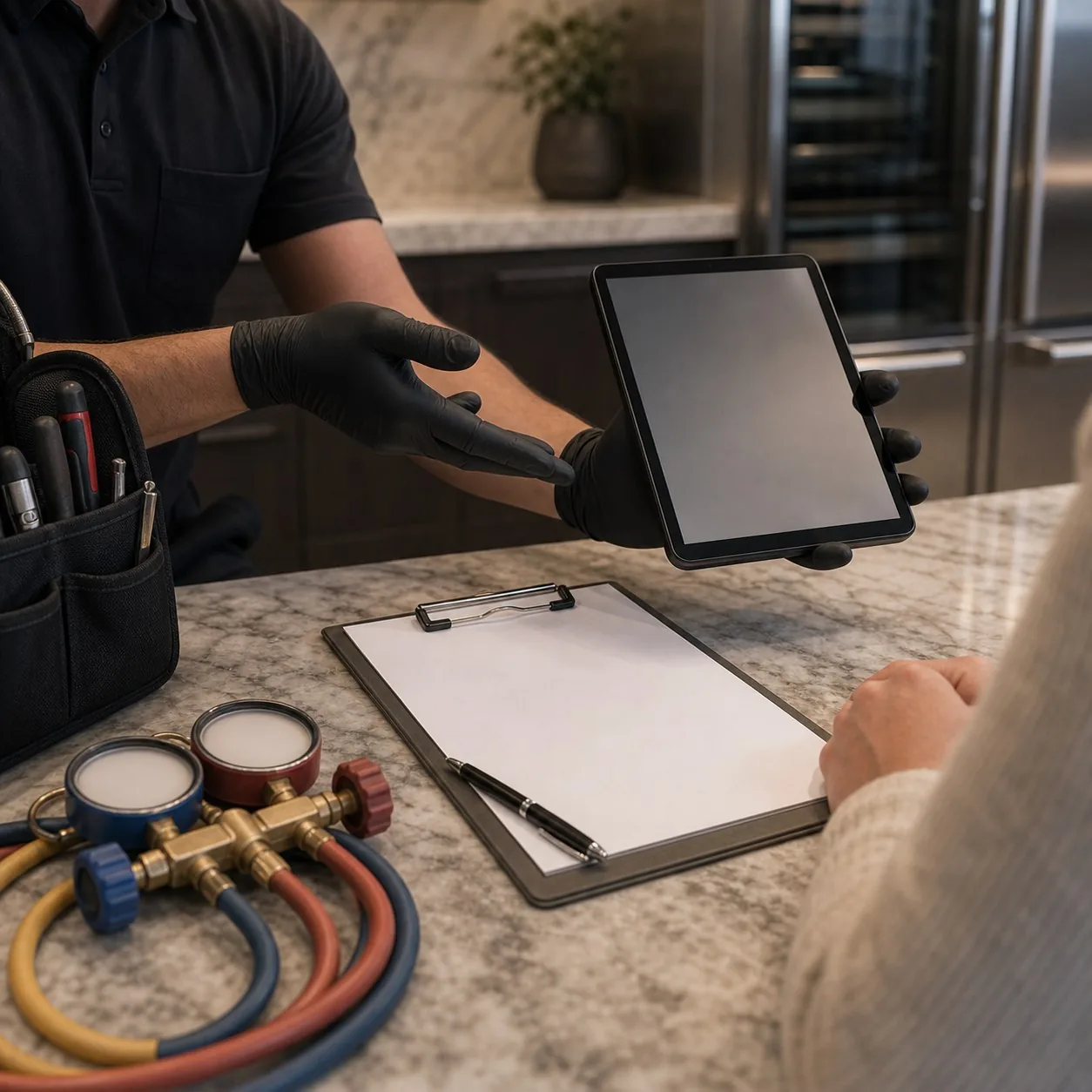
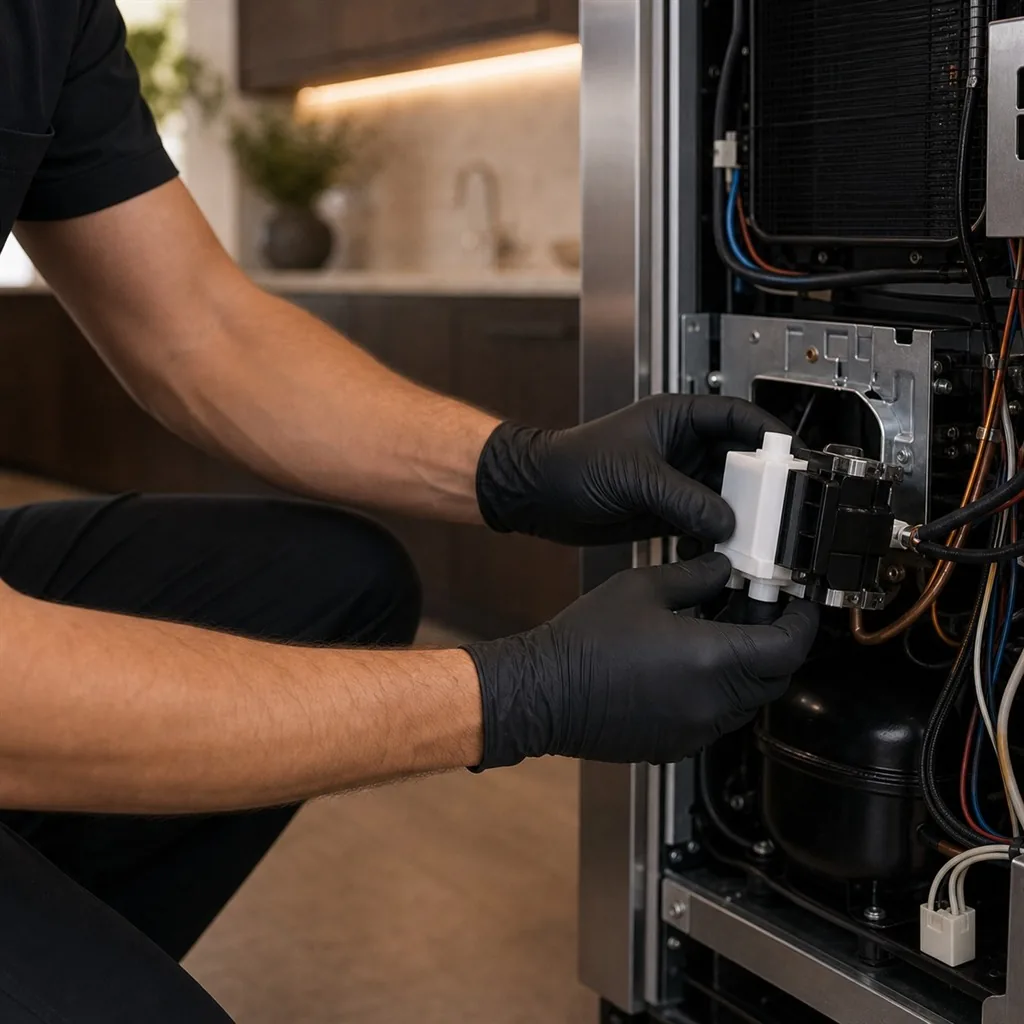
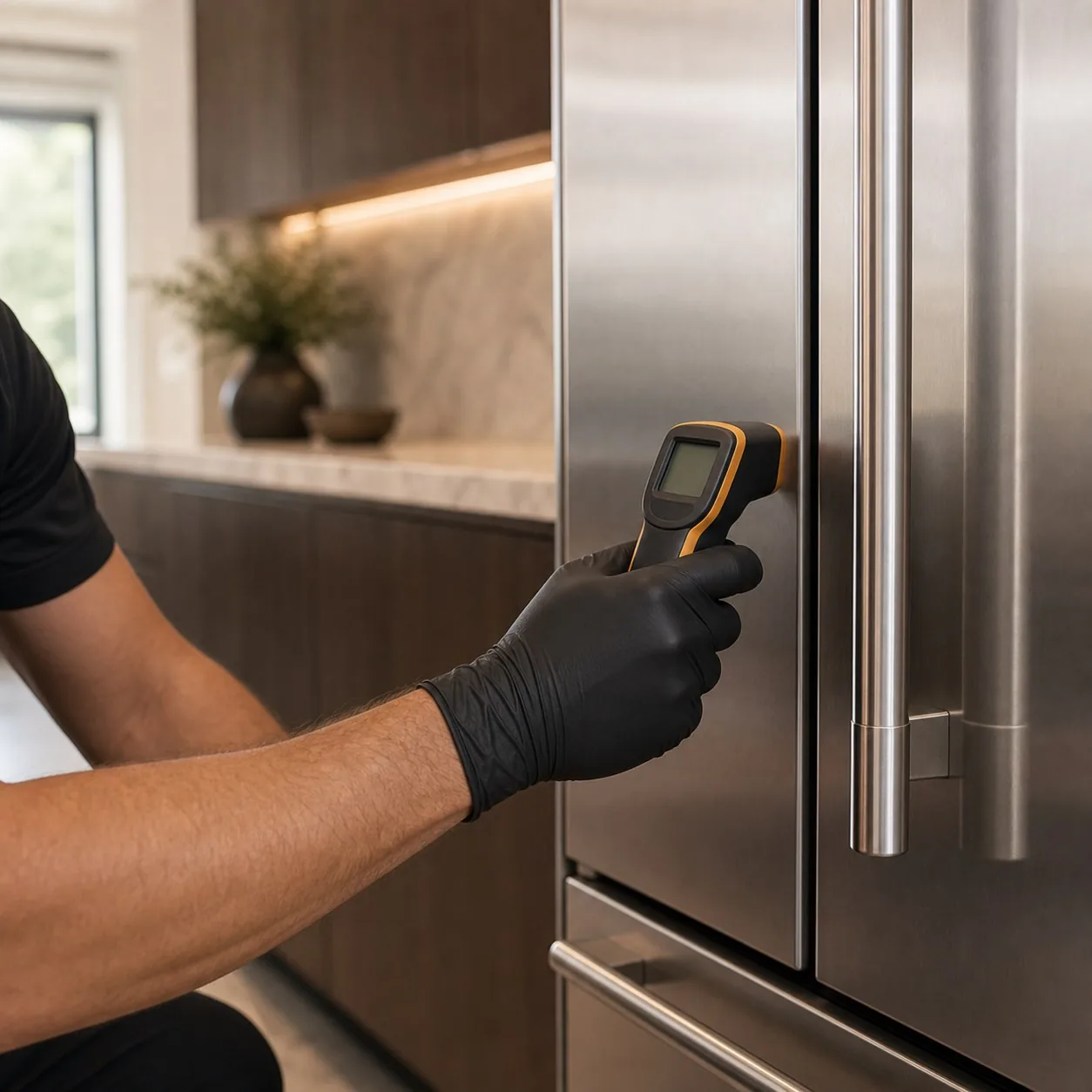
Frequently asked questions
Why is my GE Monogram ice maker not working?
Start with the simple switches: a wire feeler arm parked in the raised (off) position, a freezer drifting above 0°F, a supply line that is shut off or kinked, a filter past its rating, or a fill tube iced shut. Lower the arm and check water flow before assuming the module failed.
Why does my Monogram refrigerator make no ice at all?
No ice with the arm down and a cold freezer usually means water never reaches the mold — a closed saddle valve, a frozen fill tube, or a dead inlet valve. The control module can also fail to harvest. Confirm the line is open and unfrozen, then book a diagnostic if the bin stays empty.
Why is my GE Monogram making small or hollow ice cubes?
Small, hollow, or clumped cubes mean water is trickling instead of filling the mold each cycle. The usual cause is a tired filter, a half-open saddle valve, a kinked line, or a fill tube starting to glaze with ice. Restore full flow and replace the filter; if cubes stay thin, the inlet valve is weak.
What freezer temperature does a Monogram ice maker need?
Set the freezer near 0°F. The harvest cycle relies on the mold freezing fully between fills, and above roughly 8°F the ice maker slows or stops before any part has actually failed. Verify the setpoint, let the freezer stabilize for a full day, and recheck production before calling it broken.
How long until my Monogram makes ice after a reset or filter change?
Allow about 24 hours. After restoring power, swapping the filter, or thawing the fill tube, the first one or two harvests come out thin or hollow and should be discarded. If the bin is still empty after a full day with the arm down and the freezer at 0°F, the unit needs service.
Can a clogged water filter stop my GE Monogram ice maker?
Yes. A Monogram filter past roughly six months or 300 gallons restricts flow enough to starve the mold, so cubes shrink first and then stop. Replace the filter, flush a few quarts through the dispenser to purge air, and wait 24 hours before deciding the inlet valve or module is the problem.
What clients say
4.9 · 327 reviews
Our Monogram quit making ice entirely. The technician traced it past the feeler arm to a fill tube glazed shut by an inlet valve that kept weeping. He swapped the valve so the tube stopped re-icing instead of just melting it. A clear harvest dropped the next morning and it has run steady since.
Cubes had gone hollow and clumpy for a month. He explained that was a water-flow signal, not a frozen mold, and found a saddle valve only half open plus a filter long past its gallons. Full flow restored, fresh filter fitted, and after a day the cubes came out solid and clear again.
No ice and I'd confirmed the arm was down myself. The freezer was sitting near 10 degrees, so he corrected the setpoint first, then bench-tested the ice-maker module rather than guessing. Once the freezer held 0 the module cycled fine. Saved me an unnecessary part. Scheduling was a touch tight.