
Quick answers
- Why is my fridge not cooling in summer heat?
- A heat wave forces the condenser to reject far more heat, so a coil clogged with Diablo-wind dust or wildfire ash can no longer keep up and the fresh-food side warms first. A clean coil usually copes with a one-to-two-degree afternoon drift; a dirty one keeps climbing all day.
- Is it normal for a Sub-Zero to run warm during a heat wave?
- A slight one-to-two-degree rise on the hottest afternoon, recovered overnight, is normal summer load. What is not normal is a fresh-food side climbing past 45F, a unit that never recovers by morning, or a freezer warming too. Those signs mean a fault the heat merely exposed.
- My Sub-Zero is warm during a heat wave — what should I check first?
- Clean the condenser behind the upper grille, confirm the doors seal and nothing blocks the interior vents, and keep door openings short while it is hot. Then run the overnight test. If it still has not recovered to near 38F by morning, book a diagnostic.
- Why does my refrigerator struggle when it hits 100 degrees outside?
- Refrigeration works by moving heat out through the condenser, and a hotter kitchen leaves less of a temperature gap to push that heat into. Head pressure climbs, the compressor runs longer, and any condenser dust or low refrigerant that hid in mild weather suddenly shows as a warm cabinet.
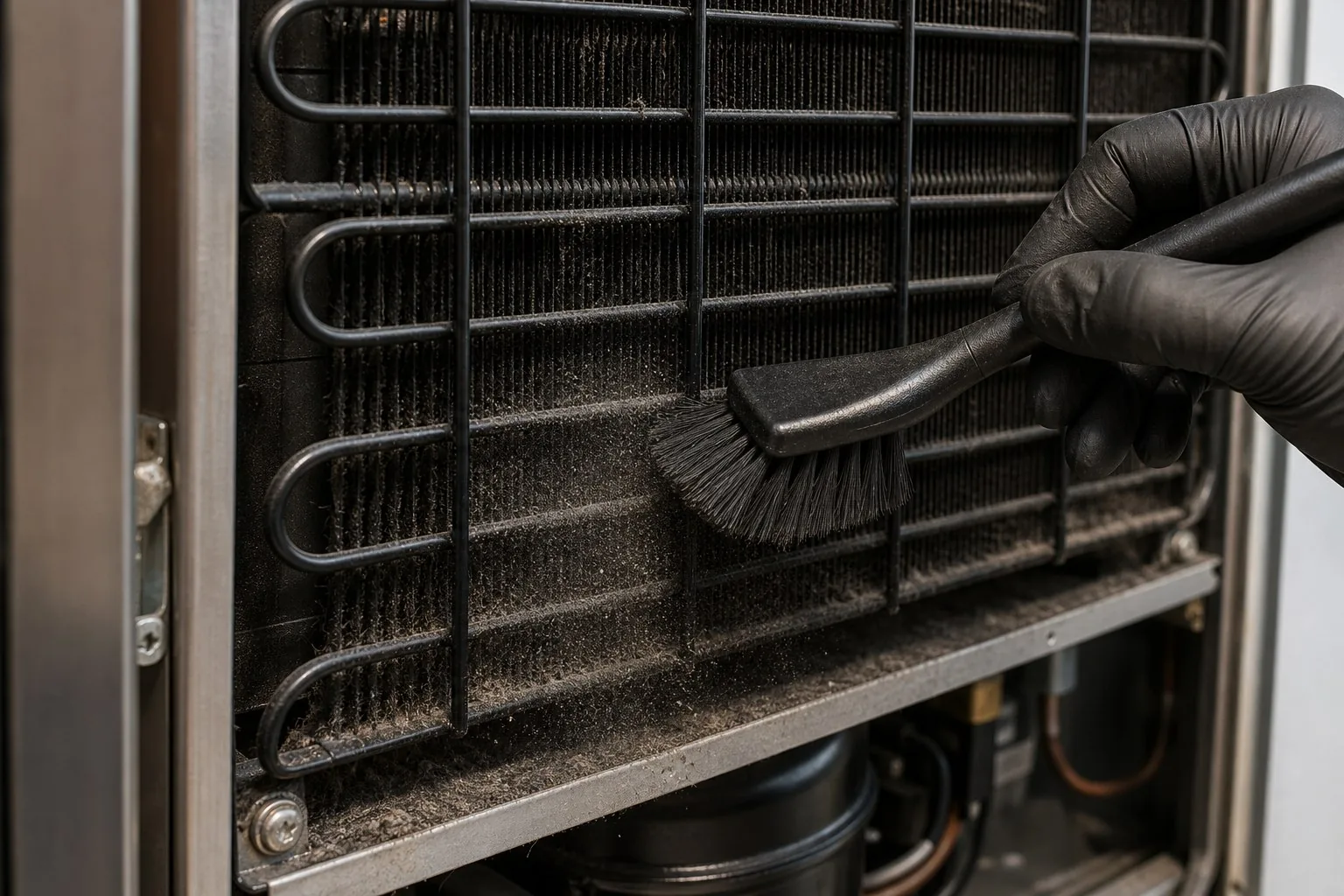
Why heat exposes it
A 100°F kitchen is a stress test for the condenser
Refrigeration sheds heat through the condenser into the room air, and the hotter that room, the smaller the temperature gap left to push heat across. A coil packed with Diablo-wind dust that quietly coped in spring suddenly cannot keep up at 100F, so head pressure climbs and the fresh-food side warms first. The heat did not break the unit — it revealed a coil that was already overdue for cleaning.
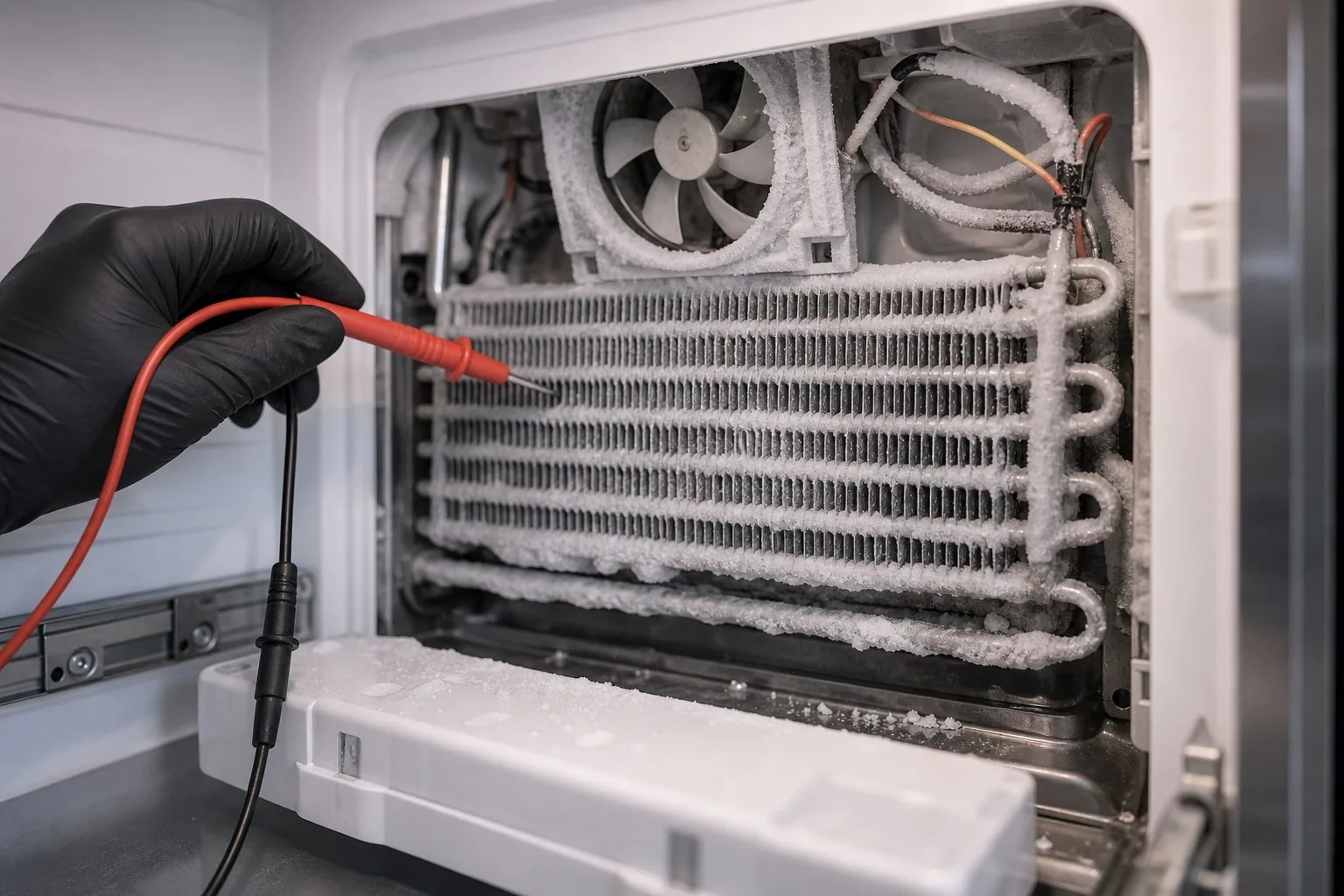
The overnight test
Let the cool early hours give the verdict
The fairest summer check costs nothing: note the fresh-food temperature late at night and again first thing in the morning, when the kitchen has cooled and door traffic has stopped. A sound Sub-Zero recovers to near 38F in that quiet window. One that stays warm at 6 a.m., with no afternoon heat and no door openings to blame, has a fault the season only uncovered, not a temporary overload.
Is it normal for a fridge to run warm in summer heat?
A one-to-two-degree drift on the hottest part of the afternoon, recovered overnight, is normal summer load for a built-in Sub-Zero — not a fault. These units (BI-36, BI-42, BI-48 and integrated columns) reject heat through a condenser into the kitchen air, so when a Tri-Valley afternoon pushes that kitchen to 90-100F there is simply less of a temperature gap to dump heat across. The compressor runs longer, the fresh-food side gives up a degree or two, and the unit quietly claws it back once San Ramon cools after sunset. That gentle daytime sag is the system working, not failing. The line between normal and broken is recovery: a healthy unit catches up overnight, and a faulty one keeps climbing or never recovers at all.
When is a warm Sub-Zero during a heat wave a real fault?
When the recovery never comes. Run the overnight test — note the fresh-food temperature late at night and again at dawn, when the kitchen has cooled and nobody is opening the door. A sound Sub-Zero settles back to near 38F in that quiet window; one that is still warm at 6 a.m., with neither afternoon heat nor door traffic to blame, has a genuine fault the season merely exposed. The most common culprit is a condenser choked with Diablo-wind dust or wildfire ash, which coped in spring but cannot shed a 100F heat load. Start with our Sub-Zero condenser cleaning steps, then read the recovery pattern with a 24-hour temperature log before assuming the worst.
| Hot-weather sign | Normal load or fault? | What it usually means |
|---|---|---|
| Fresh-food up 1-2°F on the hottest afternoon, fine by morning | Normal load | Condenser keeping up with peak heat |
| Fresh-food climbs past 45°F and stays there all day | Fault | Heat-choked or dust-packed condenser |
| Warm at noon and still warm overnight at 6 a.m. | Fault | Defrost, fan or damper not delivering cold |
| Both fridge and freezer drift warm together in the heat | Fault | Sealed-system or compressor losing capacity |
| Runs nonstop yet the cabinet never reaches setpoint | Fault | Low refrigerant or restriction the heat unmasked |
Why does a refrigerator struggle once it hits 100 degrees?
Because every 10F of extra kitchen heat measurably raises the condenser’s head pressure, and the compressor has to work against that all day. A coil with even a thin dust blanket loses the margin it relied on in mild weather, and a slow refrigerant leak that read fine in spring suddenly cannot hold temperature. This is why a Sub-Zero that is not cooling so often surfaces during the first real heat wave of the Tri-Valley summer: the underlying weakness was always there, and 100F outside is simply the load that exposes it. Keep door openings short while it is hot, make sure the gaskets seal, and never crank the setpoint lower — that only adds load and hides the recovery pattern.
Garage and outdoor Sub-Zero units in the inland heat
Garage and outdoor refrigeration takes the worst of a San Ramon summer because it sits in unconditioned air. A closed garage in Dougherty Valley or Windemere can reach 105-115F on a heat-wave afternoon — past the rated ambient ceiling of many indoor-rated units, which were never designed to reject heat into air that hot. A purpose-built, heat-rated unit copes far better, but any refrigerator fights a losing battle once ambient passes its design limit, and overheating in that range can trip protection or simply leave the cabinet warm. Ventilation, shade and a spotless condenser buy real margin; persistent warmth in a properly rated unit needs an outdoor refrigerator repair diagnostic. Local San Ramon, Danville and Alamo addresses get the fastest Tri-Valley routing. A flat $89 service call applies and is waived with any repair, with most non-sealed hot-weather fixes landing in the $200-$700 band.
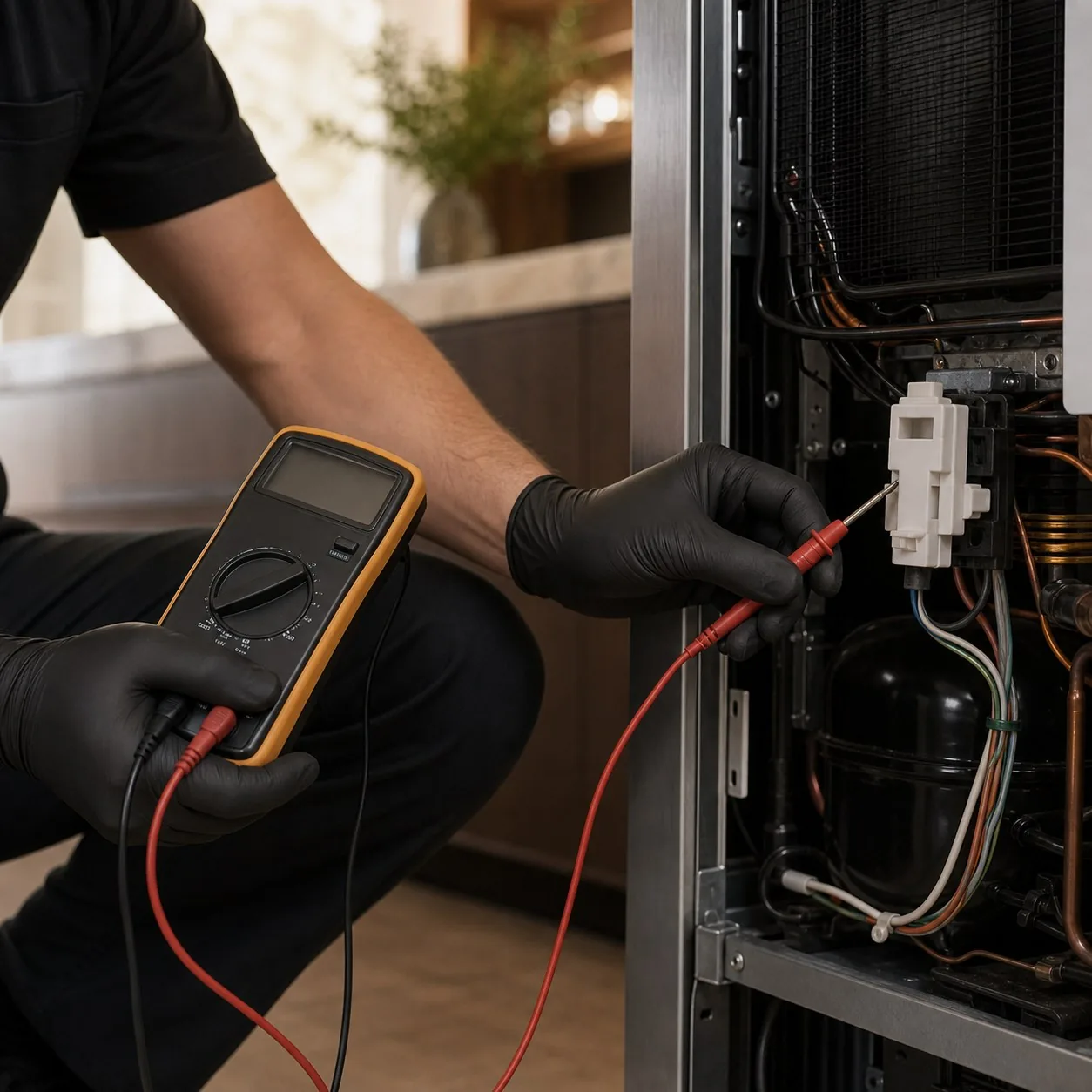
How a visit works
Service area
Where we work — the Bay Area service area
From our Tri-Valley base we cover the entire San Francisco Bay Area — choose your region for local detail.
Frequently asked questions
Why is my fridge not cooling in summer heat?
A heat wave forces the condenser to reject far more heat, so a coil clogged with Diablo-wind dust or wildfire ash can no longer keep up and the fresh-food side warms first. A clean coil usually copes with a one-to-two-degree afternoon drift; a dirty one keeps climbing all day.
Is it normal for a Sub-Zero to run warm during a heat wave?
A slight one-to-two-degree rise on the hottest afternoon, recovered overnight, is normal summer load. What is not normal is a fresh-food side climbing past 45F, a unit that never recovers by morning, or a freezer warming too. Those signs mean a fault the heat merely exposed.
My Sub-Zero is warm during a heat wave — what should I check first?
Clean the condenser behind the upper grille, confirm the doors seal and nothing blocks the interior vents, and keep door openings short while it is hot. Then run the overnight test. If it still has not recovered to near 38F by morning, book a diagnostic.
Why does my refrigerator struggle when it hits 100 degrees outside?
Refrigeration works by moving heat out through the condenser, and a hotter kitchen leaves less of a temperature gap to push that heat into. Head pressure climbs, the compressor runs longer, and any condenser dust or low refrigerant that hid in mild weather suddenly shows as a warm cabinet.
Do garage and outdoor Sub-Zero units fail more in summer?
Yes. Garage and outdoor units sit in unconditioned air that can reach 105-115F in a closed San Ramon garage, beyond the rated ambient ceiling for many indoor-rated models. Heat-rated outdoor units cope better, but any unit fights a losing battle once ambient passes its design limit.
Should I lower the setpoint to fight the heat?
No. Dropping the setpoint mid-heat-wave only makes the compressor run harder against the same load and hides the recovery pattern you need to read. Leave the setpoint alone, run the overnight test, and judge by whether the cabinet recovers in the cool early hours.
What clients say
4.9 · 327 reviews
During the July heat wave our BI-42 fresh-food side crept to the mid-40s every afternoon and I panicked. The technician explained a degree or two is normal on a 100-degree day, but ours never recovered overnight. He found the upper-grille coil packed with summer grit, cleaned it, and the cabinet held 38 again by morning.
Our garage Sub-Zero went warm during a hot spell and I assumed it was dying. He measured the closed garage at 110 degrees, well past what the indoor-rated unit could handle, and showed how head pressure spikes in that air. We added ventilation and cleaned the condenser. It has held temperature through every heat wave since.
I ran the overnight test he suggested and it confirmed the fridge was not recovering in the cool early hours, even with the heat gone. That ruled out summer load and pointed at a real fault. He arrived with the right parts, traced it to a defrost failure, and the unit stopped struggling on hot days. Scheduling took a couple of days.