
Quick answers
- Why won't my GE Monogram oven heat up?
- On electric Monogram wall ovens, the usual culprit is a failed bake element or a control relay that won't power it. On gas ranges, it's a weak glow-bar igniter that can't open the safety valve. A drifted oven sensor or a returning F-code can also stop heat before the setpoint.
- Does an F2 or F3 code mean my GE Monogram oven needs a new sensor?
- Not always. F3 and F4 flag the oven temperature sensor, and F2 flags over-temperature, but a corroded connector or relay can mimic a bad sensor. We test the sensor's resistance against spec and inspect the harness before replacing it, so a good part isn't swapped needlessly.
- How long should a GE Monogram oven take to preheat?
- Most Monogram ovens reach 350°F in roughly 12 to 18 minutes. If preheat now drags far past that, or the oven never signals ready, suspect a partly failed bake element, a tiring igniter on a gas model, or a sensor reading low. A slow preheat is an early warning, not a quirk to ignore.
- My GE Monogram oven broils but won't bake — what's wrong?
- If the broil element glows but bake stays cold, the bake element or its control relay has failed while the broil circuit still works. The reverse points to the broil element. Because each element runs on a separate circuit, one can quit while the other heats — we test both before quoting.
When a code returns
An F-code narrows the search, it doesn't end it
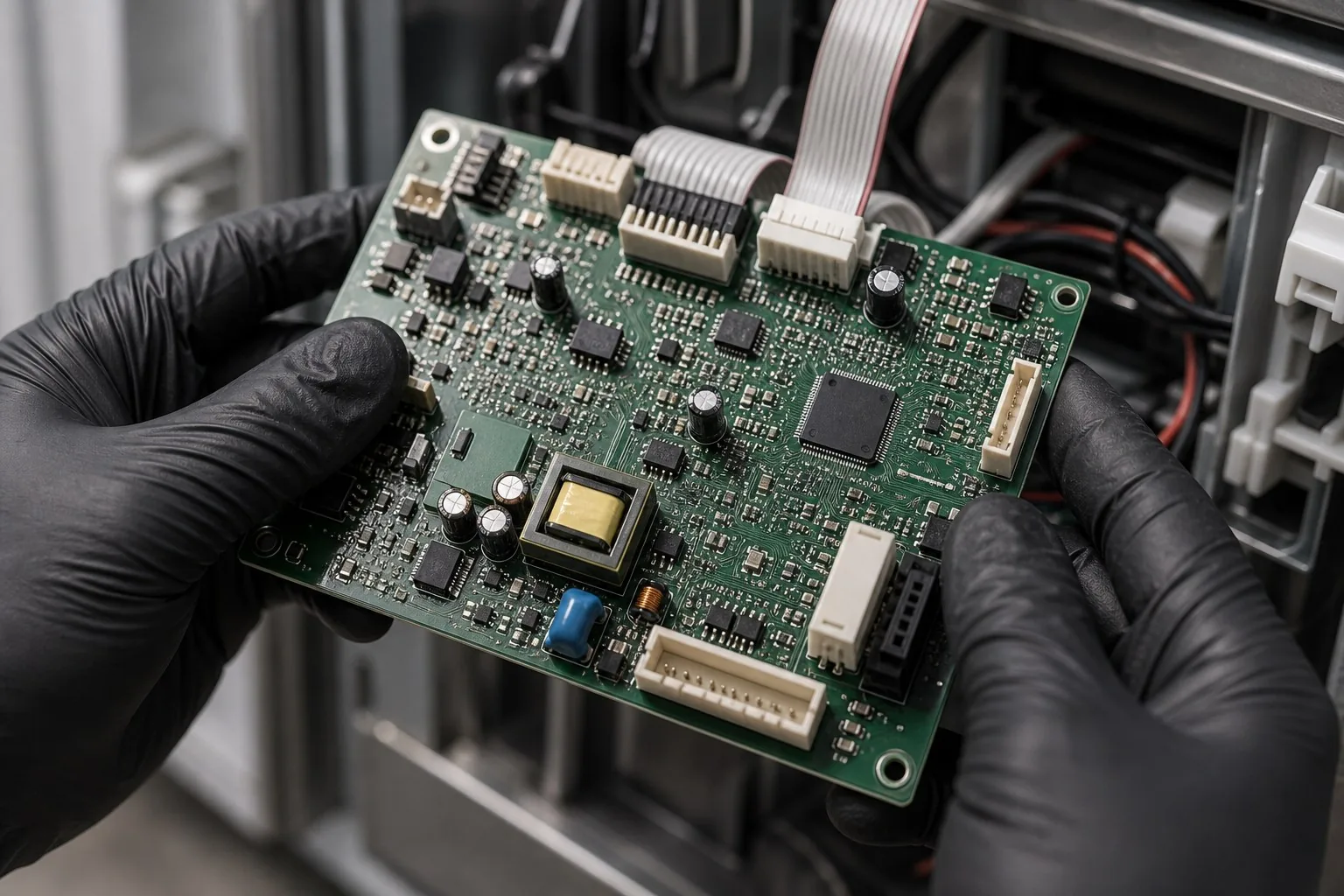
A returning F3 or F4 names the oven-sensor circuit, but a green-crusted connector or a relay stuck on the board reads identically from the keypad. Before any part leaves the van we ohm the RTD probe cold, wiggle-test the harness, and watch the relay actually close — so the fault, not the symptom, gets replaced.
How does a GE Monogram oven actually heat?
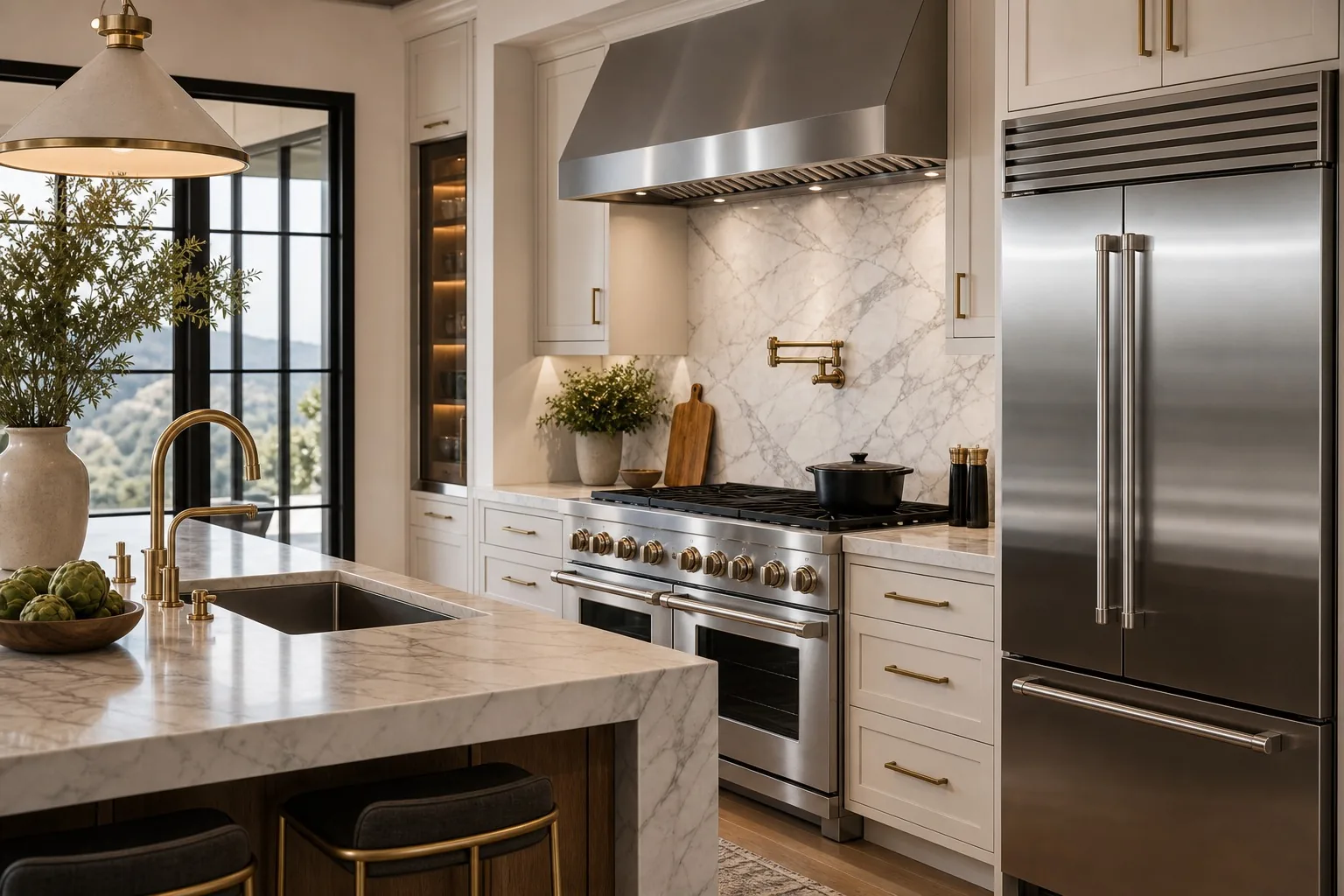
A GE Monogram heats in one of two ways, and which one you own decides the diagnosis. Electric Monogram wall ovens use a bake element and a separate broil element, with an oven temperature sensor (an RTD probe) feeding the control board so it cycles the elements to hold your setpoint; convection models add a fan and a third element. Gas Monogram ranges use a glow-bar igniter: when you call for heat it glows, and only once it’s hot enough does the safety valve open and the gas light. Knowing which fuel you have is step one, because a no-heat fault on a gas range and a no-heat fault on an electric wall oven almost never share a cause.
| Symptom or sign | Likely cause | What we do |
|---|---|---|
| Broils fine but bakes cold | Failed bake element or its control relay | Test both element circuits, confirm the relay closes, fit the dead one |
| Gas oven won’t light, faint gas smell | Weak glow-bar igniter below the valve’s current spec | Measure igniter amp draw, replace if it can’t open the safety valve |
| Preheat drags far past 18 minutes | Partly failed element, tiring igniter, or sensor reading low | Ohm the element and RTD probe against spec, isolate the slow part |
| Returning F2 / F3 / F4 code | Over-temperature trip or oven-sensor circuit fault | Test sensor resistance cold, inspect the harness and connector before any swap |
| Bakes wildly off-temperature | Drifted oven temperature sensor | Compare RTD reading to its curve, recalibrate or replace the probe |
Real causes, in order
- Failed bake or broil element — the most common no-heat on electric ovens; often a visible blister, pit or break in the coil.
- Weak glow-bar igniter — on gas ranges, it can no longer open the safety valve, so no flame.
- Drifted oven temperature sensor — the control reads the wrong heat and cycles off early or trips an over-temperature code.
- Control-board relay fault — the relay that powers an element sticks open; checked after the element and sensor test clean.
The F-code link
A GE Monogram that quits heating often shows a fault from GE’s “F” code family. A returning F2 is an over-temperature trip — the control saw too much heat, frequently a sensor or sticking relay. F3 and F4 flag the oven sensor circuit (open or shorted), which can read exactly like a failed element from the cook’s seat. The code narrows the search, but it never replaces a real measurement — see our GE Monogram error codes reference for the full list.
Element vs. igniter vs. sensor — how do we tell them apart?
A blistered or broken element is usually visible. A failing igniter glows weak or stays dark, and the oven lights slowly or not at all. A drifted sensor looks fine but reads wrong. We test each against its real resistance and amp-draw spec rather than swapping parts blind — the same measured approach we bring to a Monogram fridge that won’t cool, where a symptom also rarely names its own cause.
What does a Monogram oven repair cost, and is it worth fixing?
A bake element, glow-bar igniter, or oven sensor is a moderate repair, typically well under the price of a control board or a new built-in oven. The on-site diagnostic is a flat $89, waived with any repair, and most heating parts land in the mid range rather than the top — see the GE Monogram repair cost breakdown for bands by part. Because a Monogram is built into custom cabinetry, fixing it almost always beats swapping a fitted opening; we only steer toward replacement when a board plus multiple parts have failed at once, the threshold our repair-vs-replace guide walks through.
What should I do before the technician arrives?
Check the breaker first — a tripped double-pole breaker kills heat on an electric oven while the clock and lights still work. Note whether the oven broils but won’t bake (or the reverse), time how long preheat takes, and write down any returning F-code exactly as it reads. If it’s a gas range that smells of gas without lighting, stop relighting it, leave the door open to vent, and book the visit. Having the model number off the rating plate ready lets us load the correct OEM part for a one-trip fix.
Why GE Monogram ovens fail this way in Bay Area homes
A Monogram wall oven or pro range anchors a lot of Tri-Valley, Peninsula and Silicon Valley estate kitchens, and the way it lives here shapes how it fails. Inland summers from Danville to Pleasanton push a kitchen to 90–100°F, so a marginal igniter or a tiring element is far likelier to quit on a hot afternoon, and over-temperature F2 trips spike during the long self-clean cycles run before a dinner party. Hard water scales the steam and self-clean circuits and shortens igniter life, while coastal salt and fog corrode igniter leads, sensor connectors and ribbon contacts — the hidden root cause behind heat faults that “come and go” with the weather.
These ovens are built into custom surrounds with fitted panels and tight returns, so a clean pull matters. We work gated, hillside and white-glove-access estates by appointment, read the model from the rating plate on arrival, confirm the fault by measurement, and install genuine OEM parts. For the full range of cooking and refrigeration faults we cover on this brand, start at the GE Monogram repair hub.
Frequently asked questions
Why won't my GE Monogram oven heat up?
On electric Monogram wall ovens, the usual culprit is a failed bake element or a control relay that won't power it. On gas ranges, it's a weak glow-bar igniter that can't open the safety valve. A drifted oven sensor or a returning F-code can also stop heat before the setpoint.
Does an F2 or F3 code mean my GE Monogram oven needs a new sensor?
Not always. F3 and F4 flag the oven temperature sensor, and F2 flags over-temperature, but a corroded connector or relay can mimic a bad sensor. We test the sensor's resistance against spec and inspect the harness before replacing it, so a good part isn't swapped needlessly.
How long should a GE Monogram oven take to preheat?
Most Monogram ovens reach 350°F in roughly 12 to 18 minutes. If preheat now drags far past that, or the oven never signals ready, suspect a partly failed bake element, a tiring igniter on a gas model, or a sensor reading low. A slow preheat is an early warning, not a quirk to ignore.
My GE Monogram oven broils but won't bake — what's wrong?
If the broil element glows but bake stays cold, the bake element or its control relay has failed while the broil circuit still works. The reverse points to the broil element. Because each element runs on a separate circuit, one can quit while the other heats — we test both before quoting.
Is it worth repairing a GE Monogram oven that won't heat?
Usually yes. A bake element, igniter, or oven sensor is a moderate repair, and a Monogram built into custom cabinetry is far cheaper to fix than to swap a fitted opening. We only steer you toward replacement when a control board plus multiple parts have failed at once.
What clients say
4.9 · 327 reviews
My GE Monogram wall oven broiled fine but wouldn't bake at all. The technician pulled the panel, found a blistered bake element with a clean break, and confirmed the broil circuit was healthy. New OEM element fitted, preheat back to 350 in fifteen minutes. He explained the two separate circuits clearly.
Our gas Monogram range kept dragging on preheat and smelled faintly of gas. He measured the glow-bar igniter's amp draw, showed me it had dropped too low to open the safety valve, and swapped it. The oven lights instantly now. Honest work and he tested the sensor before replacing anything.
A returning fault code on our Monogram oven had me fearing a new sensor. The tech ohm-tested the RTD probe against spec, found it fine, and traced it to a corroded connector behind the cavity. Cleaned and re-pinned it, no part needed. Saved me an unnecessary sensor charge.